Nana Banana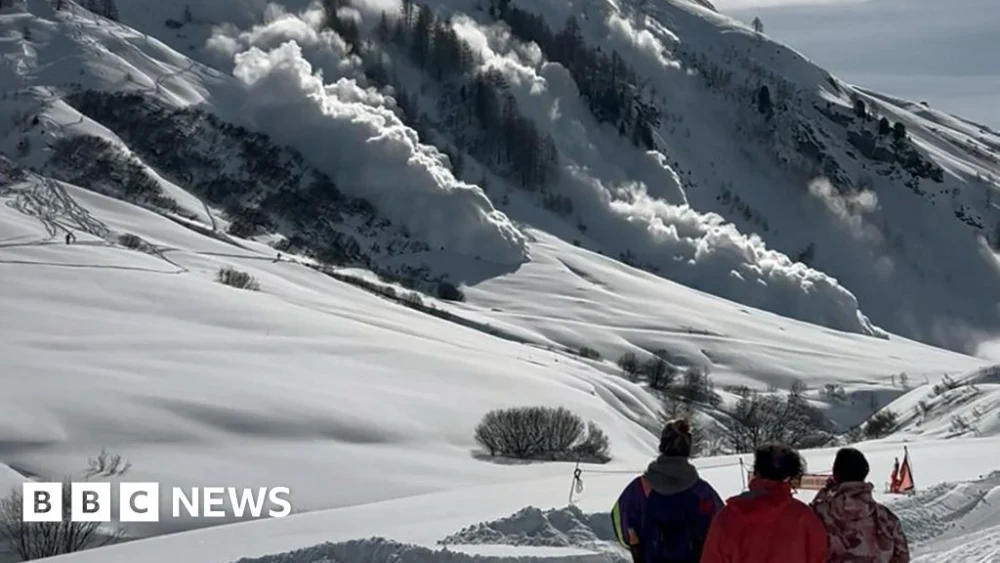
With more than 90 fatalities already recorded this season, a pressing question looms over winter sports enthusiasts and mountain communities alike: are we witnessing an increase in avalanches? The northern hemisphere’s annual ski season inevitably brings news of these powerful natural phenomena, but this year has seen a heightened focus due to a series of particularly deadly incidents across both continents, prompting an urgent examination of conditions, causes, and mitigation strategies.
The alarm was sounded following a tragic incident in California that claimed the lives of eight skiers and left one individual still unaccounted for. This devastating event, occurring in the midst of the ski season, immediately drew comparisons to the difficult and often perilous situation unfolding across much of the European Alps, where fatalities have also surged beyond typical seasonal averages. The contrasting meteorological contexts of these two regions initially suggested divergent causes, yet both underscore the critical need for winter sports enthusiasts to be exceptionally prepared and aware of the inherent dangers.
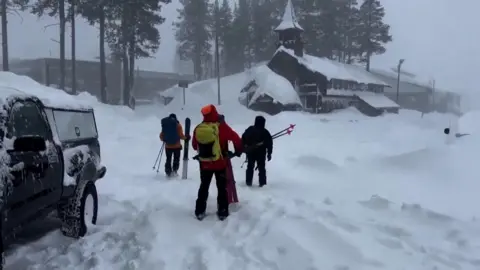
California, a region that had recently emerged from a significant "snow drought," presented a unique challenge. Experts noted that while the latest snowfall was not deemed exceptional in isolation, the preceding dry spell created an unstable foundation. In such scenarios, fresh, heavy snow struggles to bind effectively with the underlying snowpack, which can be either unusually hard and icy or, in some areas, virtually non-existent. This poor adhesion leaves the new snow dangerously loose and highly susceptible to triggering devastating slides. Rescuers faced blizzard conditions and thick snow as they diligently searched for the missing skier in Nevada County, highlighting the extreme operational challenges posed by such events.
Conversely, Europe has been grappling with an entirely different meteorological pattern. The Alps, a global epicentre for winter sports, experienced two major storms within a single week, unleashing prodigious amounts of heavy snow coupled with powerful winds. This potent combination led to unprecedentedly high avalanche warning levels across an unusually expansive swathe of the mountain range. The human toll has been significant, with three Britons among dozens killed in various incidents throughout the season. The sheer scale of the snow accumulation and the widespread instability led one Alpine resort to declare that the current conditions might well be the worst it has experienced this century, a stark testament to the severity of the situation.
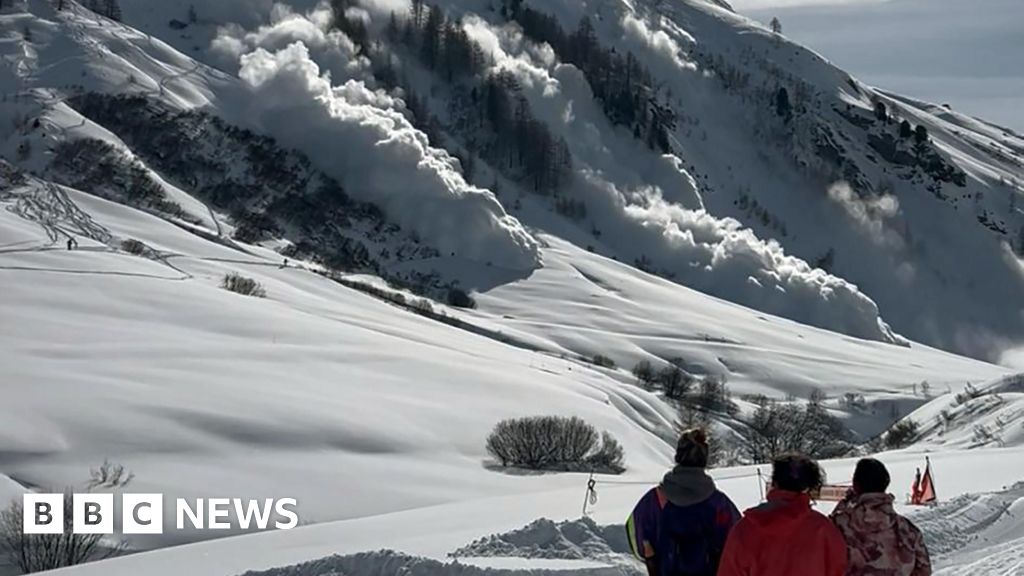
The consequences extended beyond ski slopes. Recent snowfalls have necessitated the evacuation of several communities in both Switzerland and northern Italy, where entire villages faced the immediate threat of being engulfed by descending snow masses. Power outages became widespread, disrupting daily life and complicating rescue efforts, while a train derailment at Goppenstein in the south-western Swiss canton of Valais served as a stark reminder of the broader infrastructural vulnerabilities exposed by such extreme weather events. Given these concurrent, yet seemingly disparate, crises, a crucial question emerges: is there a fundamental connection between the events in Europe and California, perhaps rooted in larger climatic shifts?
The potential role of climate change is an obvious line of inquiry when examining such unstable weather patterns. Dr. Ben S Pickering, a research associate in meteorology at the University of Manchester and National Centre for Atmospheric Science, notes, "There is evidence that climate change will lead to sharper, more intense precipitation followed by long periods without." This pattern appears to align with Europe’s recent history, which has seen several seasons with lower-than-average snowfall interspersed with prolonged dry periods earlier this winter, culminating in sudden, intense snow events. However, Dr. Pickering cautions against simplistic conclusions, stating, "since many factors control avalanche risk and precipitation is only one controlling influence, it is difficult to conclude how risks may evolve with future climate change." Avalanche formation is a complex interplay of snow depth, temperature, wind, terrain, and the layering of different snow types over time.
Adding another layer of complexity, climatologist Christoph Marthy observed to Swiss outlet SRF that the current Alpine winter – until recently dominated by high pressure and extended dry spells – presented conditions diametrically opposite to what a typical climate change winter might entail. Benjamin Zweifel, from the Swiss Federal Institute for Snow and Avalanche Research, elaborated on this, telling the BBC that the recent storms were "only one piece of the puzzle." He highlighted the "main challenge this winter was a very weak snowpack with very persistent weak layers, caused by long periods without new snow and low temperatures." These weak layers, often formed by temperature gradients within the snow, can persist for weeks or even months, acting as a potential sliding surface for subsequent heavy snowfalls.
Beyond precipitation patterns, the temperature itself could exert a direct influence on avalanche dynamics. The US Northern Rocky Mountain Science Center has pointed out that wet snow avalanches – which are projected to become more frequent as global temperatures continue to rise – are inherently dangerous, notoriously difficult to predict, and far less understood compared to their dry snow counterparts. The centre explains that "Wet snow avalanches are caused by weakening in the strength of the snowpack, often triggered by rain, abundant sunshine, or warm temperatures," underscoring their expected increase in frequency with changing climatic conditions. Furthermore, a 2021 research paper published in the journal Frontiers in Physiology suggests that snow that is wetter and warmer could significantly reduce a person’s chances of surviving an avalanche, while a thinner overall snow cover might elevate the risk of blunt trauma injuries upon impact. In essence, the dynamics of avalanches appear to be shifting due to four principal destabilizing factors: the oscillating pattern between droughts and heavy precipitation, the intensity of the precipitation itself, the increasing prevalence of wetter snow, and snowpacks that are actively melting.
Amidst these evolving risks, mountain resorts and safety experts are continuously adapting their mitigation strategies. Blaise Agresti, a seasoned high-mountain guide based in Chamonix, France, pointed to another critical factor contributing to Europe’s spike in avalanche deaths: the changing behaviour of skiers and a discernible increase in risk-taking. "People are increasingly practising off-piste skiing. Among skiers, 25% go off-piste," he told France’s Sud radio. This trend dramatically elevates exposure to uncontrolled avalanche terrain.
In response, resorts employ a multi-faceted approach to safety. Way-marked pistes, for instance, are meticulously managed and generally protected through preventative avalanche blasting, where explosives are strategically detonated to trigger smaller, controlled slides before they can become dangerous. The snow on these groomed trails is also flattened and compacted, further diminishing avalanche risk. In periods of extreme danger, pistes can be entirely closed off, as has been observed during the recent high-warning alerts. However, it’s crucial to acknowledge that "there is no such thing as zero risk," and avalanches can, on rare occasions, still impact slopes declared safe. Prudent advice often suggests maintaining a cautious distance from pistes situated beneath mountainsides visibly laden with powdery, unstable-looking snow.
In truly exceptional circumstances, resorts have imposed drastic measures. The French resorts of Tignes and Val d’Isere, for example, took the unprecedented step of enforcing a lockdown, compelling both residents and tourists to remain indoors due to the overwhelming avalanche threat. More generally, while resorts typically do not prohibit off-piste skiing, they actively promote rigorous safety protocols. La Plagne, a French resort boasting one of the world’s largest off-piste areas, exemplifies this approach. They strongly advise skiers to always seek up-to-date information on current conditions, ensure they possess essential safety gear – an avalanche transceiver, shovel, and probe – and critically, know how to use them effectively. Furthermore, they advocate for always venturing off-piste with a professional guide and never alone. La Plagne reinforces this commitment with weekly safety days during peak season and has recently invested in advanced technology, deploying drones equipped with thermal cameras to aid in avalanche detection and accelerate rescue operations.
Thomas Hager, a highly experienced ski guide operating in the Zell am See region of the Austrian Alps, offered a poignant reminder on the BBC World Service’s Outside Source programme: complacency can be a deadly foe for snow sports enthusiasts. "Snow looks so calm. It’s comparable to water," he observed. "In an ocean you don’t see undercurrents but local people know where the undercurrents are and where avalanches go off frequently. So please always talk with local people and listen to the avalanche forecast." He also underscored the critical importance of carrying an avalanche airbag, which, while not legally mandated in many areas, can significantly increase a victim’s chances of remaining near the surface of the snow, greatly improving rescue prospects.
Despite the worrying spike in avalanche deaths this winter, a broader historical perspective offered by the European Avalanche Warning Services suggests that the current figures, while high, are not entirely unprecedented. So far this season, 95 fatalities have been recorded. This compares to 70 deaths in the entire 2024-25 season (this seems to be a typo in the original text, likely meant 2023-24 or similar, given the current context), and 87 in 2023-24. More severe seasons include 2020-21, which saw 131 deaths, and 2017-18, with a staggering 147 fatalities. This historical data implies that while the present conditions are challenging, the overall casualty rate might, in fact, be kept in check by modern safety advancements.
However, when consulting meteorologists and weather watchers, a more alarming picture emerges regarding the potential for catastrophe. The Meteo France team in Bourg-Saint-Maurice, situated near the Italian border, reported to the BBC that their region experienced a rapid transition from below-average snowfall to "remarkable" above-average snowfall in a span of less than 10 days. They stated, "Statistically speaking, we experience a situation like this once every eight years. This means a very significant avalanche risk." Further amplifying this concern, the Val d’Isere resort, in its Thursday weather bulletin, issued a grave warning about an anticipated third wave of 30-50cm (12-20 inches) of snow, following the two preceding storms. The bulletin stressed that this would require "certain precautions" and added chillingly, "The situation has not been seen for a long time (perhaps since February 1999)."
This stark contrast between historical fatality figures and expert meteorological assessments leads to a crucial question: have modern avalanche-warning systems and the comprehensive safety measures implemented by resorts in recent years been instrumental in keeping casualty figures from being far worse? Benjamin Zweifel of the Swiss Federal Institute for Snow and Avalanche Research firmly believes in the efficacy of these measures, asserting that he observes a "big effect," particularly in Switzerland. He notes, however, that France and Italy have both registered higher fatalities this season – 25 in each, compared to Switzerland’s 13. Zweifel speculates that this disparity could be linked to "even more challenging conditions" prevalent in the western and southern Alps, regions that may have borne the brunt of the recent storms more severely.
Looking ahead, there is a glimmer of hope. The weather is generally expected to improve from Friday, offering mountain resorts a much-needed window of opportunity to conduct further safety work, stabilize vulnerable slopes, and allow the snowpack to settle naturally. This period of calmer weather should help consolidate the various layers of snow, reducing the immediate risk of widespread spontaneous avalanches. Nevertheless, the warming temperatures and increased sunshine associated with improved weather could present new challenges, particularly for sunny, south-facing slopes. As these areas begin to lose some of their snow cover through melting, the potential for wet snow avalanches or slides on weakened, saturated layers could increase, reminding off-piste enthusiasts that vigilance must remain paramount, even as the immediate crisis subsides.


 Roy Suryo