Ramos Leo
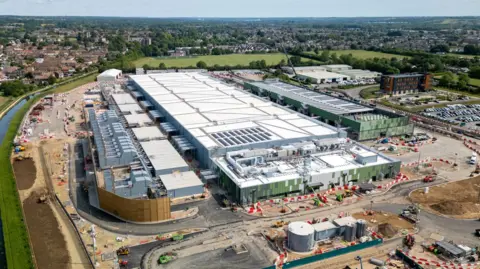
Data centres, which are sprawling industrial-scale facilities housing vast arrays of powerful computers, form the backbone of modern digital life. These facilities are indispensable for running an ever-growing suite of digital services, ranging from everyday streaming platforms and cloud computing infrastructure to cutting-edge artificial intelligence (AI) applications and even cryptocurrency mining operations. The UK government, keen to position the nation as a global leader in AI and digital innovation, has actively sought to attract substantial investment in these data centres, viewing them as vital engines for economic growth and technological advancement.
However, this fervent pursuit of digital leadership is increasingly colliding with pressing environmental anxieties. A primary concern revolves around the colossal amounts of electricity and water these facilities demand. Data centres require continuous, intensive cooling to prevent their powerful processors from overheating, a process that consumes prodigious quantities of both resources. Many existing and planned data centres also rely heavily on gas-powered generators, not just as backup systems for grid stability but often for primary power, raising alarms about a potential surge in carbon emissions. The landscape of the UK is witnessing a proliferation of new data centres, many of which are financed by major US tech corporations. Environmental campaigners are increasingly vocal about their fears that this unchecked expansion could substantially derail the UK’s progress towards its net-zero obligations.
The UK’s commitment to reducing carbon emissions to net zero by 2050 is enshrined in law, a landmark legislative change passed in 2019 with broad cross-party consensus. This legal imperative places a stringent responsibility on the government to ensure all sectors contribute to this overarching goal. In his letter, Miliband attempted to provide reassurance, stating that the government’s existing modelling "accounts for potential emissions from data centres through our projection of overall electricity demand growth, which reflects broader economic trends." Yet, he immediately qualified this by underscoring that "future demand from data centres, and interaction with wider energy system demands, remains inherently uncertain." This uncertainty, he explained, stems from various factors, including the unpredictable pace of technological innovation in computing and cooling, the unknown trajectory of AI adoption, and the evolving global energy landscape.
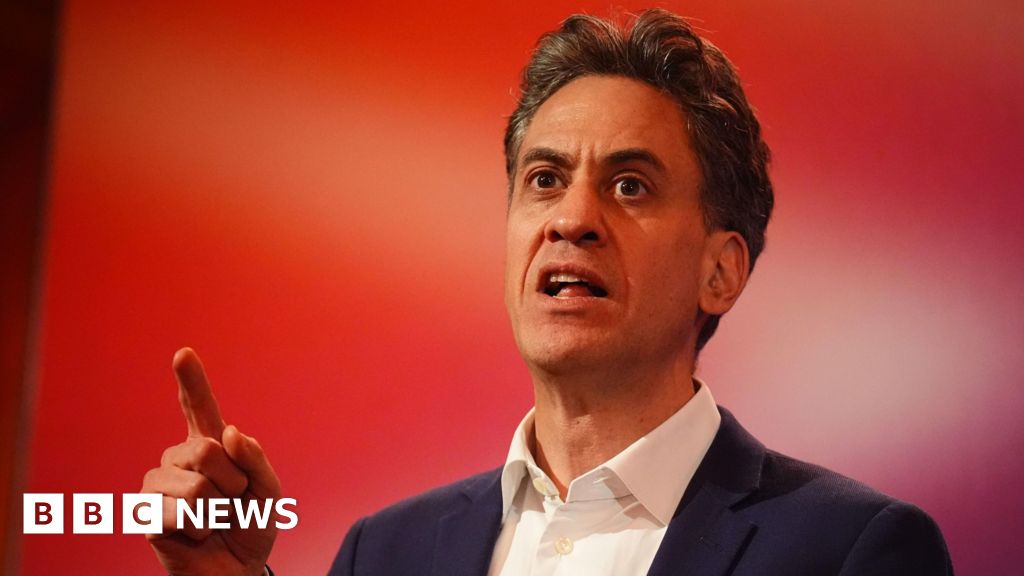
To address this acknowledged uncertainty, Miliband indicated that the departmental modelling would "test a range of trajectories to assess the potential emissions impact under different outcomes." This approach suggests a recognition of the dynamic nature of the challenge and a commitment to exploring various scenarios, although specifics of these trajectories were not detailed. This letter represents the most comprehensive explanation Miliband has offered to date regarding his department’s methodology for integrating the burgeoning impact of data centres into the national net-zero strategy.
The impetus for Miliband’s detailed response came from a direct inquiry by Toby Perkins, the chair of the influential Environmental Audit Committee (EAC). Perkins had specifically questioned whether the environmental footprint of data centres had been adequately factored into the government’s comprehensive net-zero plans. The EAC’s newly launched inquiry will delve deeply into critical aspects, including the projected energy and water consumption of data centres, the specific sources of their power, and the potential implications for the government’s legally binding net-zero targets.
Perkins articulated the committee’s rationale: "Will data centres power the UK’s economic growth? Perhaps. But what kind of implications will they have for energy and the environment?" He stressed the imperative for foresight, stating, "It is critical that we really consider what the impacts of data centres will be before we charge into approving them en masse." This highlights a growing tension between the government’s economic ambitions for digital leadership and its environmental commitments.
Reactions from advocacy groups and political opponents have been swift and varied. Donald Campbell, advocacy director at Foxglove, a prominent group of campaigning lawyers known for scrutinising tech power, expressed skepticism regarding Miliband’s letter. Campbell stated it "raises more questions than it answers," perceiving a contradiction between Miliband’s admission of "inherent uncertainty" and his claim that the impact had "already been taken into account." Campbell accused ministers of "happily pushing through the construction projects of Trump-supporting tech giants, without a thought for the environmental carnage," suggesting a perceived disconnect between policy and practical environmental consequences.

Conversely, Claire Coutinho, the Conservative shadow energy secretary, offered a different perspective, cautioning against overly restrictive measures. She argued that "barring data centres from the UK because of domestic net zero targets will do nothing to tackle climate change, but it will make us all poorer." Coutinho advocated for a "more rational approach" that would leverage the benefits of AI-driven growth while focusing on exporting clean technology and safeguarding natural environments both domestically and internationally. Her comments underscore the complex economic dimension of the debate, where innovation and growth are seen as intertwined with, rather than necessarily opposed to, environmental progress.
The rapid increase in electricity demand from data centres poses a significant challenge to the UK government’s ambitious goal of meeting 95% of its electricity demand with clean power by 2030. This surge could make an already challenging target considerably more difficult to achieve, potentially necessitating a reliance on more carbon-intensive energy sources in the interim. This month, Ofgem, the UK’s independent energy market regulator, issued a stark warning. Their report highlighted that a dramatic surge in demand for grid connections over the past year was "driven by the rapid growth" of data centres.
Ofgem’s report, a critical piece of evidence in this unfolding debate, revealed that it is currently aware of 140 proposed data centres, which collectively would require an astounding approximately 50 gigawatts (GW) of electricity. To put this figure into perspective, this represents 5GW more than the country’s current peak demand for electricity. If all these facilities were to come online, their energy consumption would be transformative for the national grid.
Friends of the Earth, a leading environmental campaign group, amplified these concerns, stating that if all the proposed data centres were to materialise, "they could consume more electricity each day than the entire country does now." Mary Stevens, a spokesperson for the group, remarked, "It’s no wonder the government views the future usage of data centres as ‘inherently uncertain’." She sharply criticised what she termed "this government’s growth-at-all-costs agenda," drawing parallels with past controversies. Stevens added, "Having greenlit rampant airport expansion, and now potentially a raft of data centres, it’s unclear how ministers will ensure the UK sticks to its legally binding climate targets and prevents rocketing emissions and water usage."
The debate surrounding data centres encapsulates a broader tension at the heart of the UK’s transition to a green economy: how to balance the undeniable benefits of digital advancement and economic growth with stringent environmental responsibilities. While the "inherent uncertainty" of data centre impact remains a key part of the official narrative, the scale of proposed developments and the warnings from regulators and environmental groups suggest that clarity and robust policy responses are urgently needed to ensure the UK can achieve its net-zero aspirations without compromising its digital future. The Environmental Audit Committee’s inquiry will be pivotal in shedding further light on these complex issues and shaping the future regulatory landscape for this critical, yet environmentally demanding, sector.




 George Anjay
 Nakalama John
 Roy Suryo
 atisusanti