Nana Banana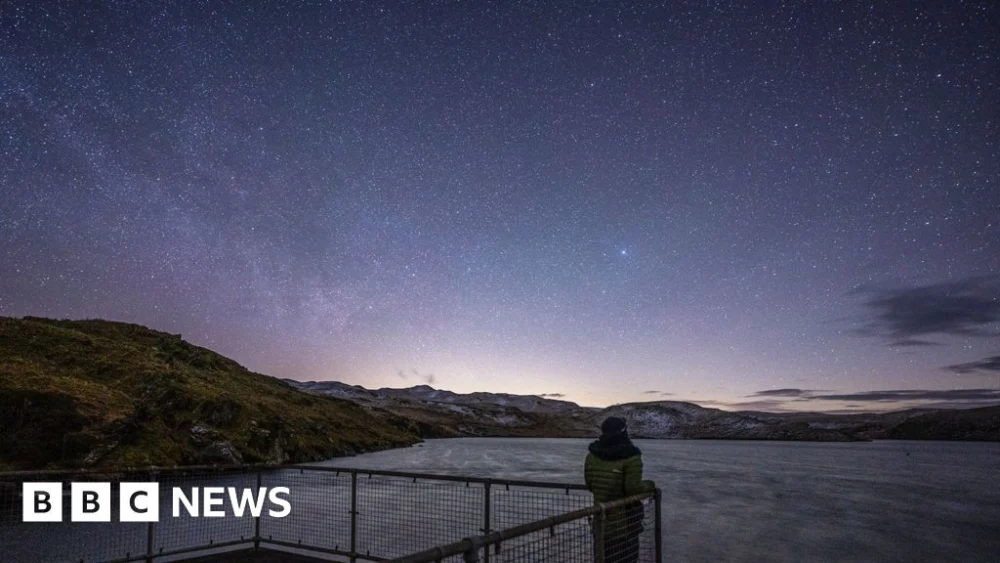
The initial impression was profound: an almost absolute darkness, so deep and encompassing it felt tangible. Arriving in the remote Ceredigion countryside, nestled deep in west Wales, the first thing that truly struck me was not the stars, but their conspicuous absence, hidden behind a blanket of persistent clouds. Four-and-a-half hours later, as the clock ticked past 22:30, patience was richly rewarded. The celestial curtain finally drew back, revealing a spectacle so breathtaking it felt like a physical blow. The night sky, once a canvas of oppressive grey, was now an infinite tapestry of glittering diamonds, stretching in every conceivable direction, a shimmering expanse that defied comprehension.
I was not alone in this mesmerising experience. Alongside me were Siân and James Harrison, two ardent astronomy enthusiasts who had journeyed from the bustling city of Cardiff, eager to immerse themselves in the pristine dark skies of Gogoyan, a tiny, secluded hamlet. Our mission was to truly connect with the cosmos, guided by Dafydd Wyn Morgan, the visionary behind Serydda, an astrotourism company dedicated to sharing the wonders of the night.
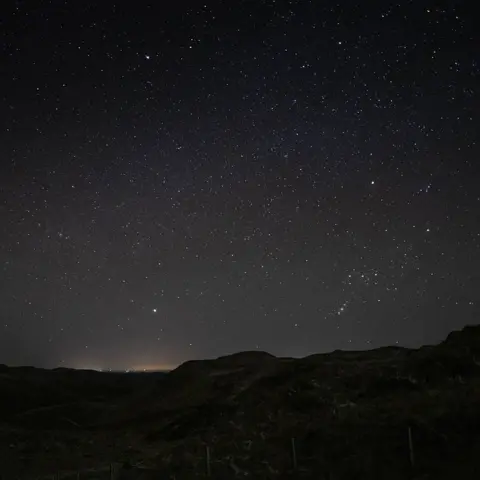
Lying comfortably on a blanket spread across the cool, damp ground, our gazes were drawn upwards. Jupiter, a brilliant beacon in the celestial sphere, shone with an almost otherworldly luminescence. Wyn Morgan, with a theatrical sweep of his green laser pointer that seemed to pierce the very fabric of the night, highlighted a trio of stars forming a distinct line. "I love Orion’s Belt," he declared, his voice filled with genuine passion. James, ever the knowledgeable enthusiast, eagerly chimed in, affirming it as his favourite constellation. He explained how the region around Orion’s Belt is a cosmic nursery, a dynamic zone where new stars are perpetually being born, a testament to the universe’s unending cycle of creation. "I’ll focus on something and it’ll be 150 million light years away," James mused, his voice laced with wonder. "I can’t quantify that." His words underscored the unfathomable scale of what we were witnessing, an expanse of space and time that humbled and inspired in equal measure.
As I absorbed the vastness above, a profound sense of calm washed over me. It was a feeling of deep connection, a primal link to generations past. I felt as though I was gazing upon the very same sky that my ancestors, millennia ago, would have seen – unblemished by artificial light, a constant source of navigation, inspiration, and existential reflection. This ancient, shared human experience resonated deeply within me, offering a rare moment of timeless tranquility.
Wyn Morgan’s "star bathing" sessions are designed not just to educate, but to evoke emotion. They typically involve setting up a smart telescope for closer views, but the core of the experience is lying on the ground, simply looking up, listening to stories of celestial myths and legends, and discussing the wonders on display. The practice draws parallels with "forest bathing" (Shinrin-yoku), a Japanese wellness trend from the 1980s that encourages immersing oneself in the atmosphere of the forest. Both practices emphasize sensory engagement and emotional well-being over scientific rigour.
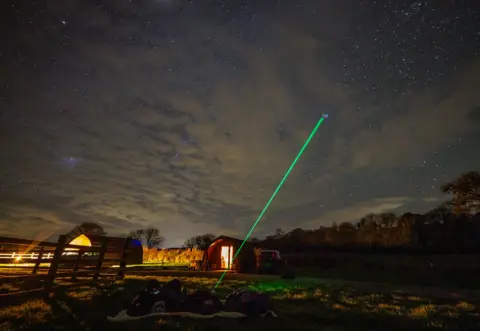
"It’s about the feeling at that precise moment," Wyn Morgan explained, "how it makes you feel emotionally," rather than demanding an encyclopedic knowledge of every star and constellation. However, he believes the immersive experience can spark a deeper interest, nurturing the confidence and curiosity needed to explore stargazing further on one’s own.
Serydda was founded in January 2025, born from Wyn Morgan’s years of collaborating on stargazing events with his close friend, the internationally acclaimed astrophotographer Alyn Wallace, who tragically passed away in 2024. Since its inception, Serydda has seen remarkable success, with 107 people attending its workshops, many returning two or three times to different dark sky locations across Wales. This growing interest is part of a broader trend: a Booking.com survey of 27,000 travellers revealed that 72% are considering visiting darker sky destinations for star bathing experiences in 2025. The yearning for true darkness and an unadulterated view of the cosmos is clearly on the rise.
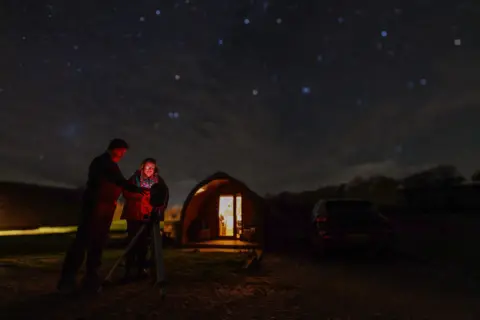
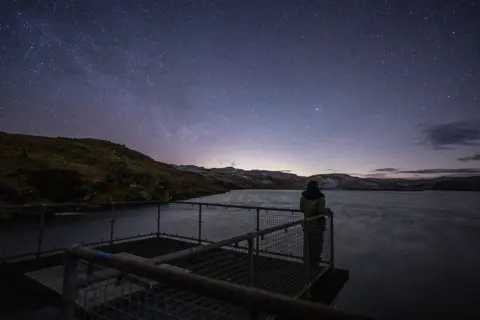
Our celestial journey continued as we drove deeper into the majestic Cambrian Mountains, eventually reaching the serene Llyn Teifi. Standing on a bridge, surrounded by the raw beauty of rocky outcrops and marshland, the air felt different. "Can you smell that?" Wyn Morgan asked, inviting us to take a deep breath. "Breathing in the night sky is something totally different: Cool, cold, fresh and pure – like drinking water from a well." It was a multi-sensory immersion, a testament to the holistic experience of being truly present in such an unspoiled natural environment. I felt a surge of childlike joy as several shooting stars streaked across the inky canvas, each fleeting burst of light a reminder of the universe’s dynamic beauty.
The human fascination with the night sky is as old as humanity itself. "It goes back to the very core of humanity," explained Dani Robertson, a dedicated dark skies officer for Snowdonia National Park. She highlighted a stark reality: a staggering 98% of the UK population lives under a sky significantly affected by light pollution. This means we are now witnessing the third or even fourth generation of people who have seen very few stars – if any at all – in their lifetimes.
Wales is at the forefront of preserving these celestial wonders, boasting two of the six UK national parks with International Dark Sky Reserve status. Robertson observes that people travel from distant urban centres, like London, to attend her events, simply because it’s their only chance to witness the true brilliance of the stars and experience genuine darkness. Her diverse range of offerings includes stargazing sessions in her mobile observatory, invigorating night hikes, tranquil night swims, and lively meteor watch parties. She recounted a particularly moving anecdote: a man, celebrating his 50th birthday, had always dreamed of seeing shooting stars. When he finally witnessed them streaking across the sky at one of her events, he was overcome with emotion, sobbing openly. For those accustomed to urban environments, she noted, "it’s hugely moving, it’s a once-in-a-lifetime opportunity." The demand is overwhelming; Robertson confirmed, "I can’t run enough events to keep up with demand. Every event has a huge waiting list."
The benefits of engaging with nature, particularly the vastness of the night sky, extend beyond mere aesthetics. Annalisa Setti, a senior lecturer of applied psychology and sustainability at University College Cork, explained how nature positively regulates our brain and body. "When we ‘get lost’ observing nature, we experience an optimal level of arousal. We are not bored, nor too excited – and that gives us the feeling of ‘positive relaxation’," she stated. Furthermore, research indicates that areas of the brain associated with "ruminating on negative thoughts" become less active when individuals are observing or immersed in nature. This profound sense of awe and connection can offer a powerful antidote to the stresses of modern life, fostering mental well-being and a broader perspective.
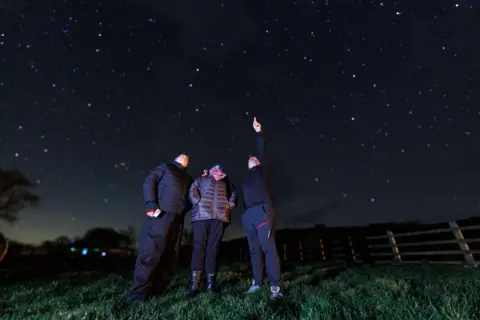
However, these invaluable benefits are under threat. While the night sky itself is not going anywhere, our ability to view it clearly is increasingly at risk. Robertson warned that light pollution is on the rise globally, impacting not only human circadian rhythms but also the delicate lives of countless other species. The indiscriminate scattering of artificial light disrupts nocturnal ecosystems, confuses migratory birds, and disorients insects, with far-reaching ecological consequences.
Yet, there is hope in simple solutions. Robertson advocates for the widespread adoption of dark-sky friendly bulbs, which direct light downwards and minimise glare. Turning off lights when they are not needed, and simply closing curtains at night, can collectively make a significant difference. These seemingly small actions contribute to a larger effort to reclaim our night skies, ensuring that future generations can also experience the wonder and inspiration that comes from gazing upon an unpolluted cosmos. If children cannot see stars, Robertson poignantly remarked, they cannot be inspired by them – a loss not just for individual imagination, but for scientific curiosity and cultural heritage.
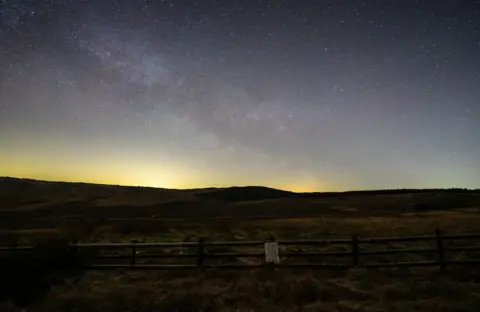
Standing in the silent mountains at approximately 02:00, a faint, ethereal cloud-like formation began to materialise in the velvety blackness. It was only the palpable excitement radiating from Siân and James that truly made me grasp what I was seeing – it wasn’t a cloud, but something infinitely more profound: the Milky Way itself. We stood in reverent silence, our eyes fixed on the majestic river of gas, dust, dark matter, and billions upon billions of stars that constitutes our home galaxy. The sheer scale and beauty were overwhelming, a moment of pure, unadulterated awe. "To be able to look at these things and appreciate the beauty," James articulated, his voice hushed with wonder, "the majesty and the scale of it – it’s just amazing." It was a moment etched forever in memory, a powerful reminder of our tiny place in a universe of infinite splendor.


 Roy Suryo