Nakalama John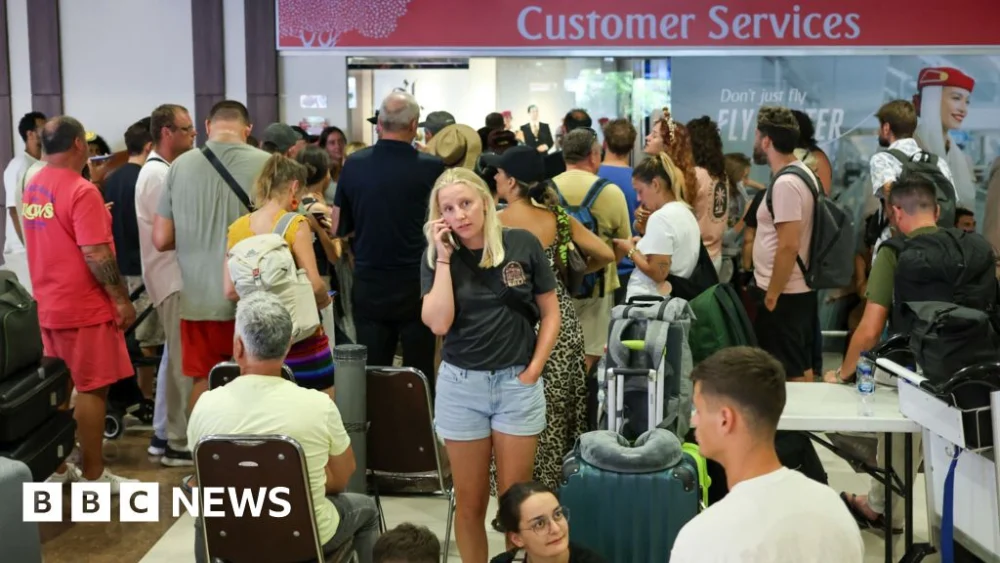
The skies over the Middle East fell silent for many as major airlines initiated widespread cancellations and diversions following a perilous escalation of tensions, ignited by US and Israeli strikes against Iran and subsequent Iranian retaliatory attacks across the Gulf. This dramatic surge in geopolitical instability has triggered an unprecedented response from global aviation and governments, leaving tens of thousands of passengers stranded and raising profound concerns about regional security.
In the immediate aftermath of the initial US-Israeli military actions targeting Iranian facilities, which President Donald Trump cited as a response to Iran’s failure to curtail its nuclear program and the broader aim of regime change, Iran swiftly launched a barrage of retaliatory missile and drone attacks. These counter-strikes were aimed at Gulf states hosting US military assets and perceived Israeli interests, plunging the region into a state of high alert. As a direct consequence, a domino effect of airspace closures cascaded across Iran, Israel, Iraq, Qatar, Bahrain, Kuwait, Syria, and the United Arab Emirates (UAE) on Sunday morning. Saudi Arabia implemented partial closures, while Jordanian and Lebanese airspace, though technically open, saw severely limited flight activity.
The ripple effect on international air travel was immediate and severe. British Airways and Virgin Atlantic were among the first European carriers to ground flights, while major regional hubs, particularly Dubai International (DXB) and Al Maktoum International (DWC) in Dubai, experienced complete operational shutdowns. Emirates, one of the world’s largest long-haul carriers, announced the suspension of all its operations in and out of Dubai until 15:00 local time (13:00 GMT) on Sunday, citing the extensive airspace closures. Similarly, Etihad, based in Abu Dhabi, halted flights until 14:00 local time, causing significant disruption for travelers connecting through these vital aviation arteries. Qatar Airways also confirmed a temporary suspension of flights to and from Doha, with operations slated to resume later in the day at 19:00 local time (16:00 GMT).
Beyond the immediate suspensions, the long-term impact on flight schedules began to materialize. British Airways, for instance, cancelled services to Tel Aviv and Bahrain until Wednesday, indicating a projected multi-day disruption. The airline warned that its services between London Heathrow and key regional destinations such as Abu Dhabi, Amman, Bahrain, Doha, Dubai, or Tel Aviv could be affected for several days, forcing passengers to seek alternative arrangements or face prolonged delays. Virgin Atlantic suspended its Heathrow-Riyadh service on Sunday, following earlier cancellations of Heathrow-Dubai flights on Saturday and Sunday. The airline also cautioned that flights to India, Saudi Arabia, and the Maldives would likely incur longer travel times due to extensive rerouting to circumvent the affected areas. Flight tracking data vividly illustrated this altered landscape, showing aircraft between Europe and Asia undertaking significant detours, primarily via Saudi Arabia or the Caucasus region, adding hours to journey times and increasing fuel costs for airlines.
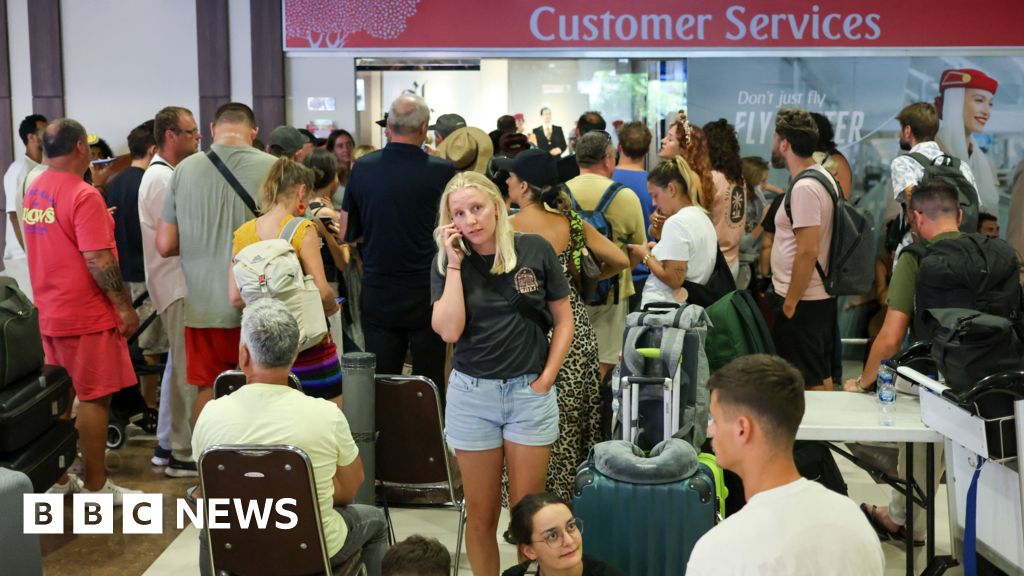
The human cost of this disruption was palpable, with countless personal stories of frustration and uncertainty emerging from airports worldwide. Sarah Short, a British holidaymaker attempting to return to Heathrow from Dubai, vividly recounted the moment her flight was about to taxi when the pilot announced, "We have some bad news – we’re not going anywhere." She, along with hundreds of others, endured over three hours stuck on the tarmac, a testament to the abruptness of the airspace closures. Elsewhere, Emma Belcher and her husband Vic, on their way back to Heathrow from a Maldives holiday via Dubai, found their connecting flight cancelled. "There is absolutely no information about when they might open airspace so we don’t know how long we’ll be here," Emma lamented, expressing the profound disappointment of being separated from their children for longer than anticipated.
The security situation on the ground was equally alarming. John Henry, a 71-year-old from Northampton on holiday in Qatar, experienced the immediacy of the threat. While at a shopping centre, an air raid alert sounded, followed by a "thud and felt a tremor," prompting a hurried evacuation of the premises. Qatar’s defence ministry later confirmed it had intercepted Iranian missiles after explosions were heard in Doha, underscoring the direct danger faced by civilians in the targeted Gulf states. Similar reports emerged from the UAE, which intercepted Iranian missiles and drones, while footage circulated showing a US facility in Bahrain reportedly being hit. Kuwait also confirmed it had been targeted by Iranian projectiles, and explosions were heard at Erbil airport in Iraq, indicating the widespread nature of Iran’s retaliatory strikes.
In response to the escalating peril, governments issued stern travel advisories. The UK Foreign Office escalated its warnings, now advising British citizens against "all travel to Israel and Palestine" and against "all but essential travel to Bahrain, Kuwait, Qatar, and the United Arab Emirates." Those already present in these Gulf nations were strongly advised to shelter in secure locations and register their presence with the embassy to receive direct updates. Similar warnings were issued for British nationals in Saudi Arabia, who were told to "remain indoors in a secure location," while those in Jordan, Syria, Lebanon, Iraq, Yemen, Turkey, and Oman were instructed to "remain vigilant" and take shelter if advised. These warnings reflected a heightened assessment of risk, encompassing not just direct military action but also potential collateral damage, missile debris, and the general instability that such a conflict brings. Other nations, including the United States, Canada, Australia, and various European Union members, issued parallel advisories, urging their citizens to exercise extreme caution or to reconsider travel to the affected areas.
The broader implications of this crisis extend far beyond immediate travel disruptions. The audacious nature of the US-Israeli strikes on Iranian soil, followed by Iran’s calculated retaliation against regional targets, has shattered any illusion of a contained geopolitical rivalry. It has brought the Middle East to the precipice of a broader conflict, with potential ramifications for global oil markets, international trade routes, and diplomatic relations. Leaders worldwide quickly moved to condemn the escalation and call for restraint. UK Prime Minister Sir Keir Starmer, who spoke to President Trump on Saturday, affirmed that British planes were "in the sky" over the Middle East as part of a defensive operation "to protect our people, our interests and our allies." He joined the leaders of France and Germany in a joint statement, urging Iran to refrain from "indiscriminate" strikes, highlighting the international community’s desperate efforts to de-escalate the volatile situation.
The aviation industry, still recovering from previous global crises, now faces another formidable challenge. The extensive rerouting of flights, the financial costs of cancellations, accommodating stranded passengers, and the inherent safety concerns of operating near active conflict zones will place immense strain on airlines and air traffic control systems. While the immediate focus remains on passenger safety and clearing the backlog of delayed and cancelled flights, the long-term impact on traveler confidence and regional air connectivity remains to be seen. The unfolding events underscore the fragile interconnectedness of global travel and security, where geopolitical tremors in one region can send shockwaves across continents, leaving a trail of disruption and uncertainty in their wake.




 Roy Suryo
 George Anjay
 Ramos Leo