
 Nakalama John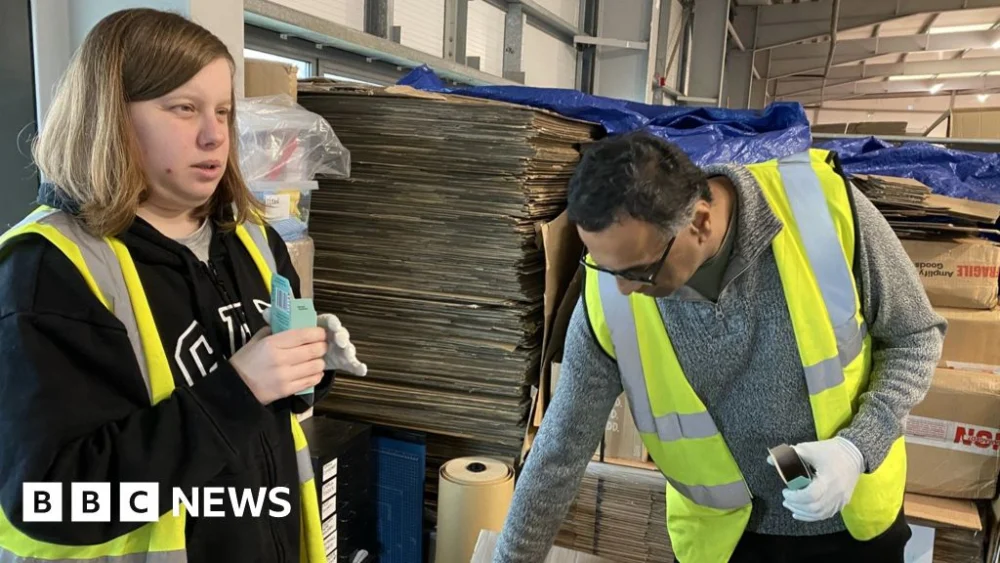
Clarity’s storied past included patronage from figures as prominent as Queen Victoria and the beloved actress Joanna Lumley, underscoring its historical significance and the widespread respect it commanded. However, this venerable institution was rocked by a colossal shortfall in its pension fund, leading to its eventual collapse in 2020. In the aftermath, a man named Nicholas Marks acquired the company out of administration, offering a glimmer of hope with promises to sustain the business and its vital social mission. Tragically, these assurances proved hollow.
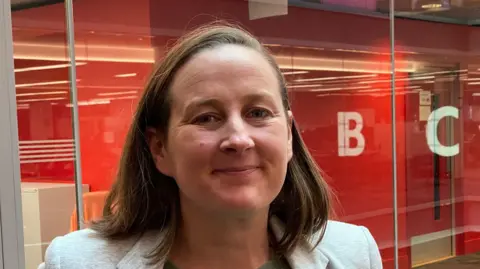
Camilla Marcus-Dew, who served as Clarity’s head of commercial, watched in dismay as Marks’ true intentions became clear. "He wasn’t interested in growing jobs for disabled people and even protecting the jobs for the disabled people that we had working with us, which was truly heart-breaking to watch unfold," she recounted. The core ethos of Clarity – providing meaningful employment for disabled individuals – was systematically dismantled. Workers, many of whom were blind or visually impaired and had dedicated years to the enterprise, found themselves abruptly laid off, denied the wages, furlough payments, and redundancy compensation they were legally owed. The factory doors closed for good, and the company was ultimately shut down, leaving a staggering debt of more than £400,000 to 84 employees.
The betrayal deepened when Marks, facing scrutiny, was taken to court for allegedly stealing his workers’ pensions. In a further act of perceived retaliation, he launched legal action against two employees, including Marcus-Dew, who had bravely spoken out about the company’s downfall. Following a BBC report highlighting the plight of Clarity’s former employees, the legal battle dragged on, a testament to the resilience of those fighting for justice. Eventually, after considerable personal and financial strain, the baseless case against Marcus-Dew and her colleague was thrown out of court, offering a small measure of vindication amidst the ruins of their former workplace.
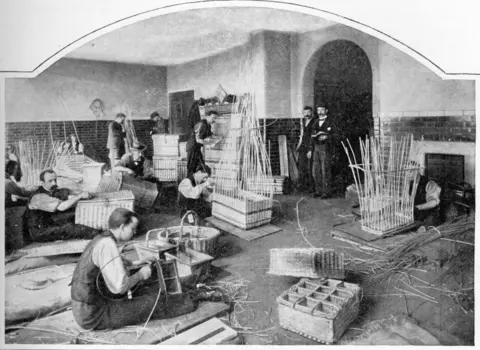
A black and white photograph from around 1901 depicts blind men in waistcoats meticulously weaving baskets in a London factory warehouse run by General Welfare of the Blind, the precursor to Clarity. This image serves as a powerful reminder of the enterprise’s profound historical impact and its role in challenging societal norms regarding disability and employment. The sight of these men, engaged in skilled labour, underscores the century-long commitment to empowerment that was so cruelly undermined.
Yet, from the ashes of Clarity’s demise, a new mission began to take shape. Camilla Marcus-Dew, undeterred by the personal and professional setbacks, chose to channel her invaluable experience and unwavering commitment into a fresh endeavour. Recognizing the immense need for inclusive employment opportunities, she took what she had learned from Clarity’s inspiring beginnings and its tragic end, and started anew.

In a vibrant corner of a sprawling warehouse in London, provided by the homelessness charity Crisis, a different kind of enterprise is now thriving. Here, a dedicated group of workers gathers weekly to meticulously pack soap products for Amplify Goods, the new business co-founded by Marcus-Dew and Pasha Michaelsen. Amplify Goods stands as a beacon of hope, providing vital paid work experience at the London Living Wage to individuals from marginalized communities: homeless people, disabled people, and prison leavers. This expanded focus reflects a broader understanding of barriers to employment, aiming to reach those who often face the greatest challenges in entering or re-entering the workforce.
Pasha Michaelsen eloquently articulates the profound psychological impact of long-term unemployment: "The longer you’re out of employment, you start to lose confidence that you do have something to offer even just in being yourself." Amplify Goods directly combats this erosion of self-worth by offering not just a job, but a supportive environment where individuals can rebuild their confidence, acquire new skills, and regain a sense of purpose and belonging.
Among the dedicated team at Amplify Goods is Taylor, a young woman who is autistic and has verbal dyspraxia. Working one day a week, Taylor finds immense value in her role. "I like to get out of the house so I can get money and buy my own stuff," she explains, highlighting the economic independence and personal agency the job provides. Beyond the financial aspect, Taylor emphasizes the skill development: "I learn to pack the soap box properly, so that it could be on my CV." This practical experience is crucial for building a professional resume and opening doors to future employment opportunities.
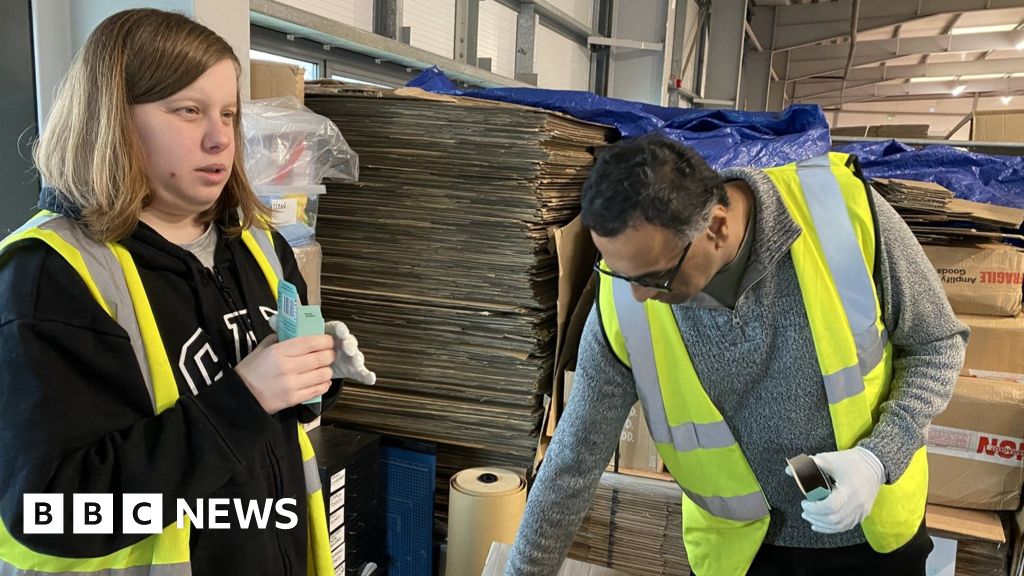
For Jentital, Amplify Goods has provided an even more transformative experience – his very first job. His journey to work, traversing the vast expanse of London, was initially daunting. However, the confidence gained through his employment has empowered him to undertake this journey independently, utilizing the Tube for the first time. "I like coming here, learning new skills," he beams, his words echoing the sentiment of personal growth and newfound independence that Amplify strives to foster.
Amplify Goods operates on a robust business model, primarily targeting businesses for their washroom supplies or as thoughtful corporate gifts. The products, however, are also readily available to the public through Amplify’s accessible online website. A core tenet of the company’s philosophy is its unwavering commitment to minimizing environmental waste. The soap bars are thoughtfully packed in reused, rather than merely recycled, cardboard, and the liquid soaps are offered in elegant, refillable bottles, encouraging a circular economy and reducing single-use plastic consumption.
Like Clarity before it, Amplify is structured as a social enterprise. This means it functions as a viable business, but its paramount objective is its social purpose. More than half of its profits are dedicated to supporting good causes, directly reinvesting in its mission to create opportunities for those who need them most. Camilla Marcus-Dew passionately articulates this distinction: "We’re not selling things as fast as we can and giving some money away. We’re putting people who want work at the centre." This person-centric approach ensures that the social impact is not an afterthought but the very driving force of the enterprise.
Amplify’s tangible impact is evident in success stories like that of Yusuf Hussein. After losing his driving licence, his job as a taxi driver, and experiencing the breakdown of a significant relationship, Yusuf found himself in a precarious position. Amplify Goods offered him a lifeline, providing 10 days of invaluable work experience. Crucially, they connected him with Standing Tall, an organization that offered him a home for 12 months and comprehensive support to prepare him for re-entry into the workforce. Yusuf’s journey culminated in a new role in customer service for Network Rail at the bustling Waterloo Station. "They did give me assurance like ‘OK, it’s not the end of the life, we’ll help you and you’ll get somewhere’," he reflects, highlighting the crucial emotional and practical support he received.
Last year alone, Amplify Goods proudly created over 1,000 hours of meaningful work experience. While still in its early stages, the ambition of Marcus-Dew and her team is palpable. They hope to make a significant and lasting impact on the lives of many more individuals. "It was a massive loss for the disability sector when Clarity went under," Marcus-Dew acknowledges. "So, will we ever have businesses again that are of that scale, that are public facing, doing those amazing things? Maybe not, but we’re doing it in our own way now at Amplify Goods." Her vision is not to replicate Clarity’s exact model but to evolve its mission, adapting to contemporary needs and challenges.
Marcus-Dew concludes with a powerful and inspiring call to action, reminding everyone of their potential to contribute to positive social change: "I think often people go: ‘I don’t have influence to create jobs for homeless and disabled people’. I promise you do. I promise you do, through the change of something like soap in a washroom." This emphasizes that everyday consumer choices, when directed towards social enterprises like Amplify Goods, can collectively weave a stronger, more inclusive societal fabric, ensuring that the mission of empowerment and dignity continues to thrive, even after the collapse of its pioneering predecessor.




 Ramos Leo
 Nana Banana
 Roy Suryo
 atisusanti
 George Anjay