
 Ramos Leo
The vast majority of those currently impacted are holidaymakers, individuals transiting through major regional hubs, or professionals on business visits, all caught unexpectedly in a rapidly deteriorating security situation. Foreign Office sources, while emphasizing that no mass evacuation is immediately imminent, revealed that the government is actively preparing comprehensive contingency plans for various potential scenarios, particularly if commercial flight operations remain suspended for an extended period. This proactive stance highlights the seriousness with which the UK government views the current crisis and its potential humanitarian implications.
British nationals situated in Bahrain, Israel, Kuwait, Palestine, Qatar, and the United Arab Emirates have been specifically urged to register their details with the Foreign Office. This registration process is crucial for them to receive timely and critical updates, safety advice, and information regarding any potential government assistance. While the government has utilized similar registration schemes in past international crises, the sheer volume of individuals and the broad geographical scope encompassed in this particular instance are unparalleled, presenting a significant logistical and diplomatic challenge.
Foreign Secretary Cooper articulated the gravity of the situation during an interview with BBC Breakfast, describing it as "deeply stressful" for all those affected. She reiterated the paramount importance for all British nationals in the region to meticulously follow local advice issued by authorities in their respective countries, which in most cases has been to "shelter in place" due to the unpredictable nature of the attacks. When pressed on the possibility of a government-led evacuation effort, Cooper detailed ongoing close contact with key stakeholders, including the travel industry, major airline companies, airport authorities, and the governments of the affected countries in the region.
She elaborated that the government’s primary objective, in line with past responses to similar international incidents, is to collaborate effectively with commercial airlines to facilitate the safe return of citizens via regular flight operations whenever feasible. However, she stressed the critical role of the registration process: "But we will need to provide updates for people as we go along… That’s why we’re encouraging people to register their presence so we know where they are so we can get information to them swiftly." This ensures that the Foreign Office can maintain an accurate understanding of its citizens’ locations and needs, enabling a more targeted and effective response.
The human element of this crisis was poignantly illustrated by the ordeal of Layla Hamood and Matthew McGinn, who, along with their three-year-old son, found themselves stranded in Dubai while on what was meant to be their honeymoon. The family has been confined to their hotel since the onset of the attacks, experiencing firsthand the terror of the unfolding events. "It’s been terrifying to be honest," Layla recounted to BBC Breakfast, her voice conveying a palpable sense of fear and uncertainty. "The bombing hasn’t stopped. We can hear the missiles." Their desperate situation encapsulates the widespread anxiety among those trapped, as Layla added, "No one knows what to do. We’re in a limbo, we don’t know how we can get home."
The widespread impact of the regional instability on air travel has been significant. According to data compiled by analytics company Cirium, nearly half of all flights scheduled to depart from London Heathrow for destinations in the Middle East on Sunday were cancelled. Major carriers such as British Airways and Virgin Atlantic have confirmed the cancellation or rerouting of some of their flights, adjusting their schedules in response to the volatile airspace conditions. Further exacerbating the travel woes, Qatar Airways announced on Monday morning that all its flights remained suspended indefinitely, while Emirates, a key player in regional aviation, confirmed the suspension of all operations to and from Dubai until 11:00 on Tuesday, impacting thousands of passengers globally.
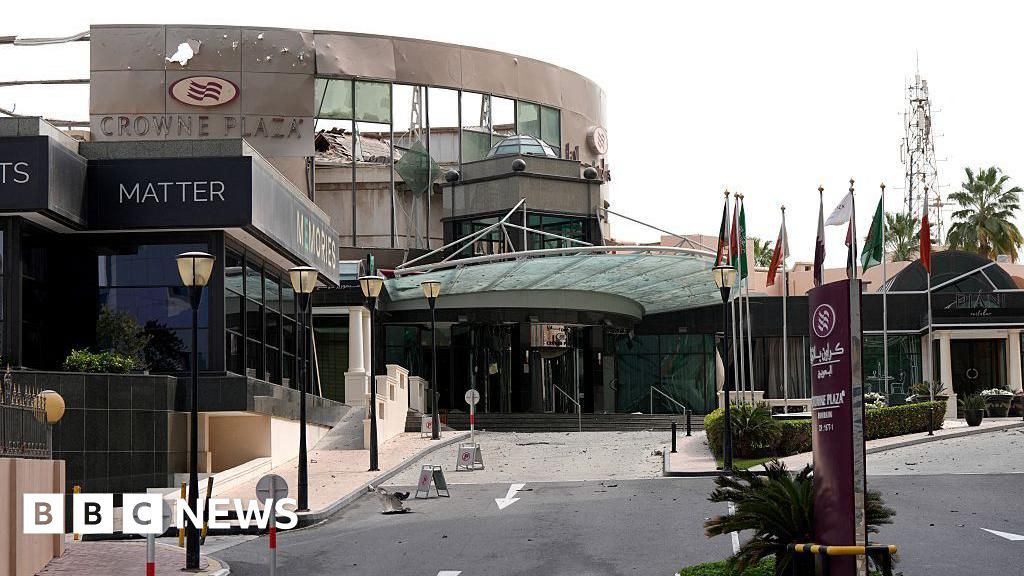
The current wave of Iranian strikes represents a direct retaliation to earlier US and Israeli military actions in the region. These retaliatory strikes have targeted various US assets and countries hosting a significant US military presence, including Bahrain, Qatar, the United Arab Emirates, Kuwait, and Iraq. The consequences of these strikes have been tragically tangible, with reports confirming one fatality and eleven injuries at airports in Dubai and Abu Dhabi since the hostilities intensified. The damage extends beyond military installations, affecting civilian infrastructure and disrupting daily life.
The ripple effect of the Middle East crisis has also extended to nearby regions. EasyJet, a popular budget airline, announced the cancellation of all its flights to and from Cyprus on Monday, illustrating the broader geographical reach of the security concerns. This decision followed a concerning incident at Paphos Airport, the island’s second civilian airport, which had to be evacuated earlier in the day after a drone was detected in its airspace. While no casualties were reported and the UK’s Ministry of Defence confirmed that its base in Cyprus sustained only "minimal damage," the incident prompted a precautionary measure: family members of military personnel stationed at the base were relocated to alternative accommodation, underscoring the elevated threat perception and the need for heightened security protocols across the wider region. The interconnectedness of regional security means that even seemingly peripheral locations can quickly become affected by the central conflict, adding layers of complexity to the challenges faced by international governments and their citizens abroad. The sheer number of Britons seeking assistance is a stark reminder of the global implications of the escalating tensions in the Middle East.




 Roy Suryo

 Nakalama John
 atisusanti
