
 Ramos Leo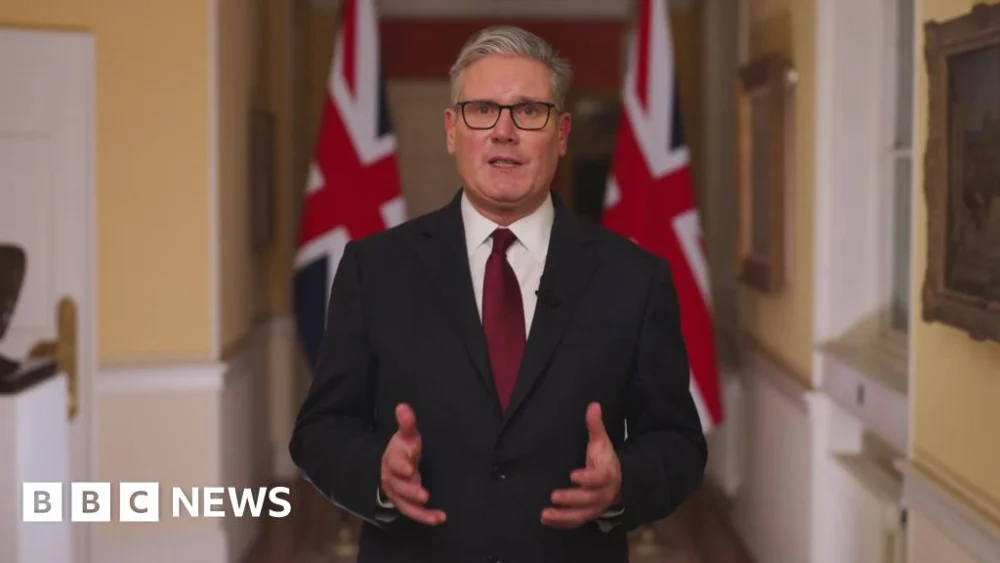
The Prime Minister underscored the conditional nature of this agreement, asserting that the UK’s involvement is strictly limited. He emphasised that the UK has drawn crucial lessons from the "mistakes of Iraq," making it clear that Britain was not party to the initial US-Israeli strikes on Iran and will not participate in any offensive actions going forward. Instead, the permission granted is for a "specific and limited defensive purpose" – to neutralise Iran’s missile capabilities "at source."
Sources close to the matter indicate that the US is likely to deploy assets from two key British military installations: RAF Fairford in Gloucestershire, England, and Diego Garcia in the Indian Ocean. Both bases possess a history of supporting long-range heavy bombing missions and strategic operations, making them critical staging points for such an undertaking. RAF Fairford, known as a forward operating location for US Air Force heavy bombers, offers a European launchpad, while Diego Garcia, a remote atoll, provides a strategic projection of power into the Indian Ocean and Middle East. The selection of these bases highlights their geographical and logistical importance in any potential retaliatory or defensive military action in the region.
The decision follows a series of provocative actions attributed to Iran. Investigations are currently underway after an attack on RAF Akrotiri in Cyprus, which occurred around midnight local time (22:00 GMT). While the Ministry of Defence reported "minimal damage," the incident underscores the direct threat posed by Iranian capabilities to British interests and personnel. This attack on a British base served as a stark reminder of the widening scope of the conflict.
In a video statement released on Sunday, Sir Keir articulated the rationale behind the UK’s decision, framing it within the context of "collective self-defence" for allies and the paramount need to protect British lives. He vehemently accused Iran of pursuing a "scorched-earth strategy" in the region, destabilising its neighbours and endangering international shipping and air routes. He stressed that the move was in accordance with international law, and the UK government has taken the unusual step of publishing a summary of its legal advice to bolster transparency and legitimacy.
The escalation began early Saturday when the US and Israel initiated attacks on Iran, with former US President Donald Trump publicly encouraging the Iranian populace to overthrow their government. In response, the Iranian regime has launched a series of attacks targeting US assets and countries hosting a US military presence, including Bahrain, Qatar, the United Arab Emirates, Kuwait, and Iraq. Sir Keir revealed that Iranian strikes have "hit airports and hotels where British citizens are staying," and critically, on Saturday, an Iranian missile "hit a military base in Bahrain, narrowly missing British personnel." These incidents, he argued, necessitated a robust defensive posture.
Sir Keir elaborated on the immediate threat, stating that British people, including members of the armed forces and allies, were being placed at "huge risk" by increasingly "reckless" Iranian strikes. He detailed that "our partners in the Gulf have asked us to do more to defend them," and with at least 200,000 British citizens – residents, holidaymakers, and transit passengers – currently in the region, the government’s duty to protect them was paramount. The Prime Minister’s statement on Sunday began by reiterating that "it remains the case" that the UK is "not involved in the strikes on Iran," yet acknowledged that British aircraft were "in the sky" in the Middle East as part of defensive operations, successfully intercepting Iranian strikes.
The Prime Minister explicitly stated: "The only way to stop the threat is to destroy the missiles at source, in their storage depots, or the launchers which are used to fire the missiles." He continued, "The United States has requested permission to use British bases for that specific and limited defensive purpose. We have taken the decision to accept this request to prevent Iran firing missiles across the region, killing innocent civilians, putting British lives at risk, and hitting countries that have not been involved." The Foreign Office has subsequently urged British nationals in Bahrain, Israel, Kuwait, the Palestinian territories, Qatar, and the UAE to register their presence to receive crucial updates and assistance. Sir Keir concluded that this move represented the "best way to eliminate the urgent threat and prevent the situation spiralling further."
The decision to grant base access did not come without political scrutiny and debate, both domestically and internationally. Former US President Donald Trump, in an interview with the Telegraph, expressed surprise at the delay in the UK accepting the US request, remarking, "That’s probably never happened between our countries before." He speculated about Sir Keir, saying, "It sounds like he was worried about the legality." Responding to Trump’s comments, the Prime Minister’s official spokesman affirmed the UK and US as "staunch allies," attributing the change in stance to Iran striking British interests.
On the domestic front, the government faced criticism from various political spectrums. Kemi Badenoch, a prominent Conservative leader, accused the government of being "too scared" to adopt a stronger stance against Iran. She suggested that Labour’s hesitancy stemmed from concerns that some of its voters were "swayed by conflicts in the Middle East, not the British national interest." Badenoch asserted, "So we watch our prime minister and cabinet ministers squirm and obfuscate in interviews, because they cannot say what needs to be said because too many of their voters do not want to hear it," implying a politically motivated timidity.
Conversely, Liberal Democrat leader Sir Ed Davey raised concerns about potential UK complicity in "illegal military action" and demanded that Members of Parliament be given a parliamentary vote on allowing the US to use British bases. This call for democratic oversight reflects a historical tension in the UK regarding executive decisions on military engagement, particularly after the controversial Iraq War. Reform UK leader Nigel Farage, while generally supportive of a firmer line against Iran, offered a backhanded compliment, describing the decision as "better late than never" but characterising Sir Keir as "a follower, not a leader." Meanwhile, Green Party leader Zack Polanski condemned the move outright, stating that Sir Keir had "jumped into yet another Middle East illegal war," echoing the concerns of anti-war activists and those wary of deeper entanglement in regional conflicts.
It was reported last month that the British government had initially withheld permission for the US to use UK military bases to support potential US strikes on Iran. This earlier reluctance underscored the cautious approach the UK was attempting to maintain. Donald Trump had previously indicated that it "may be necessary" for the US to use RAF Fairford and Diego Garcia for operations if Iran "decides not to make a deal," foreshadowing the current situation.
The UK government has maintained a careful diplomatic line, not explicitly stating whether it backs the US-Israeli strikes on Iran or if it considers them legal. Sir Keir stated that it was for the US to articulate the legal basis for its own actions. However, he affirmed a shared strategic objective with allies, declaring, "we share, however, the primary aim of all allies in the region and the US that Iran should never have a nuclear weapon."
In a crucial public disclosure, the UK government released a "summary of its own legal position" late on Sunday regarding the legality of allowing the US to use its bases. The statement asserted: "The UK and its allies are permitted under international law to use or support force in such circumstances where acting in self-defence is the only feasible means to deal with an ongoing armed attack and where the force used is necessary and proportionate." This legal justification underscores the UK’s interpretation of its actions as a defensive measure aimed at de-escalation by neutralising immediate threats.
Further solidifying the international consensus among key European allies, the UK, France, and Germany issued a joint statement on Sunday evening. The communiqué accused Iran of carrying out "indiscriminate and disproportionate" strikes, signalling a united front against Tehran’s recent actions and lending diplomatic weight to the necessity of defensive measures. This collective condemnation highlights the international community’s growing concern over Iran’s regional behaviour and its implications for global stability.




 Roy Suryo

 Nakalama John
 atisusanti
