
 Ramos Leo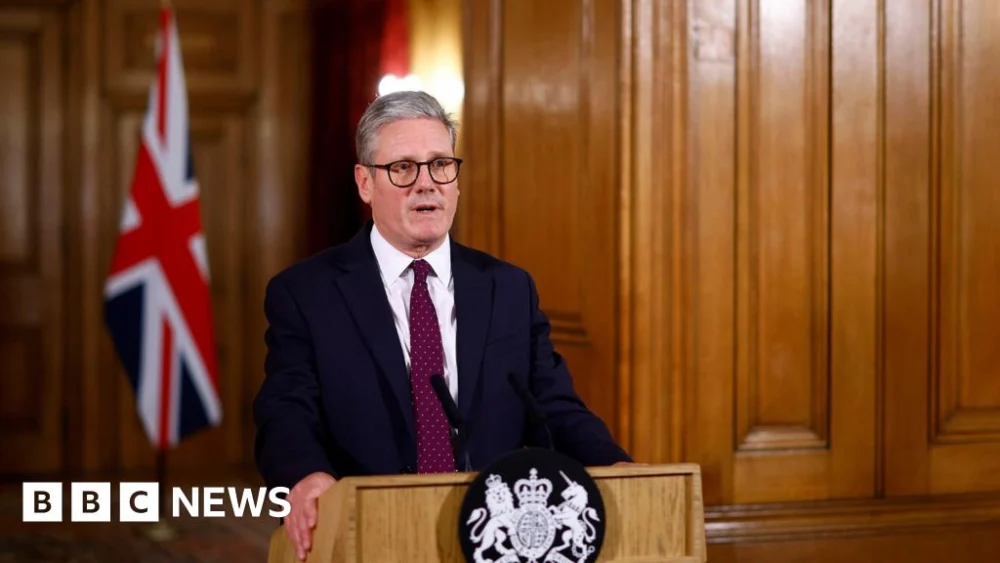
Crucially, Starmer’s statement emphasized the national interest, concluding with a powerful triple invocation: "This is the British government, protecting British interests and British lives." This seemingly obvious assertion was, in fact, a carefully calibrated move to delineate a uniquely British foreign policy stance, distinct from the broader and often more aggressive aspirations for regime change historically championed by the United States and Israel. The subtle yet significant act of not participating in or directly assisting the initial wave of US strikes against Iran had already begun to carve out this distinction. While government ministers have, perhaps tactically, refrained from explicitly declaring those initial American strikes "wrong" or "unlawful" – a logical corollary many observers expected – their non-participation spoke volumes about a desire to avoid direct entanglement and preserve legal ambiguity.
The prime minister’s statement was particularly vital as it announced a nuanced, yet new, position. While reaffirming that the UK would not join "offensive action" against Iran, Starmer declared a significant shift: the UK would now permit the United States to utilize joint UK-US bases for specific, targeted strikes against Iran. This decision, he explained, was a direct response to what he termed Iran’s "scorched earth strategy" following earlier US and Israeli actions. The stated purpose of these newly sanctioned strikes is narrowly defined: to degrade Iran’s capacity to launch missile and drone attacks across the region, especially in Gulf countries where substantial numbers of British citizens reside. This, government officials argue, fundamentally differs from earlier, broader US requests to use British bases for more generalized strikes on Iran, which Sir Keir had previously resisted. The distinction hinges on the defensive nature of the permitted strikes, aimed solely at neutralizing immediate threats and protecting regional stability, rather than precipitating a wider conflict or regime change.
However, this finely-tuned distinction is destined for intense scrutiny and significant strain within the House of Commons, attracting criticism from across the political spectrum. From one side, a chorus of opposition, led by the Greens and Liberal Democrats, and echoed by a significant faction within Labour, will lambaste the government for allowing any use of British bases to strike Iran. Their concerns revolve around the "slippery slope" argument: that even limited permission inevitably enmeshes the UK deeper into a burgeoning regional conflict. They will question the legality and morality of these strikes, particularly when viewed within the broader context of American actions that some perceive as designed to provoke regime change in Tehran. Fears of mission creep and an erosion of Britain’s independent foreign policy will dominate this line of critique, drawing parallels with past interventions that proved disastrous.
Conversely, a powerful contingent comprising Conservatives and Reform UK, alongside another segment of Labour MPs, will challenge the government for not pursuing a more robust and proactive approach. These voices will argue that the UK should be doing more to support strikes aimed at toppling a regime in Iran that has, in their view, consistently menaced the region, destabilized international shipping lanes, and even threatened British citizens both abroad and domestically. They will advocate for stronger allied action to neutralize what they perceive as a grave and escalating threat, questioning the efficacy of a purely defensive posture.
The problem for Sir Keir is that this full spectrum of deeply held, often irreconcilable, positions is not merely represented by distinct parties, but is acutely present within the Labour Party itself. While partly an inevitable consequence of leading a large parliamentary party, it also reflects Labour’s enduring internal divisions on foreign policy, which have only intensified since the seismic events of 7 October 2023. This makes the Middle East a particularly delicate and treacherous terrain for the prime minister, especially given recent electoral signals. The Green Party’s victory in the Gorton and Denton by-election, for instance, demonstrated unequivocally that foreign policy, and specifically Britain’s stance on the Middle East, can significantly sway domestic electoral outcomes. This by-election result, combined with the general public’s historically negative view of British military involvement in the Middle East post-Iraq, adds another layer of pressure to Starmer’s careful balancing act.
The politics of Britain’s international alliances further complicate Starmer’s position. While he moves in concert with the "E3" – the Christian Democrat Chancellor of Germany, Friedrich Merz, and the centrist President of France, Emmanuel Macron – there are nuanced differences. Merz’s candid remark that "international law classifications will have little effect" on the unfolding situation suggests a more pragmatic, perhaps less legally-focused, approach than Starmer’s emphasis on distinguishing between offensive and defensive actions. More pointedly, two of Starmer’s closest global political "lodestars" – Anthony Albanese and Mark Carney, the centre-left prime ministers of Australia and Canada respectively – have publicly backed the recent US action in Iran. Just a month prior, Labour MPs were effusive in their praise for Carney’s Davos speech on the "rupture in the world order," urging Starmer to adopt a similar forward-looking mindset. The divergence in approach from these key allies thus presents a significant political and ideological challenge for Starmer, who must navigate a path that maintains solidarity without sacrificing his distinct British position.
Beyond the immediate diplomatic and parliamentary challenges, the prolonged nature of this conflict carries profound practical implications. Those involved in government planning are keen to downplay the inevitability of a mass government evacuation, yet they acknowledge that if the war persists, a clamor for state assistance for British citizens in the region will become unavoidable. Such an operation would be a logistical nightmare and a political minefield, placing immense pressure on public resources and government credibility. Furthermore, the war’s economic fallout threatens to exacerbate existing domestic challenges. Escalations in the Middle East invariably lead to spikes in global fuel prices, which in turn fuel inflation in the UK, directly impacting the cost of living crisis and public sentiment. This economic strain will inevitably reignite debates about the adequacy and pace of the UK’s defence spending, forcing difficult choices about national priorities in an already constrained fiscal environment. In essence, there is scarcely a single conundrum faced by Sir Keir and his government – from economic stability to social cohesion, from parliamentary unity to international standing – that this escalating conflict does not render significantly harder to resolve.




 Roy Suryo

 Nakalama John
 atisusanti
