Nakalama John
After a tumultuous twelve months that saw investors navigate geopolitical headwinds, shifting trade policies, and an AI-driven frenzy, the US stock market concluded 2025 on a remarkably strong trajectory, sending a wave of optimism into the new year. It was a true roller-coaster ride for financial markets, but American equity investors are now heading into 2026 with significant gains and renewed confidence.
The year began with cautious optimism, but that quickly turned to anxiety in the spring when US President Donald Trump announced sweeping global trade tariffs. These protectionist measures, targeting key trading partners in Europe and Asia, particularly impacted sectors like manufacturing, automotive, and technology, sending shockwaves through global supply chains and financial markets. The initial reaction was a sharp downturn, pushing major indices to the brink of, or briefly into, bear market territory – Wall Street’s technical term for a decline of 20% or more from recent highs.
Specifically, in early April, when the Trump administration unveiled its most aggressive tariff proposals, the benchmark S&P 500 index saw a rapid decline, nearing the 20% threshold that signifies a bear market. Even more acutely affected were the technology-heavy Nasdaq Composite index and the Russell 2000 index, which tracks smaller companies. Both of these indices did, in fact, briefly tumble into bear markets, reflecting deep investor concern over the potential for a global trade war to derail economic growth and corporate profitability.
However, the market’s resilience proved formidable. Major indexes swiftly bounced back after President Trump strategically walked back some of his steepest tariffs, particularly those that threatened significant retaliatory measures from key economic blocs. This easing of protectionist rhetoric alleviated Wall Street’s most acute fears about a tariff-driven economic slowdown and provided the necessary catalyst for a powerful market rebound.
From the summer onwards, the US market saw a sustained rally, propelling indices to record highs. This surge was primarily fuelled by a combination of robust corporate profits across various sectors and an unprecedented surge in confidence surrounding artificial intelligence (AI) investments. Companies reported stronger-than-expected earnings, indicating underlying economic health and efficient cost management despite earlier trade uncertainties. The enthusiasm for AI, meanwhile, became the dominant narrative, with investors pouring capital into firms at the forefront of this technological revolution.
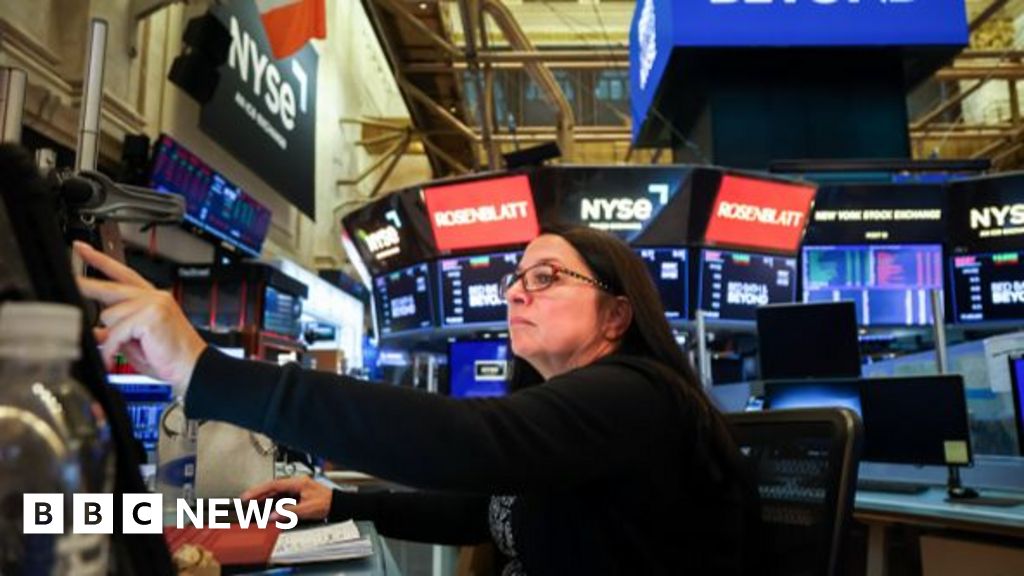
As 2025 drew to a close, the S&P 500 index was on track to finish the year with an impressive gain of approximately 17%. This marked the third consecutive year of double-digit returns for the broad market index, underscoring a prolonged period of wealth creation for investors. The technology-heavy Nasdaq Composite index, benefiting immensely from the AI boom, was poised for an even more substantial 21% gain year-to-date, reflecting the outsized performance of tech giants. Even the Russell 2000 index of smaller companies, which had earlier dipped into bear market territory, recovered significantly to register a roughly 12% gain for the year.
Analysts are now forecasting that 2026 could shape up to be yet another significant year for stock investors. Robert Edwards, chief investment officer at Edwards Asset Management, observed in a recent note that "The market continues to climb the wall of worry into next year," highlighting the persistent underlying economic jitters that the market has successfully shrugged off. He added, "2026 should be another year of record setting for stocks," citing expectations for lower borrowing costs as a key factor that could further boost corporate earnings and drive stock prices higher. Lower interest rates typically reduce the cost of capital for businesses, making it cheaper to expand and innovate, thereby improving profitability and making equities more attractive compared to fixed-income investments.
Parag Thatte, an equity strategist at Deutsche Bank, echoed this sentiment, emphasizing that strong earnings growth in corporate America has been a crucial driver of the stock market rally since the tariff-driven whiplash in the spring. Beyond equities, the year also saw significant movements in other asset classes. Geopolitical tensions, the lingering threat of Trump’s tariffs, and the anticipation of interest rate cuts globally fueled a substantial investor demand for safe haven assets. Gold, traditionally a hedge against uncertainty and inflation, experienced a spectacular run, on track for a nearly 70% yearly increase, pushing its price well above previous record highs as investors sought refuge from potential volatility.
In stark contrast to gold’s stellar performance and the robust stock market, Bitcoin, the world’s largest cryptocurrency, struggled to maintain momentum. Despite receiving an early-year boost from the Trump administration’s supportive stance on digital assets, which included discussions around potential regulatory frameworks favorable to innovation, Bitcoin was poised to end 2025 slightly lower than its starting point. This came after a sharp decline from its all-time highs recorded in October, which saw the cryptocurrency soar past $100,000 before retracing significantly amid renewed regulatory scrutiny and profit-taking by early investors. The volatility in the crypto market served as a reminder of its nascent and speculative nature compared to established asset classes.
The sustained rally in 2025 was heavily influenced by enthusiasm for massive AI spending, which helped several technology firms dramatically outperform the broader S&P 500. A handful of tech giants—Nvidia, Apple, Microsoft, Amazon, and Alphabet—became increasingly dominant, collectively making up almost 30% of the overall index. This concentration, while indicative of their innovative power, also raised questions about market breadth and potential overreliance on a few mega-cap companies.
In recent months, however, fears have mounted in Silicon Valley and beyond of an "AI bubble" potentially bursting. The rapid appreciation in the valuations of tech companies linked to AI, often based on future potential rather than current profits, led many analysts to draw parallels with past speculative bubbles. Companies continued to spend big on the burgeoning industry, investing heavily in data centers, specialized hardware, and research and development, but the sustainability of these growth rates and valuations became a focal point of debate. Concerns included whether the substantial capital expenditure would translate into commensurate revenue growth, and if the market had prematurely priced in a future that might still be years away.
A key development noted by Mr. Thatte of Deutsche Bank was that corporate earnings growth appeared to be broadening out beyond just the tech sector. The third quarter of 2025 showed improved profitability for average-sized companies across various industries, not solely the tech giants. This diversification in earnings growth is crucial, as it offers investors a potential cushion should the tech sector’s rally slow down or if AI valuations come under intense scrutiny. A broader market participation suggests a healthier, more sustainable rally less susceptible to the fortunes of a few companies.
However, even with increasingly broad gains across the US stock market, whether the S&P 500 can maintain its momentum if the tech sector’s rally were to significantly cool remains to be seen. "The rotation is already happening," Mr. Thatte said, referring to investors beginning to pivot away from Big Tech stocks towards other undervalued sectors. "It might be noisy along the way," he cautioned, indicating that such a transition could be marked by increased volatility. Furthermore, professional investors continue to express concerns that even some stocks outside of tech are beginning to appear overvalued, leading to a generally more cautious outlook on long-term returns. Analysts at Vanguard, for example, predict annualized returns of about 3.5% to 5.5% for US stocks over the next decade – a relatively subdued outlook compared to the double-digit gains witnessed in recent years, implying that future growth might be harder to come by.
Despite the market’s strong finish, the economic landscape heading into 2026 is not without significant question marks and policy risks. David Sekera, chief US market strategist at Morningstar, commented that in 2025, the US economy "probably held up better than most people had expected." Indeed, the world’s largest economy picked up speed over the three months to September, expanding at an annual rate of 4.3%, an acceleration from the 3.8% growth in the previous quarter, marking the strongest growth in two years. This robust performance was driven by resilient consumer spending, solid business investment, and a rebound in government expenditure.
Nevertheless, the possibility of President Trump’s tariff policies prompting another jolt to markets remains a tangible threat. Negotiations between Washington and its major trading partners will be "an ongoing headline," Mr. Sekera warned, suggesting that the specter of renewed trade disputes could inject fresh uncertainty into the market at any moment. The implications of such actions could be far-reaching, impacting specific industries, consumer prices, and global economic stability.

Compounding these trade concerns, the US labor market has shown signs of weakness towards the end of the year. The unemployment rate rose to a four-year high of 4.6% in November, up from 4.4% in September, according to Labor Department figures. This uptick in joblessness, while still historically low, suggests a potential cooling in economic activity and could dampen consumer confidence and spending, which are vital drivers of the US economy. Analysts at Charles Schwab highlighted this precarious balance in a research note, stating, "With policy risk not subsiding anytime soon, the bar for a pullback or mini correction in the beginning of 2026 is not terribly high."
Another critical factor looming large for investors is the leadership transition at the US central bank. President Trump is expected to name a new Federal Reserve chair in the coming weeks, to succeed Jerome Powell, whose term concludes in May 2026. This decision represents "the big uncertainty" for investors heading into the new year, according to Paul Stanley, chief investment officer at Granite Bay Wealth Management. Trump has been vocal in his criticisms of Powell’s perceived hawkish stance and has publicly stated his intention to pick a Fed chair committed to easing borrowing costs and prioritizing economic growth.
Wall Street investors will be keenly focused on understanding how this change in leadership will impact monetary policy moving forward. A new chair, particularly one aligned with President Trump’s preference for lower interest rates, could signal a significant shift in the Fed’s approach to inflation and economic stimulus. "Fed chair transitions come with volatility," Mr. Stanley underscored, as markets grapple with the uncertainty of a new leader’s philosophy and policy decisions. This leaves investors facing down plenty of unpredictability, even as many analysts anticipate another strong year ahead. The delicate balance between market optimism, economic realities, and political decisions will undoubtedly define the investment landscape of 2026.


 Roy Suryo