
 Ramos Leo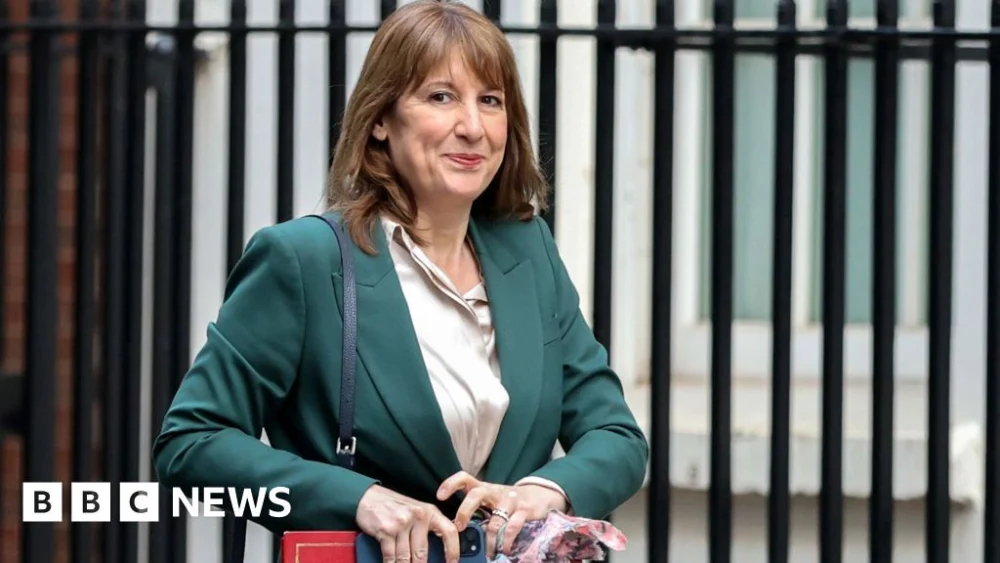
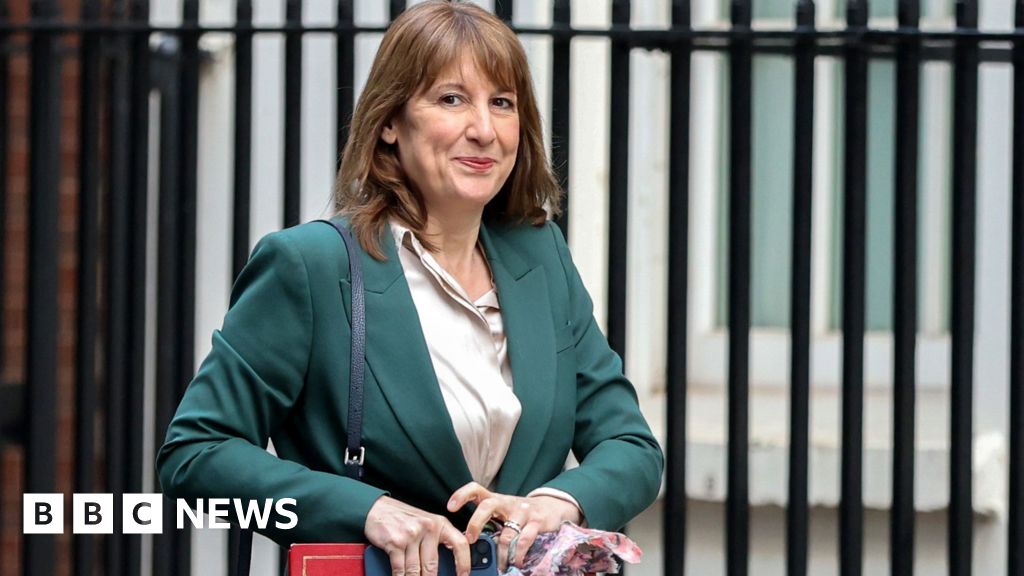
Chancellor Rachel Reeves is set to deliver her eagerly anticipated Spring Statement later on Tuesday, offering a crucial update on the UK’s economic health and the government’s fiscal trajectory. This event, while not carrying the same weight as an autumn Budget, provides significant insights into the nation’s financial standing and future prospects, particularly through the lens of independent economic forecasts.
The Chancellor’s address is expected to commence in the House of Commons after 12:30 GMT on Tuesday. Following her speech, the Treasury will publish the full economic forecasts from the Office for Budget Responsibility (OBR). This sequence is a vital part of parliamentary tradition, ensuring that the Chancellor’s remarks precede the official release of the underlying data. Once Reeves concludes her statement, the opposition, likely led by either Conservative leader Kemi Badenoch or shadow chancellor Mel Stride, will have the opportunity to respond, scrutinising the government’s economic strategy and offering alternative perspectives. This exchange typically sets the tone for subsequent economic debate and policy discussions.
At its core, the Spring Statement serves as a critical economic health check, outlining the latest projections from the Office for Budget Responsibility (OBR). The OBR, an independent public body, plays a pivotal role in monitoring the government’s spending plans and overall economic performance. Twice a year, it produces detailed forecasts that offer a comprehensive indication of how the economy is expected to perform across several key metrics: economic growth (GDP), inflation rates, unemployment levels, government spending commitments, and projected tax income over the coming years. These detailed projections are indispensable, as they form the foundation upon which government decisions regarding future tax adjustments and public spending are often made.
A notable change for this year’s Spring Statement is that it will not include an official assessment of whether the government is on track to meet its own tax and spending rules. Such assessments, which typically quantify the fiscal "headroom" – the amount of financial buffer the government has against its targets – will now be exclusively published at the time of the main Budget. Despite this procedural shift, independent economists are still widely expected to produce their own unofficial assessments of the government’s finances, offering alternative calculations of this critical "headroom" figure. At the time of November’s Budget, the OBR had indicated that the government would meet its primary fiscal measure with a reserve of £21.7 billion. These figures are not mere academic exercises; they carry real-world implications, as the government may feel compelled to cut spending or raise taxes if its financial position appears to be weakening or if it risks breaching its self-imposed fiscal rules.
The latest OBR report is anticipated to incorporate policy changes that have been announced since the last Budget. There is considerable speculation that government borrowing and inflation forecasts could see downward revisions, reflecting a potentially improving fiscal picture and easing price pressures. However, this positive outlook might be tempered by a potentially worsening forecast for economic growth and employment. Crucially, the forecasts published alongside the Spring Statement will not account for any potential impact from the recent jump in oil prices, triggered by strikes on Iran. This omission highlights a key limitation: economic projections are always based on available data up to a certain point, meaning rapidly evolving geopolitical events can quickly shift the underlying assumptions and necessitate future revisions.
Chancellor Reeves is not expected to announce any major new policy decisions, such as significant changes to taxes or government spending. This aligns with a deliberate strategy by the government to consolidate major fiscal announcements into a single annual event, typically the autumn Budget. The rationale behind this approach is to reduce uncertainty for businesses and households, avoiding a constant stream of speculation over potential tax and spending measures that can disrupt planning and investment. The government believes that the uncertainty surrounding possible measures in last autumn’s Budget had a tangible negative impact on both businesses and the wider public.
However, while a slew of new policies is not anticipated, the Spring Statement can still be a vehicle for confirming details of previously announced changes or signalling the government’s future direction. For instance, the 2025 statement confirmed details of changes to benefits, although some of these were subsequently reversed later in the year, illustrating that even minor announcements can have significant implications. In her speech, Chancellor Reeves is expected to reinforce the message that the government "has the right economic plan for our country… in a world that has become yet more uncertain." She will likely assert, "Because of the decisions we have already taken, we have a stronger and more secure economy," aiming to project an image of steady stewardship amidst global volatility. This narrative will underscore the government’s commitment to fiscal stability and long-term economic growth, even if specific new measures are absent.
The broader context for the Spring Statement is the current state of the UK economy. When the Labour government took power in July 2024, it declared boosting economic growth its paramount priority. However, concerns persist among many economists and politicians that the UK economy is not expanding rapidly enough to deliver sustained improvements in living standards.
Recent data provides a mixed picture. Gross Domestic Product (GDP), the primary measure of all economic activity across companies, government, and individuals within a country, grew by a modest 0.1% in the final three months of 2025. This figure was slightly below market expectations, indicating a somewhat sluggish end to the year. Over the entirety of 2025, the economy expanded by 1.3%. In November, the OBR had forecast the economy to grow by 1.4% in 2026, but analysts now widely anticipate this projection to be revised downwards, reflecting a more cautious outlook for the coming year. A lower growth forecast would imply slower job creation, less investment, and potentially greater challenges in funding public services.
On the inflation front, there has been more positive news. Prices rose by 3% in the year to January, marking the lowest inflation rate since March 2025. This deceleration brings the UK closer to the Bank of England’s 2% target and has fueled expectations that the central bank might begin to cut interest rates from their current level of 3.75%. Lower interest rates would typically ease borrowing costs for businesses and households, potentially stimulating investment and consumer spending. However, this optimism is tempered by external factors. The recent jump in oil prices following strikes on Iran could significantly impact the inflation outlook. If these higher oil prices are sustained, they would inevitably push up fuel costs for consumers and transport expenses for businesses, leading to increased prices for other goods, such as food. Such a scenario could make the Bank of England more hesitant to cut rates, or even prompt them to hold rates steady for longer, to prevent a resurgence of inflationary pressures.
Wage growth, while slowing, has continued to outpace inflation, offering some relief to households grappling with the cost of living. In the three months to December, average wages, excluding bonuses, grew at an annual rate of 4.2%. This real-terms increase in pay provides a boost to consumer purchasing power, although the pace of growth has been moderating.
Reflecting on the economic situation, Chancellor Reeves stated in February that 2026 would be the year the British public begins to "feel the positive impacts of Labour’s changes." She added, "Is there more to do? Absolutely. But we’ve created the conditions for growth and I am confident this will be the year we will see the results of that." This statement suggests a belief that existing policies are laying the groundwork for future economic improvement, even if immediate, dramatic changes are not forthcoming.
However, the business community continues to voice concerns, particularly regarding the rising tax burden. A significant point of contention has been the Chancellor’s hike in employer National Insurance contributions, which came into effect last April. Business owners argue that this measure has directly driven up the cost of hiring for firms, potentially stifling job creation and investment. These concerns highlight the ongoing tension between the government’s need to manage public finances and the desire to foster a business-friendly environment conducive to growth.
The Spring Statement also carries a historical footnote regarding its procedural integrity. Last year, the OBR’s analysis was mistakenly released before the Chancellor had delivered her Budget statement in the House of Commons, a significant breach of protocol that led to the resignation of the OBR’s chairman, Richard Hughes. Following a subsequent security review into the incident, the government has affirmed that the OBR’s March forecast will now be published by the Treasury using its official gov.uk platform. This revised publication method is intended to enhance security and prevent any recurrence of such an error, ensuring that the parliamentary process and the integrity of economic announcements are upheld.
In summary, the Spring Statement, while not a platform for sweeping policy changes, remains a vital moment for understanding the UK’s economic trajectory. It will provide the most current independent forecasts for growth, inflation, and employment, setting the stage for future government decisions. The Chancellor’s speech will aim to project confidence in the government’s economic plan, even as the nation navigates persistent challenges like modest growth, the potential for renewed inflationary pressures from global events, and ongoing concerns from the business sector regarding taxation. It is an opportunity for the government to reiterate its priorities and for the public to gauge the direction of the national economy.



 Roy Suryo

 Nakalama John
 atisusanti
