Nana Banana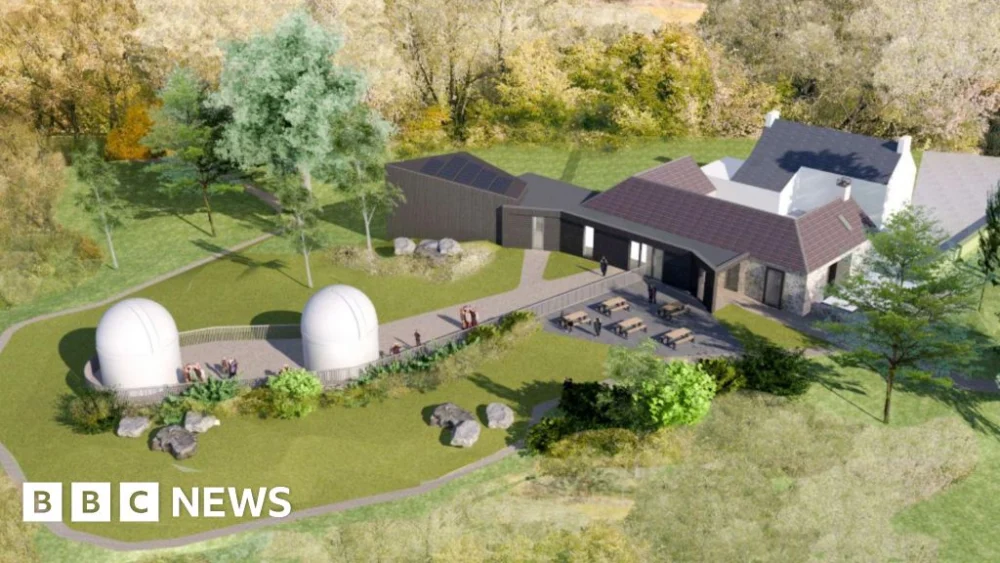
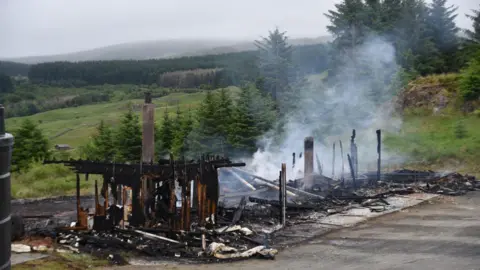
The journey to this approval has been a challenging one, rooted in a tragic event. On 23 January 2021, the original Scottish Dark Sky Observatory, located near Dalmellington in East Ayrshire, was engulfed in flames. The fire, believed to have been accidental, completely decimated the beloved facility, including its two bespoke observation domes, advanced telescopes, and visitor amenities. The loss was a severe blow to Scotland’s scientific community and a particular disappointment for the thousands of visitors who had flocked to the observatory since its opening in 2012. It represented not just the destruction of a building, but the temporary silencing of a vital educational hub that brought the wonders of the cosmos closer to the public. The smouldering remains, captured in poignant images, underscored the magnitude of the task ahead for the SDSO trustees.
In the immediate aftermath, there was an outpouring of support and a determined commitment to rebuild. However, the original site near Dalmellington was eventually ruled out due to a range of issues. These challenges included the extensive damage to the existing infrastructure, the high costs associated with rebuilding from scratch on the same footprint, and logistical considerations regarding access and future expansion. The trustees embarked on a meticulous search for a new location that could not only house a replacement observatory but also offer superior conditions for stargazing and visitor experience.
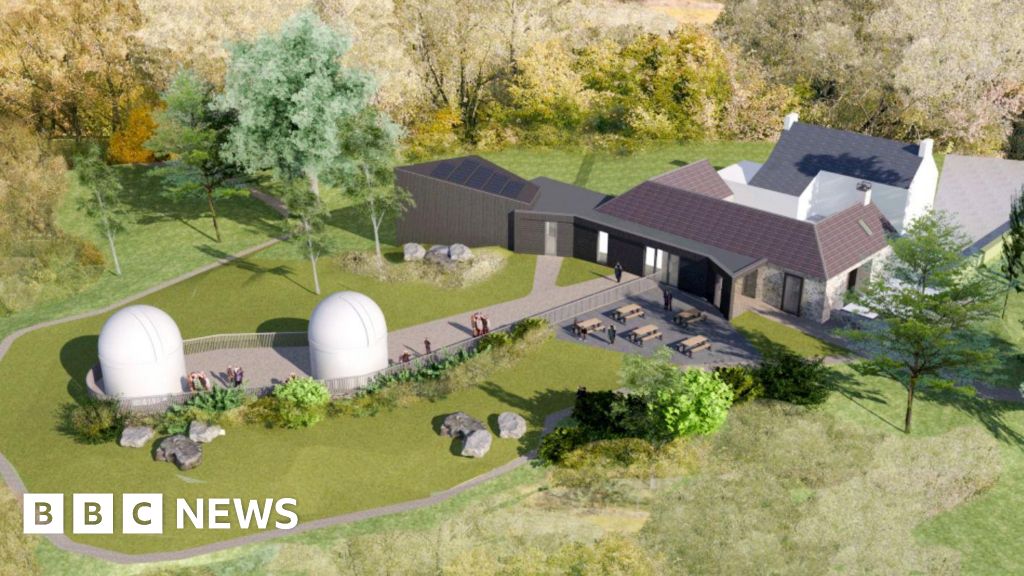
Their search led them to the picturesque setting of Clatteringshaws, near New Galloway, within the internationally-recognised Galloway Forest Dark Sky Park. This location proved to be ideal, offering unparalleled dark skies, minimal light pollution, and breathtaking views over Clatteringshaws Loch. Crucially, the site included the former Forestry and Land Scotland (FLS) visitor centre, which presented a valuable opportunity for conversion and extension rather than a complete new build. This strategic choice promised a more efficient and sustainable pathway to re-establishing the observatory.
The approved plans detail an ambitious £1.5 million project that will see the former FLS visitor centre transformed into a cutting-edge astronomical hub. At its heart will be two new observing domes, designed to house powerful telescopes capable of revealing distant galaxies, nebulae, and planetary systems. These domes, envisioned by ARPL Architects, feature a contemporary design that blends seamlessly with the natural landscape while providing optimal functionality for astronomical observation. Beyond the domes, the complex will boast a state-of-the-art 360-degree planetarium, offering immersive journeys through the cosmos regardless of the weather conditions outside. This planetarium is expected to be a major draw, providing an accessible and engaging way for visitors of all ages to learn about astronomy and space science.
The new Scottish Dark Sky Observatory will be more than just an astronomical facility; it is designed as a comprehensive visitor centre. Plans include dedicated exhibition spaces, educational classrooms for school groups and workshops, a welcoming gift shop, and a small cafe where visitors can relax and reflect on their celestial discoveries. This multi-faceted approach underscores the SDSO’s commitment to creating a unique educational asset and a significant tourist attraction that caters to a broad audience, from serious amateur astronomers to curious families.
The trustees of the Scottish Dark Sky Observatory expressed their profound delight at the planning permission. In a statement, they affirmed their eagerness to "press ahead with their plans to redevelop and extend the former FLS Clatteringshaws Visitor Centre," envisioning it as "an astronomical observatory, planetarium and visitor centre in the heart of the internationally-recognised Galloway Forest Dark Sky Park." They further committed to "continue to release further project updates as they become available," signalling the start of a new, exciting phase of development.
The choice of location within the Galloway Forest Dark Sky Park is particularly significant. Designated in 2009 by the International Dark-Sky Association (IDA), Galloway Forest earned the distinction of being the first Dark Sky Park in the UK, and one of only a handful worldwide at the time. This designation is a testament to the exceptionally low levels of light pollution in the area, offering some of the darkest night skies in Europe. Such conditions are crucial for astronomical observation, allowing for crystal-clear views of the Milky Way, meteor showers, and distant celestial objects that are often obscured by urban light glow elsewhere. The new observatory will capitalize on this natural asset, providing unparalleled stargazing opportunities.
The establishment of the SDSO at Clatteringshaws will further cement the Galloway Forest’s reputation as a prime destination for astro-tourism. This niche form of tourism is growing rapidly, attracting visitors keen to experience truly dark skies and learn about the universe. The observatory is expected to draw both domestic and international tourists, boosting the local economy through increased visitor spending on accommodation, food, and other services. It will also provide employment opportunities and foster a deeper connection between the local community and the wonders of the night sky.
Beyond tourism, the observatory will play a crucial role in education and scientific outreach. By providing state-of-the-art facilities and expert guidance, it aims to inspire the next generation of scientists, engineers, and astronomers. Educational programmes will focus on STEM subjects, environmental awareness, and the importance of preserving dark skies. The facility will serve as a beacon for scientific literacy, encouraging curiosity and critical thinking about the universe we inhabit. It will also highlight the broader issue of light pollution, a growing concern that not only hinders astronomical observation but also impacts wildlife, human health, and energy consumption. The observatory will advocate for responsible lighting practices, promoting the preservation of this precious natural resource.
The four-and-a-half years since the fire have been a testament to the resilience and dedication of the SDSO trustees, volunteers, and supporters. Navigating the complexities of insurance claims, site selection, architectural design, and planning permissions has been a monumental undertaking. The £1.5 million price tag for the new facility underscores the scale of the ambition and the significant fundraising efforts that will be required to bring this vision to fruition. With planning approval now secured, the focus will shift to detailed design work, securing full funding, and commencing construction.
The new Scottish Dark Sky Observatory represents more than just a replacement for what was lost; it signifies an evolution. It will leverage a superior location, modern design principles, and enhanced visitor facilities to create an observatory that is not only resilient but also more capable of fulfilling its mission as a leading centre for astronomy education and public engagement. This initiative underscores Scotland’s commitment to protecting its pristine dark skies and sharing the majesty of the cosmos with the world. The clearing of the planning hurdle ensures that work can now begin in earnest, paving the way for the observatory to once again shine brightly as a focal point for celestial exploration in Galloway.



 Roy Suryo