Nana Banana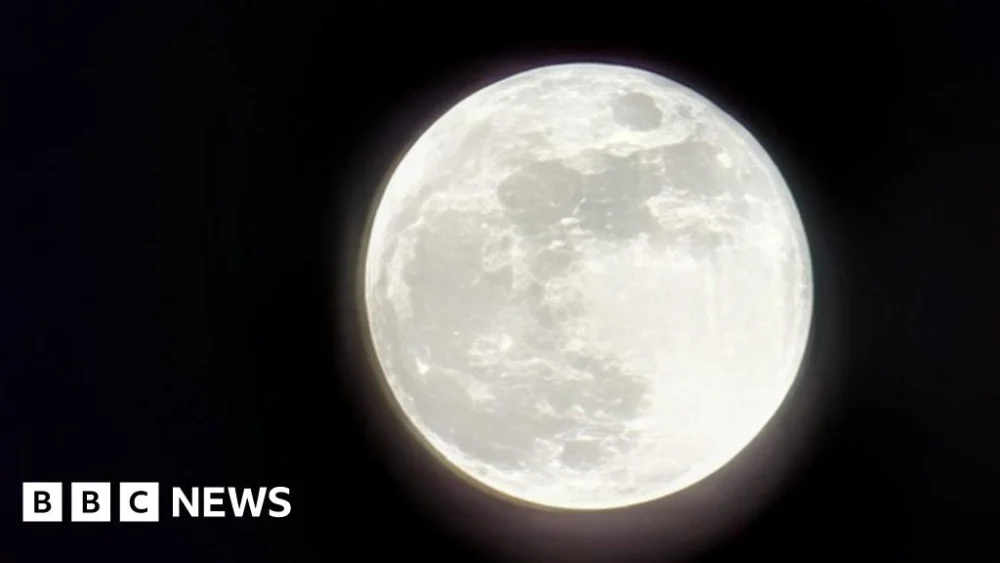
The celestial spectacle of the Worm Moon, marking the first full moon of spring, graced the skies over Northern Ireland on the evenings of Monday, March 25th, and Tuesday, March 26th, captivating stargazers and photographers alike. As the vibrant orb ascended, its radiant presence served as a poignant reminder of the changing seasons and the ancient rhythms that govern our world, prompting many to turn their gaze upwards and capture its ethereal beauty.
This particular full moon, known as the Worm Moon, carries a rich history rooted in the traditions of various indigenous cultures, particularly Native American tribes. The name is most commonly attributed to the Algonquin tribes, who observed the natural world around them to mark the passage of time. It refers to the time of year when the ground begins to thaw after winter’s chill, allowing earthworms to emerge from the soil. This emergence signals the return of robins and other birds, which feed on the worms, heralding the true beginning of spring and the renewal of life. For these communities, the Worm Moon was a vital indicator for planting, hunting, and understanding the seasonal cycle, a testament to their deep connection with nature.
While the "Worm Moon" is the most widely recognized name, this March full moon has been known by several other evocative names across different cultures and regions. In some Native American traditions, it was also referred to as the "Sap Moon" due to the maple trees beginning to yield their sweet sap, crucial for making syrup. The "Crow Moon" was another moniker, signifying the return of crows after winter, a harbinger of spring. European traditions offered names like the "Lenten Moon," linking it to the Christian observance of Lent, or the "Chaste Moon," symbolizing purity and new beginnings. Other historical names include the "Crust Moon," referencing the crust of snow that thaws by day and refreezes at night, and the "Death Moon," which in some contexts alluded to the end of winter and the symbolic death of the old season. Each name, regardless of its origin, underscores the profound connection between lunar cycles and earthly events, reflecting a time when human life was intricately woven with the natural calendar.
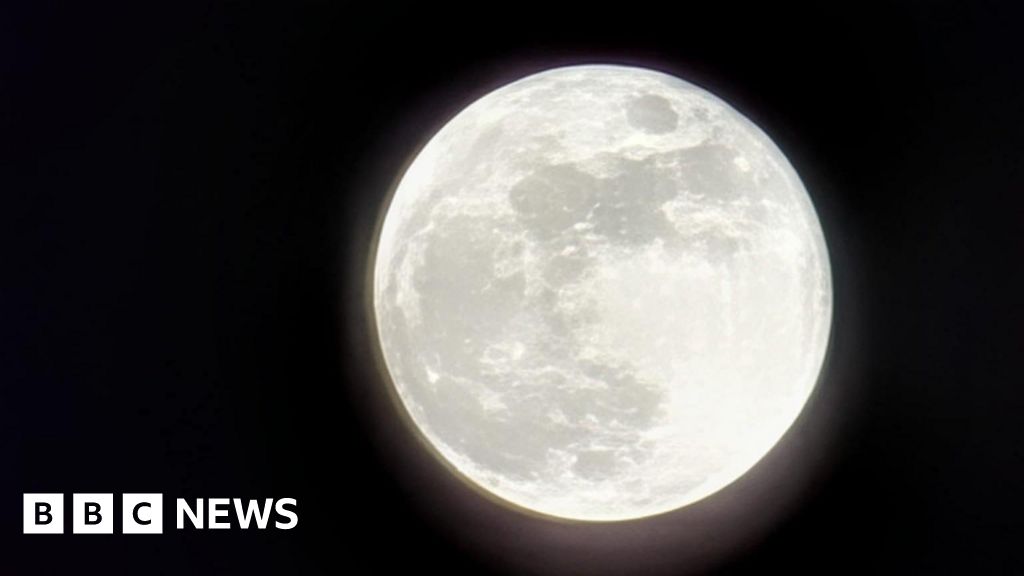
Astronomically, a full moon occurs when the Moon is exactly opposite the Sun in its orbit around Earth, making its entire face illuminated as seen from our planet. This alignment typically happens once a month, presenting a breathtaking display of our nearest celestial neighbour. On the evening of March 25th, 2024, the Moon reached its fullest phase at 07:00 UTC (GMT), meaning that for observers in Northern Ireland, it was already past its peak illumination as it rose in the eastern sky later that evening. Despite this, its appearance remained strikingly full and brilliant, continuing to present a spectacular view well into the night and the following evening. The Moon’s consistent orbital path ensures that, weather permitting, a full moon is always a predictable and beautiful event, offering a moment of cosmic reflection.
It is important to clarify a distinction often made in popular discourse: while the original text mentioned a "full lunar eclipse, and Blood Moon," it correctly noted that this phenomenon was not visible in the UK. The Worm Moon itself is simply a full moon, not an eclipse. A "Blood Moon" is a colloquial term for a total lunar eclipse, which occurs when the Earth passes directly between the Sun and the Moon, casting a shadow that turns the Moon a reddish hue due to Rayleigh scattering in Earth’s atmosphere. Although there was a subtle penumbral lunar eclipse on March 25th, it was barely perceptible and certainly did not qualify as a "Blood Moon." The Worm Moon observed over Northern Ireland was a stunning full moon in its own right, bathed in direct sunlight, and distinct from any eclipsing event. This clarification helps prevent confusion, ensuring that the magic of the full moon is appreciated for its inherent beauty rather than being conflated with other, albeit equally captivating, astronomical phenomena.
Across Northern Ireland, residents armed with cameras and keen eyes captured the Moon’s grandeur. A particularly striking image, submitted by "Weather watcher/GranniAnne," showcased a very close-up view of the Moon from Dundonald, County Down. This photograph exquisitely revealed the Moon’s shining white surface, with its myriad craters and mare (dark plains) clearly visible, offering a detailed glimpse of our lunar companion’s rugged terrain. Another captivating shot, taken by "Weather watcher/Leah K," depicted a bright orange Moon majestically rising above a faint treeline in Comber, also in County Down. This warm, amber glow, often seen when the Moon is low on the horizon, is a result of its light passing through a greater amount of Earth’s atmosphere. The atmosphere scatters the blue light more effectively, leaving the red and orange hues to reach our eyes. These diverse perspectives highlight the varied ways in which the Worm Moon presented itself, from intimate details to broad, atmospheric vistas.
The clear skies that graced parts of Northern Ireland during these evenings were crucial for such magnificent sightings. Often, cloud cover can obscure lunar events, making a clear night all the more precious for stargazers. For aspiring astrophotographers and casual observers alike, the Worm Moon provided an excellent opportunity to practice their skills or simply bask in the celestial glow. Tips for photographing the Moon often include using a tripod for stability, a telephoto lens to magnify the distant orb, and adjusting exposure settings to prevent overexposure of the bright lunar surface while still capturing surrounding details. The success of these local photographers in capturing such stunning images is a testament to both their skill and the favourable viewing conditions.
The tradition of naming full moons is a practice that dates back thousands of years, reflecting humanity’s innate desire to understand and categorize the world around them. Before the advent of modern calendars and timekeeping devices, indigenous communities and early civilizations relied on the predictable cycles of the Moon to track seasons, anticipate agricultural needs, and plan hunting expeditions. Each full moon name served as a mnemonic device, a simple yet powerful way to remember what was happening in nature during that particular time of year. Beyond the Worm Moon, this tradition continues with other well-known names throughout the year. April brings the "Pink Moon," named after a widespread early spring flower, Phlox subulata, or moss pink, which blankets the ground. May is heralded by the "Flower Moon," when flowers are in abundant bloom. June features the "Strawberry Moon," coinciding with the short strawberry harvesting season. The "Buck Moon" in July references the time when male deer begin to grow new antlers. August’s "Sturgeon Moon" marks when this large fish is most readily caught. September often brings the "Harvest Moon," the full moon closest to the autumnal equinox, providing light for farmers to work late into the night. October’s "Hunter’s Moon" follows, signalling the ideal time for hunting to prepare for winter. November’s "Beaver Moon" relates to beavers building their winter dams, while December’s "Cold Moon" signifies the deepening chill of winter. January’s "Wolf Moon" refers to the howling of hungry wolves, and February’s "Snow Moon" speaks to the heavy snowfalls. These names collectively paint a vivid picture of the yearly cycle, demonstrating how closely human existence was once intertwined with celestial observations and the rhythms of the natural world.
Looking ahead, the lunar calendar promises more enchanting displays for sky-watchers in Northern Ireland and beyond. Following the Worm Moon, the next full moon, the "Pink Moon," is set to rise on April 23rd. This beautiful appellation, as mentioned, is inspired by the vibrant pink wildflowers that emerge in early spring, particularly in North America. After that, May will bring the equally charming "Flower Moon" on May 23rd, a name that perfectly encapsulates the profusion of blossoms that adorn the landscape during that month. These upcoming events offer further opportunities for people to connect with the cosmos, observe the subtle shifts in nature, and perhaps even capture their own breathtaking images. Each full moon, with its unique name and seasonal significance, offers a moment to pause, look up, and appreciate the enduring beauty and mystery of the universe.
The Moon, our constant celestial companion, continues to exert a profound influence on Earth, from governing ocean tides to stabilizing our planet’s axial tilt, which in turn helps maintain our climate. Its ever-changing phases have inspired countless myths, poems, and scientific inquiries throughout human history. The Worm Moon, in its brilliant ascendancy over Northern Ireland, was more than just an astronomical event; it was a cultural touchstone, a natural calendar, and a moment of shared wonder. It reminded us of the intricate connections between the heavens and the Earth, and the timeless beauty that unfolds above us, inviting us to look up and marvel at the universe’s grand design.


 Roy Suryo