Nakalama John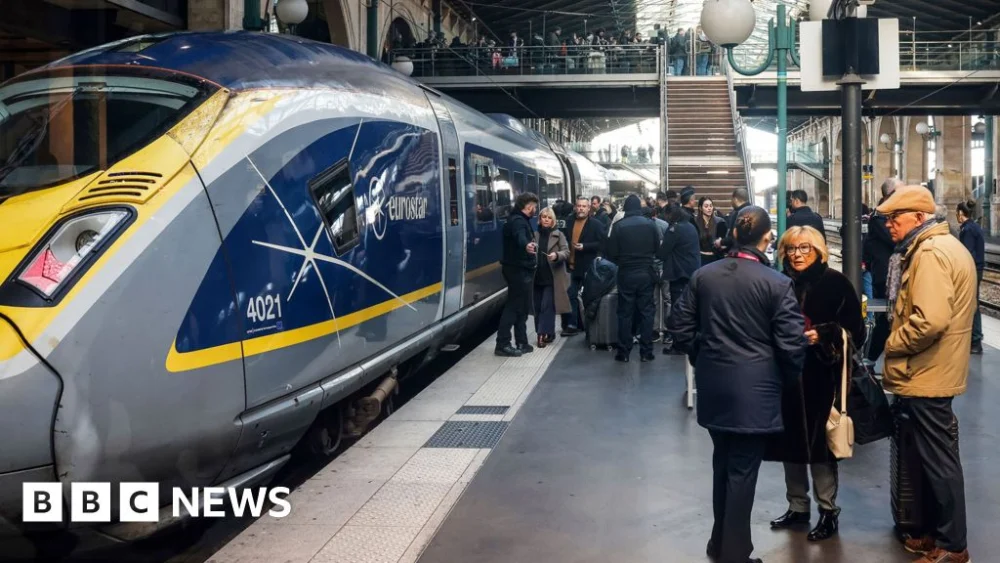
Cross-Channel rail services, including Eurostar and Le Shuttle, have largely returned to normal operations following significant disruption that crippled routes between the UK and France for over 24 hours. Thousands of passengers faced extensive delays and cancellations beginning Tuesday, 2nd January, after a dual incident involving a critical overhead power supply problem and a failed Le Shuttle train brought traffic to a standstill within the Channel Tunnel. Following an intensive overnight repair effort by Getlink engineers, both rail lines through the vital undersea link resumed service on Wednesday morning, 3rd January. However, Eurostar has continued to advise passengers to meticulously check their travel status, warning of potential lingering knock-on delays and the possibility of further last-minute cancellations as the system works to clear the backlog of disrupted journeys.
The severe disruption on Tuesday stemmed from two distinct but compounding issues. The primary cause was a failure in the overhead power supply system that powers the electric trains within the Channel Tunnel. This critical infrastructure fault immediately halted services, as trains rely entirely on this power source for propulsion. Simultaneously, a Le Shuttle train, designed to transport vehicles, broke down inside the tunnel. The combination of a power outage and a stationary train effectively blocked all routes in both directions, rendering the tunnel impassable for a significant period. Getlink, the operator of the Channel Tunnel, confirmed that its teams worked through the night to address both the electrical fault and to recover the stalled shuttle train, a complex operation requiring specialized equipment and careful coordination in the confined environment of the tunnel.
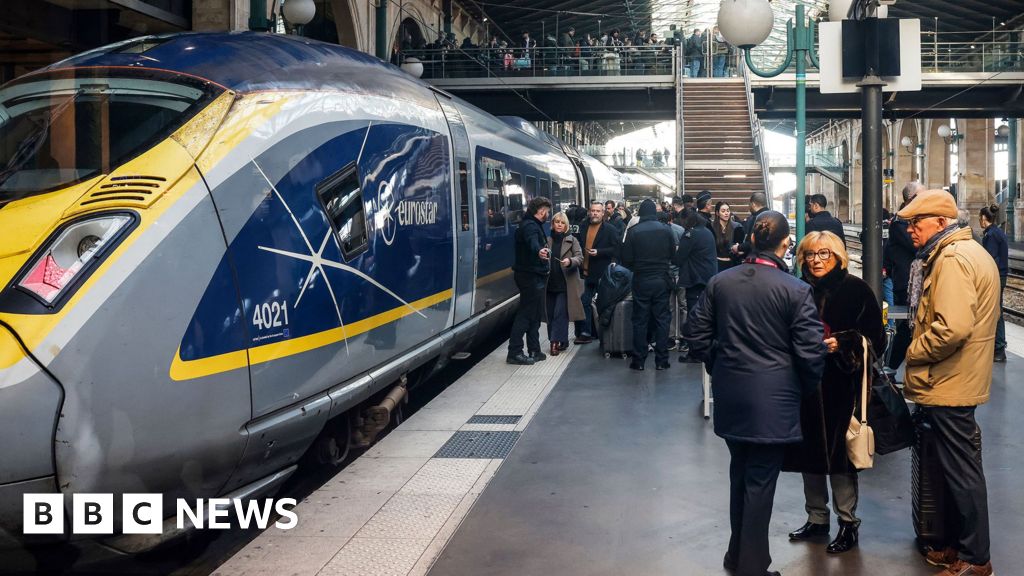
The timing of the disruption could not have been worse, coinciding with a peak travel period as many individuals were attempting to return home or embark on New Year’s holidays. The immediate aftermath on Tuesday saw the cancellation of the vast majority of Eurostar services from London St Pancras International to key European destinations like Paris Gare du Nord, Brussels Midi, and Amsterdam Centraal. This left countless travellers stranded, their New Year’s plans in disarray. Images shared widely across social media depicted chaotic scenes at London St Pancras, with massive crowds of frustrated passengers queuing for information or attempting to rebook their journeys. Similarly, drivers planning to use Le Shuttle faced lengthy queues and significant delays at the Folkestone terminal in the UK and Calais in France, as the vehicle-carrying trains were also unable to pass.
While repair work commenced swiftly, the complexity of the issues meant that full restoration of service was not possible immediately. By Tuesday evening, some Eurostar and Le Shuttle services were able to resume, but only one of the Channel Tunnel’s two rail lines was operational, leading to continued bottlenecks and extended delays. For many, this meant hours spent waiting, with some unfortunate passengers even stuck on board trains overnight. Dennis Van Der Steen, who boarded a Eurostar service for Amsterdam departing London St Pancras at 20:49 on Tuesday, recounted his ordeal. His train came to an abrupt halt before even entering the tunnel and, after a gruelling six-hour wait at the tunnel’s entrance, was eventually forced to turn back to London, leaving him to find alternative arrangements.
The prolonged uncertainty and lack of immediate solutions prompted some travellers to resort to remarkably creative and arduous alternatives to reach their destinations. Floriaen Dullaert, originally scheduled to travel from Amsterdam to London, found himself in Brussels due to the cancellations. Determined not to let the disruption ruin his plans, he bought a bicycle for €20, then cycled to a local train station to catch a service to Dunkirk on the French coast. From there, he managed to secure a spot on a late-night ferry to Dover, finally making his way to the UK after a multi-modal journey that highlighted the extraordinary lengths people were willing to go to circumvent the Channel Tunnel’s paralysis.

By Wednesday morning, the situation began to stabilize significantly. Most of Eurostar’s scheduled services from London St Pancras successfully departed, offering a glimmer of relief to thousands more passengers. However, the ripple effects of Tuesday’s extensive cancellations were still evident, with three specific Eurostar services for Wednesday confirmed as cancelled: one bound for Paris Gare du Nord, another for Brussels Midi, and a third destined for Amsterdam Centraal. Eurostar promptly issued an apology for the "inconvenience caused to passengers," acknowledging the significant disruption to travel plans, particularly during the festive period.
In an effort to mitigate the financial impact on affected travellers, Eurostar announced an "enhanced compensation" package. This included the option for a full 100% refund of the ticket price or, alternatively, a 150% e-voucher of their ticket value to be used for future Eurostar travel. This generous offer aimed to acknowledge the severity of the disruption and provide substantial redress to those whose journeys were cancelled. Furthermore, to assist with the recovery and accommodate as many passengers as possible, Eurostar confirmed that an extra London to Paris service would operate on Wednesday. The high-speed rail firm continued to stress the importance of checking their website for live updates on specific train statuses before heading to the station, given the potential for lingering operational challenges.
Le Shuttle services also saw a marked improvement on Wednesday. Departures from the Folkestone terminal in the UK were reported to be running normally, indicating a resolution to the issues that caused extensive vehicle queues the previous day. While delays persisted at the Calais terminal in France, they had significantly reduced to approximately one hour, a substantial improvement from the six-hour waits reported earlier on Wednesday morning. This gradual return to efficiency across both Eurostar and Le Shuttle operations signalled the successful repair of the Channel Tunnel infrastructure.

The Channel Tunnel, a marvel of modern engineering, typically provides a highly reliable and efficient link between the UK and mainland Europe. It accommodates not only Eurostar’s high-speed passenger trains but also Le Shuttle’s vehicle-carrying trains, making it a critical artery for both tourism and trade. Getlink, the Anglo-French company that owns and operates the tunnel, is responsible for maintaining this complex infrastructure. The recent incident, therefore, represented a rare and significant failure within a system generally known for its robustness. The power supply problem, managed by Getlink, and the breakdown of a Le Shuttle train underscored the vulnerabilities inherent even in advanced transport networks when multiple issues converge.
The human element of the disruption was particularly poignant given the time of year. For many, Eurostar journeys are integral to their New Year’s celebrations, whether visiting family, friends, or simply enjoying a short break in a European capital. The sudden cancellations dashed these plans for thousands, leading to disappointment, stress, and unexpected costs for alternative travel or accommodation. The scenes of weary travellers, suitcases in tow, facing uncertainty at stations across Europe highlighted the deep impact of such widespread transport failures. While the system has now largely recovered, the memories of the disrupted festive period will undoubtedly linger for those caught in the Channel Tunnel chaos. The swift response and round-the-clock efforts by engineers and operational staff were crucial in restoring this vital link, but the incident serves as a stark reminder of the delicate balance required to maintain seamless international travel.


 Roy Suryo