Nana Banana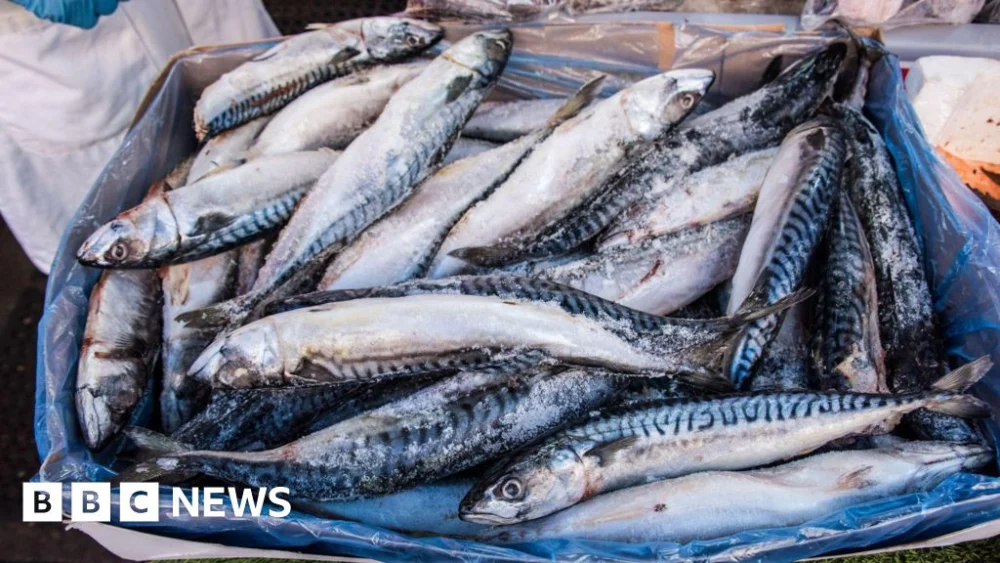
This unprecedented decision by Waitrose stems directly from warnings issued by leading marine science organizations regarding the health of mackerel populations. The International Council for the Exploration of the Sea (ICES), the principal scientific advisory body for fisheries management in the North Atlantic, has repeatedly highlighted that North East Atlantic mackerel has been subjected to unsustainable fishing levels for several years. Their scientific assessments indicate that current fishing pressure, coupled with a persistent failure to agree on comprehensive international quota allocations, has pushed the stock into a precarious state, where the rate of reproduction is insufficient to replenish the volume of fish being caught. Scientists have explicitly stated that mackerel supplies in this vital region have fallen into a "danger zone," necessitating urgent and substantial reductions in catch limits to avert a potential ecological collapse.
Waitrose, a supermarket known for its stringent ethical and sustainability policies, articulated that this action is a direct response to these scientific findings. Jake Pickering, head of agriculture, aquaculture, and fisheries at Waitrose, emphasized the supermarket’s commitment: "By suspending sourcing of mackerel at Waitrose, we are reinforcing our ethical and sustainable business commitments, acting to tackle overfishing and protect the long-term health of our oceans and this crucial fish." The company has stated that it will only reintroduce mackerel to its shelves once it can be assured that the fish meets its "high sourcing standards," a benchmark it believes current North East Atlantic mackerel stocks will fail to meet from May 2026. This future deadline suggests a long-term commitment to a robust recovery plan for the species before any reconsideration of sales.
The issue of mackerel overfishing is particularly pertinent to the United Kingdom, where mackerel represents a significant component of the national fishing industry. In 2024 alone, UK vessels landed over 230,000 tonnes of mackerel, making it the most caught fish species in British waters. The majority of this pelagic fishery is concentrated in Scotland, providing substantial economic activity and employment in coastal communities. This makes Waitrose’s decision not just an environmental statement, but one with tangible economic ramifications for the Scottish fishing fleet and its associated processing sector.
The complexity of managing migratory species like mackerel lies in the fact that they traverse the waters of multiple sovereign nations, necessitating intricate international agreements on catch quotas. Key players in the North East Atlantic mackerel fishery include the UK, Norway, the Faroe Islands, and Iceland. In December of the previous year, these nations, after protracted negotiations, agreed to cut mackerel catches by 48%. While this reduction marked a significant diplomatic achievement, Waitrose has publicly declared that, from its perspective, this measure does not go far enough to address the severity of the stock depletion. The supermarket’s internal assessment indicates that even with this reduction, the overall fishing pressure remains too high to ensure the long-term viability and recovery of the mackerel population to healthy levels. This divergence highlights a critical tension between political agreements, which often balance economic interests with scientific advice, and the more uncompromising standards demanded by some retailers and conservation groups.
In anticipation of the mackerel suspension, Waitrose has outlined plans to replace the withdrawn products with "responsibly sourced" alternatives. These replacement products will adhere to the rigorous standards set by the Marine Stewardship Council (MSC), an international non-profit organization that certifies fisheries and seafood products for sustainability. MSC certification involves a comprehensive assessment against a science-based standard for sustainable fishing, ensuring that fish stocks are healthy, ecosystems are protected, and fishing is well-managed. This move not only ensures that Waitrose continues to offer seafood options to its customers but also reinforces its commitment to supporting fisheries that are demonstrably managed sustainably. Examples of potential alternatives could include other responsibly sourced pelagic species or whitefish, providing consumers with options that align with environmental best practices.
The announcement has been met with widespread commendation from conservation and sustainability organizations, who view Waitrose’s action as a powerful precedent. The Marine Conservation Society (MCS), a leading UK charity dedicated to protecting the marine environment, lauded the supermarket’s decision as "leading and decisive." Kerry Lyne, the Good Fish Guide manager at MCS, stressed the importance of collective action: "To keep favourites like mackerel on the menu, we need support right across the supply chain with fishing kept within sustainable limits." This sentiment was echoed by Charles Clover, co-founder of the influential conservation charity Blue Marine Foundation, who described overfishing as a "crisis" that has been "ignored for too long." Clover expressed hope that Waitrose’s high-profile action would elevate the issue to the forefront of the political agenda, prompting governments and other industry players to take more robust measures.
However, the response from the Scottish fishing industry, which is heavily reliant on mackerel, has been one of dismay and criticism. Ian Gatt, representing the Scottish Pelagic Fishermen’s Association, voiced strong objections to the timing of Waitrose’s announcement. He argued that it failed to acknowledge ongoing progress in international quota-sharing negotiations, implying that the supermarket’s move was premature and potentially undermined efforts to reach more comprehensive agreements. The Scottish industry’s perspective highlights the delicate balance between environmental imperatives and the socio-economic realities of fishing communities, where livelihoods depend directly on access to fishing grounds and viable quotas. They often argue that Scottish mackerel fisheries are among the best managed globally and that the problem lies more with the overall international management framework than with their specific practices.
This development underscores the escalating global challenge of ensuring marine biodiversity and food security in the face of increasing demand and climate change. Overfishing is a critical threat to ocean ecosystems, leading to declining fish stocks, disruption of marine food webs, and economic instability for fishing communities. Waitrose’s decision serves as a potent reminder that consumer choices, amplified by corporate responsibility, can play a significant role in driving change within the seafood supply chain. The hope among environmentalists is that this bold step by a major retailer will catalyze a ripple effect, prompting other supermarkets and international bodies to reassess their commitments and accelerate the transition towards truly sustainable fisheries management worldwide, ensuring that vital species like mackerel remain abundant for future generations.


 George Anjay
 Nakalama John
 atisusanti
 Ramos Leo