Nakalama John
The disruption, which left thousands of flights cancelled and countless Britons stranded, stemmed from escalating geopolitical tensions. The region experienced US-Israeli strikes on Iran, which subsequently triggered retaliatory strikes by Iran across the Middle East. These military actions led to widespread airspace closures and diversions, impacting major aviation hubs and causing significant travel chaos. The initial closures were a direct response to the heightened risk of aerial conflict, forcing airlines and civil aviation authorities to prioritize passenger and crew safety above all else. This rapid escalation meant that many travellers found themselves unexpectedly grounded, facing uncertainty and a desperate scramble for alternative routes home.
In response to the crisis, the UK government initiated efforts to repatriate its citizens. A second government-chartered flight successfully landed at Gatwick Airport at 00:30 GMT on Saturday, having departed from Oman’s capital, Muscat, on Friday. This followed an earlier chartered flight to Stansted Airport, which was delayed by a full 24 hours due to unspecified "technical issues," highlighting the complexities and unforeseen challenges even in government-coordinated rescue efforts. Despite these interventions, a government minister underscored that commercial flights remain "by far the most likely and the most rapid" routes for Britons to return home, emphasizing the sheer scale of the challenge and the limitations of government-organised transport. While new flights have been announced, the underlying conflict remains rapidly evolving, meaning circumstances around air travel could shift quickly and without much warning. Travellers are therefore advised to remain vigilant and informed.
Which flights are departing from the UAE?
Etihad, based in Abu Dhabi, was among the first to announce a resumption of limited flights starting from Friday. This decision, according to the airline, came after "extensive safety and security assessments," indicating a careful evaluation of the operational environment. These crucial new flights are set to connect Abu Dhabi with key UK destinations, specifically London Heathrow and Manchester, alongside several major European cities including Barcelona, Brussels, Dublin, Rome, Paris, and Milan. The airline stated that passengers with existing bookings would be prioritised for these services, although tickets are also available for purchase via its website. Etihad issued a strong caution to travellers, advising them against proceeding to the airport unless they had been directly contacted by the airline or held a confirmed booking on one of the newly scheduled flights, aiming to prevent further congestion and disappointment at the terminal.
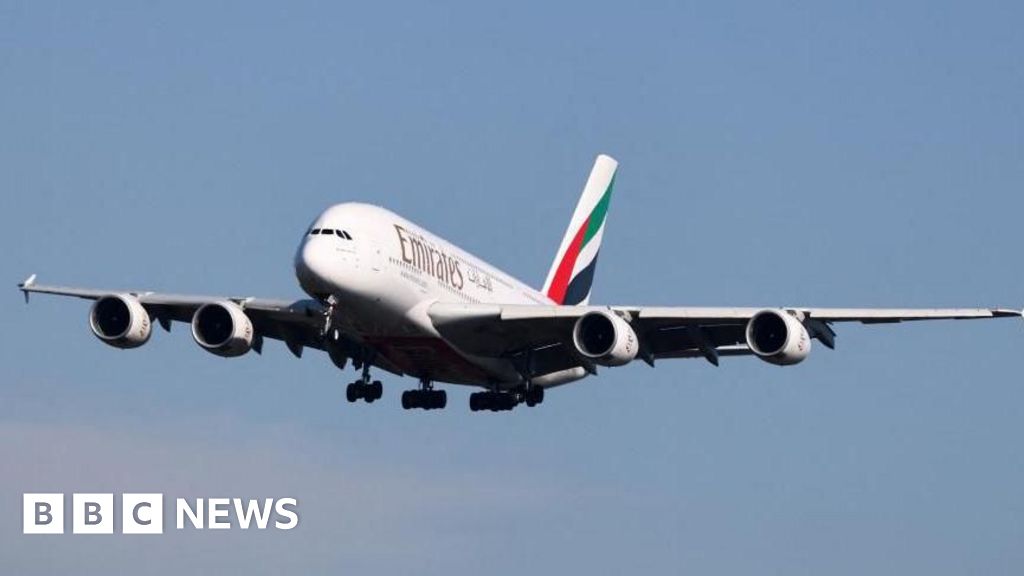
Similarly, Emirates, operating out of Dubai, also announced the availability of new commercial flights. These flights are open for booking, but like Etihad, Emirates confirmed that customers with earlier, cancelled bookings would be given precedence. Scheduled services to Manchester, Birmingham, London Heathrow, London Gatwick, and Edinburgh were slated for Friday and Saturday, offering a much-needed lifeline for those trying to leave the UAE. A critical caveat for transit passengers was also issued: they would only be accepted on these flights if their connecting flight was confirmed to be operating as planned, preventing a backlog of passengers stuck in Dubai. Emirates reported a significant operational push, having carried approximately 30,000 passengers out of Dubai on Thursday and completing 35 flights to the UK since services resumed. The airline further projected a substantial increase in capacity, aiming to operate 106 daily return flights to 83 destinations globally by Saturday. For the UK specifically, Emirates anticipated operating 11 daily flights across five airports by the same day, showcasing a rapid effort to restore connectivity. BBC’s Nick Beake, reporting from Dubai Airport on Friday morning, observed a surprisingly calm and quiet atmosphere, with a steady flow of passengers and no visible large gatherings of expatriates attempting to leave, suggesting that the initial chaos might have subsided or been efficiently managed.
Are there any flights leaving Qatar?
The situation in Qatar remains more challenging, with no commercial flights currently departing from its airspace. This continued grounding is due to a temporary closure mandated by the Qatar Civil Aviation Authority, reflecting an ongoing assessment of safety and security in its flight information region. Qatar Airways, the national carrier, committed to providing updates to passengers by 09:00 local time (06:00 GMT) on Saturday. The airline indicated that it had been "working around the clock to organise additional relief flights where operationally possible," signalling its dedication to assisting affected travellers. As with other airlines in the region, passengers impacted by the disruption were advised that they would be contacted directly by Qatar Airways with any necessary next steps. Crucially, travellers were explicitly told not to go to the airport unless they had received an official flight confirmation, to avoid exacerbating congestion and frustration at Hamad International Airport. The closure of Qatari airspace has significant implications, as Doha is a major global transit hub, affecting thousands of passengers connecting to destinations worldwide.
Are flights from Oman running?
In contrast to Qatar, flights from Oman are currently running, positioning Muscat as a crucial and relatively safer key location for individuals seeking to depart the Middle East. British Airways capitalized on this stability, announcing additional flights from Oman to London Heathrow. These services were scheduled to depart at 02:30 local time daily from March 9 to 12. These new flights were specifically designated for BA customers already in Oman or the UAE with an existing booking, underscoring the airline’s commitment to its pre-booked passengers. Unfortunately, BA’s flights from Oman to London Heathrow on March 6, 7, and 8 were already fully booked, indicating the high demand and limited availability. Deputy Prime Minister David Lammy acknowledged the government’s collaboration with commercial airlines to facilitate the return of Britons from the Middle East. He also expressed the government’s hope to arrange more charter flights out of Oman over the "coming hours and coming days." Lammy highlighted a significant logistical concern: ensuring the safe passage of people within the region to Muscat Airport, emphasizing the necessity for them to "be able to travel safely in buses and cars without being hit by drone or missile fire," which vividly illustrates the dangers inherent in the current environment. Foreign Office minister Hamish Falconer reiterated that commercial flights remained "by far the most likely and the most rapid" routes out of the region, especially after the government’s initial charter flight experienced a nearly day-long delay, further stressing the advantages of the commercial network when operational.
What about Bahrain flights?
The airspace above Bahrain remains closed, consequently meaning there are no flights currently departing from Bahrain International Airport. Gulf Air, the primary operator from Bahrain, stated that it would provide updates to passengers on Saturday at 11:00 local time (08:00 GMT), reflecting the ongoing uncertainty and the need for continuous assessment of the security situation before flights can resume.
Can I fly to the Middle East from the UK?
For those considering travel to the Middle East from the UK, the Foreign Office has issued stringent advice, cautioning against all but essential travel to Bahrain, Kuwait, the UAE, and Qatar. This heightened advisory reflects the unpredictable and volatile security situation in the region, where circumstances can change rapidly. While the majority of flights from the UK to the Middle East have been cancelled in the wake of the recent missile strikes, a few services are still operating. Kuwait Airways, for instance, announced a flight from Manchester to Dammam Airport, scheduled to depart at 10:00 GMT on Saturday, catering to individuals needing to return to specific parts of the Middle East. Concurrently, several Virgin Atlantic and Emirates flights are scheduled to depart London Heathrow for Dubai on Friday and Saturday, indicating that certain routes are being maintained, albeit under close monitoring and with potential for disruption. Travellers planning any journey to the region are strongly advised to meticulously check the latest Foreign Office travel guidance and verify the operational status of their specific flights directly with their airline before making any travel arrangements.
Correction: This article originally described Hamish Falconer as a Home Office minister and has been amended to make clear that he’s a Foreign Office minister.




 Roy Suryo

 George Anjay
 Ramos Leo