Ramos Leo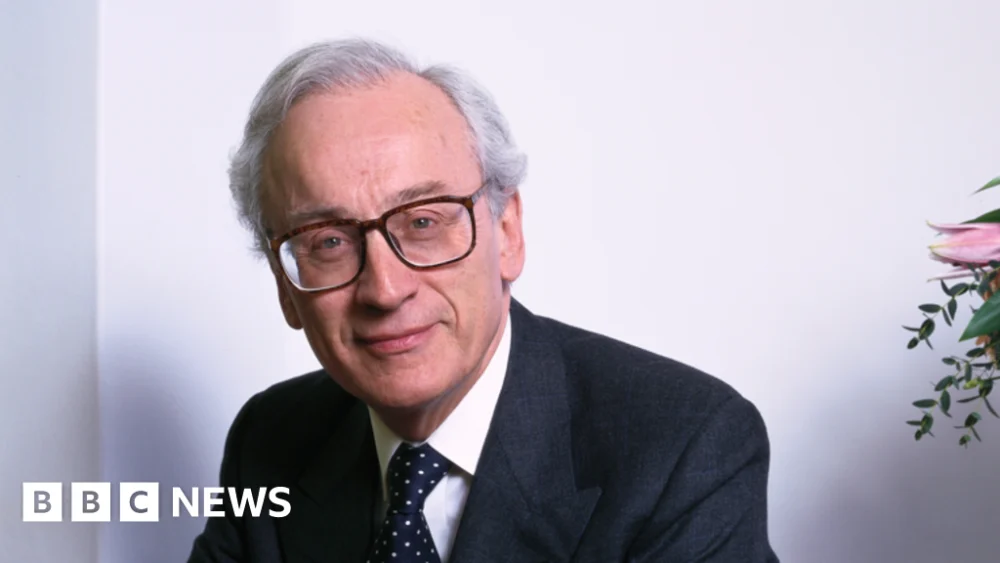
Lord Chadlington, a prominent Conservative peer and a former influential adviser to Prime Minister John Major, has announced his immediate departure from the House of Lords and resignation from the Conservative Party. His decision comes in the wake of a damning report by the Lords standards commissioner, Martin Jelley, which recommended his suspension from Parliament for a year. The investigation concluded that Lord Chadlington had committed multiple breaches of the Lords code of conduct, specifically concerning his involvement in assisting a subsidiary of a company he chaired to secure lucrative contracts for personal protective equipment (PPE) during the tumultuous early months of the COVID-19 pandemic.
The controversy centers on the peer’s actions in 2020, when the UK government was scrambling to procure essential PPE to protect frontline health workers. Lord Chadlington was found to have leveraged his parliamentary position to facilitate deals for SG Recruitment Ltd (SGRL), a subsidiary of Sumner Group Holdings Ltd (SGHL), where he served as a shareholder and non-executive director. SGRL subsequently secured contracts through the government’s controversial ‘High Priority Lane’ – a fast-track procurement route established to accelerate the acquisition of vital supplies during the national emergency. This lane, designed to bypass traditional competitive bidding processes, became a lightning rod for criticism, with allegations of a lack of transparency, potential cronyism, and concerns over the quality and value for money of contracts awarded. The urgency of the pandemic, while undoubtedly real, often led to less stringent checks, creating opportunities for those with connections to government to secure lucrative deals, raising significant ethical questions about conflicts of interest and the integrity of public service.
This latest development marks the culmination of a protracted and complex series of inquiries. Initially, Lord Chadlington had been cleared in two separate investigations conducted by the previous Lords standards commissioner in 2022 and 2023. These earlier probes had concluded that his actions did not constitute a breach of the stringent ethical guidelines governing members of the upper house. However, the landscape shifted dramatically when new information emerged from the ongoing UK Covid-19 Inquiry. Evidence submitted by Lord Chadlington himself to the public inquiry, detailing his extensive contact with ministers and government advisers during the pandemic, prompted the current commissioner, Martin Jelley, to launch a third, more in-depth investigation. This "fresh evidence" proved pivotal, shedding new light on the extent and nature of his involvement and ultimately leading to the revised and critical findings.

The commissioner’s report, made public on Friday, meticulously outlined three primary breaches of a crucial Lords rule that explicitly prohibits peers from providing "parliamentary services in return for payment or other incentive or reward." Firstly, Lord Chadlington was found to have introduced SGRL’s chief executive, David Sumner, to Lord Feldman, who was then an influential adviser to the Department of Health on procurement matters. This introduction, facilitated by a sitting peer, provided SGRL with direct access to a key decision-maker in the government’s PPE procurement strategy, a significant advantage in the highly competitive and urgent environment of the pandemic.
Secondly, the investigation revealed that Lord Chadlington contacted the then-Health Secretary, Matt Hancock, specifically to obtain the personal contact details of another senior adviser, Lord Deighton, again for the benefit of David Sumner. This demonstrated a direct and active use of his privileged access to government ministers to aid a company in which he held a financial interest. Thirdly, and compounding these actions, he was found to have provided direct advice to Sumner on the most effective way to approach Lord Deighton, effectively coaching him on how to navigate the corridors of power to secure contracts. These actions, taken together, painted a clear picture of a peer actively using his position, network, and influence to advance the commercial interests of a company with which he was financially linked.
Beyond these direct breaches related to parliamentary services, the commissioner also found Lord Chadlington guilty of additional transgressions. He was cited for failing to fully cooperate with the two previous investigations, a critical requirement for maintaining the integrity of the Lords’ self-regulatory system. This lack of full disclosure in earlier inquiries implied a potential attempt to downplay or obscure the extent of his involvement. Furthermore, he was found to have failed to act "on his personal honour," a fundamental principle underpinning the conduct expected of all members of the House of Lords. This particular finding suggests a broader lapse in judgment and a failure to uphold the high ethical standards intrinsic to parliamentary life, especially when personal financial interests intersect with public duty.
In response to the commissioner’s findings and the recommended 12-month suspension, Lord Chadlington had lodged an appeal. He vigorously maintained that any errors he might have made were "honest," and asserted his "total commitment to full transparency" throughout the process. He vehemently "wholly rejected" the commissioner’s conclusions and argued that the proposed sanction of a year-long suspension was "wholly disproportionate" to the alleged misconduct. His defence rested on the premise that his intentions were honorable, driven by a desire to assist the nation during an unprecedented crisis, and that he had not personally profited from the introductions.

However, the Lords Conduct Committee, the body responsible for adjudicating such appeals, ultimately rejected his arguments. While acknowledging that there was "no finding that Lord Chadlington deliberately set out to mislead the former commissioner," the committee firmly concluded that his actions nonetheless "fell short of the standards the House expects of its members." This nuanced judgment highlighted that even in the absence of deliberate deception, a peer’s conduct must consistently uphold the highest ethical benchmarks, particularly when navigating the complex intersection of public service and private business interests. The committee’s decision to uphold the recommendation for a 12-month suspension underscored the seriousness with which the House views breaches of its code of conduct, especially those involving commercial dealings during a national crisis.
Facing the imminent prospect of a vote by the entire House of Lords on his suspension, Lord Chadlington chose to pre-empt the formal proceedings by announcing his immediate retirement and resignation from the Conservative Party. In a statement issued on Friday, he reiterated his stance: "Although the committee have acknowledged that I did not act dishonestly, it is important that I make clear that I never profited from an introduction, properly made with honourable intent, at a time of unprecedented national crisis." He continued, "Any errors that I did make were honest. I have apologised for them and I do so again today." Providing context for his retirement, he explained, "For more than three years, since reaching 80, I have discussed retiring with House officials but did not wish to do so while these investigations were ongoing." Concluding his statement, he declared, "I have now decided, having proudly served as a peer for 30 years, that the time is right for me to retire and resign my membership of the Conservative Party." His resignation effectively bypasses the formal vote on his suspension, allowing him to leave Parliament on his own terms rather than facing a public rebuke from his peers.
The decision from the Lords Conduct Committee and Lord Chadlington’s subsequent resignation were met with approval by the Covid-19 Bereaved Families for Justice campaign group. This influential advocacy group had been instrumental in prompting the third investigation, having lodged a complaint that brought the "fresh evidence" to the commissioner’s attention. A spokesperson for the campaign group hailed the outcome as a vindication of "years we have spent fighting to expose the truth" about the controversial ‘High Priority Lane’ for PPE contracts. Their long-standing advocacy has consistently highlighted concerns about transparency, accountability, and potential conflicts of interest in the government’s pandemic procurement strategies, and this ruling provides a significant moral victory for their efforts.
This case adds another chapter to the ongoing scrutiny of government procurement during the pandemic, reinforcing public and parliamentary concerns about the ‘VIP lane’ system. The House of Lords, as an unelected chamber, relies heavily on the integrity and ethical conduct of its members to maintain its legitimacy and public trust. Breaches of the code of conduct, particularly those involving financial interests and access to government, are therefore taken extremely seriously. Lord Chadlington’s departure, while allowing him to avoid a formal suspension, serves as a stark reminder of the rigorous standards expected of those in public office and the enduring legacy of the controversies surrounding the acquisition of PPE during one of the most challenging periods in recent British history. The incident underscores the critical role of independent oversight bodies, such as the Lords standards commissioner, in holding powerful individuals to account and safeguarding the ethical foundations of parliamentary democracy. The full implications of the ‘High Priority Lane’ and the ethical questions it raised continue to be a subject of public debate and official inquiry, with Lord Chadlington’s case shining a further light on the complex interplay between public service, private enterprise, and political influence during a time of national crisis.



 Roy Suryo
 Nakalama John
 atisusanti