Nana Banana
The original blueprint for the Artemis program envisioned a direct progression: following the uncrewed Artemis I test flight, the Artemis II mission, currently slated for launch in April, would carry a crew around the Moon and back. This would then be followed by Artemis III, the mission designated for the historic crewed lunar landing, initially targeted for 2028. However, under the revised plan, Artemis III will now serve a different, crucial purpose. Instead of heading to the Moon, a crew aboard the Orion capsule will embark on a mission to low-Earth orbit (LEO) in 2027. The primary objective of this new Artemis III flight will be to practice docking procedures with a lunar lander, a vital maneuver that must be perfected before any attempt at a Moon landing.
Despite this new interim step, NASA maintains that this additional flight will not impede its overarching goal of returning humans to the lunar surface. The agency is still targeting 2028 for its first crewed lunar landing, which will now be designated as Artemis IV or V. In a display of accelerated ambition, NASA also suggested the possibility of achieving not just one, but potentially two lunar landings within that same year, under the banners of Artemis IV and V.
During a media briefing outlining these changes, NASA Administrator Jared Isaacman articulated the rationale behind the program’s evolution. Isaacman emphasized that the previous architecture, characterized by extended periods between launches, was "not a pathway to success." He highlighted the inherent risks of such a protracted timeline: "You don’t go from one uncrewed launch of SLS [Artemis I], wait three years, go around the Moon [Artemis II], wait three years and land on it." The administrator stressed that the addition of an extra, dedicated test flight in low-Earth orbit is a proactive measure designed to reduce these risks and enhance mission reliability. This intermediate step will allow engineers and astronauts to thoroughly test the integrated systems of the Orion capsule and the lunar lander in a comparatively safer and more accessible environment, far less unforgiving than the vast expanse around the Moon. Furthermore, Isaacman noted that this new Artemis III mission would present a valuable opportunity to test the next-generation spacesuits that astronauts will ultimately wear on the lunar surface, ensuring their functionality and comfort before a high-stakes landing.
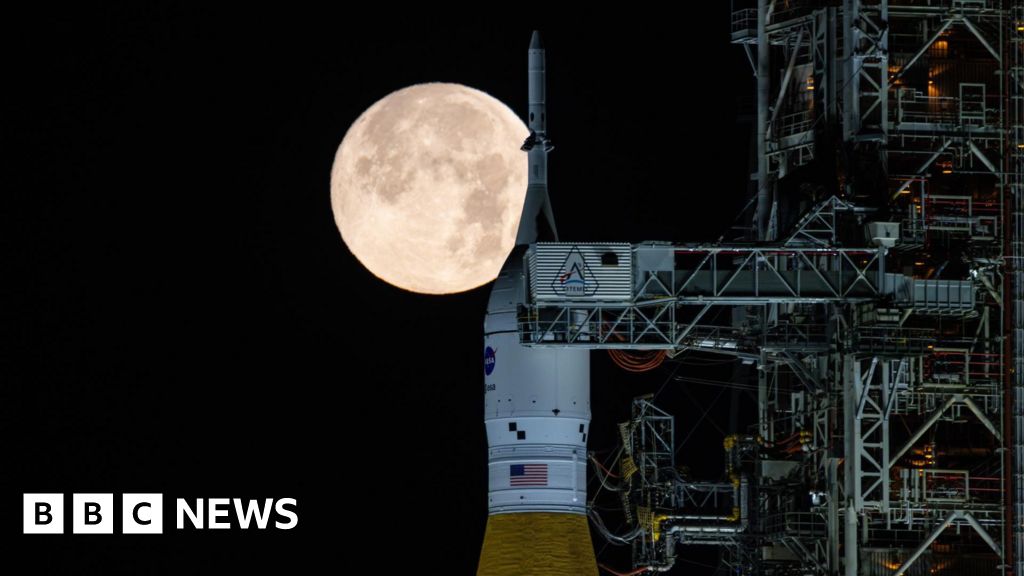
Concurrently with these programmatic shifts, NASA also provided an update on the eagerly anticipated Artemis II mission. This mission is set to carry four astronauts – Victor Glover, Jeremy Hansen, Reid Wiseman, and Christina Koch – on a journey around the far side of the Moon and back to Earth, serving as a critical dress rehearsal for future lunar landings. While NASA had initially aimed for a March launch, these plans have been delayed due to a technical setback. A helium leak was detected on the massive Space Launch System (SLS) rocket, the most powerful rocket in the world, necessitating its return from the launchpad. The majestic rocket has since been carefully transported to the iconic Vehicle Assembly Building (VAB) at the Kennedy Space Center in Florida, where engineers will undertake the necessary repairs. Consequently, the earliest possible launch window for Artemis II has now shifted to April, with the exact date contingent upon the duration and complexity of the required technical work. This delay, though disappointing, underscores NASA’s unwavering commitment to safety and thoroughness in its complex human spaceflight endeavors.
The new plans represent a significant strategic pivot for the Artemis program, reflecting a more pragmatic and incremental approach to deep-space exploration. Isaacman’s candid assessment that the previous architecture was "not a pathway to success" reveals a proactive willingness to adapt in the face of developmental challenges and the sheer complexity of the mission. By sending the Orion capsule and a lunar lander into low-Earth orbit first, NASA aims to replicate and refine critical procedures like docking and transfer, ensuring that the astronauts are fully prepared and the hardware is thoroughly vetted before facing the unique challenges of the lunar environment. This methodical approach is intended to mitigate potential failures and safeguard the lives of the astronauts.
However, a major piece of the Artemis puzzle remains under active development: the Human Landing System (HLS), the vehicle that will ultimately transport astronauts from lunar orbit to the Moon’s surface and back. Elon Musk’s SpaceX company currently holds a pivotal contract to develop this lander, which will be an adapted version of their massive Starship rocket. Starship’s ambitious development schedule, which includes the complex challenge of orbital refueling to achieve lunar transit, has faced its own share of delays. Recognizing the critical importance of having a reliable lander ready for the 2028 target, NASA has urged SpaceX to provide a new, streamlined plan to accelerate the development and certification of Starship for human lunar landing.
In a move to foster competition and ensure redundancy, NASA has also extended an invitation to Blue Origin, the aerospace company founded by Jeff Bezos. Blue Origin has been asked to present its own accelerated plan for its proposed lunar lander, adding another potential provider to the mix. This dual-path strategy is designed to increase the likelihood of having at least one certified human-rated lunar lander ready within the required timeframe, reducing dependence on a single contractor and fostering innovation. The newly introduced Artemis III LEO docking mission offers flexibility, as Isaacman indicated it could potentially involve testing integration with one or both of the competing lander designs.
These adjustments to the Artemis program unfold against a backdrop of escalating international competition in lunar exploration. The United States is keenly aware of the pressure to re-establish a human presence on the Moon, particularly as China continues to make steady and impressive progress toward its own ambitious goal of a crewed lunar landing by 2030. Both nations have expressed a strategic interest in the Moon’s South Pole, a region believed to harbor significant reserves of water ice in permanently shadowed craters. This water ice is a crucial resource, not only for potential life support for future lunar bases but also as a source of hydrogen and oxygen propellants, which could enable deeper space missions. The competition for these scientifically valuable and strategically important "best spots" at the lunar South Pole adds a geopolitical dimension to the ongoing lunar race, making the success of the Artemis program even more imperative.
Ultimately, NASA’s revised approach to the Artemis program underscores a fundamental commitment to safety, technological readiness, and sustained exploration. While the adjustments may introduce new steps and shift timelines, they are rooted in a desire to build a robust and reliable pathway for humanity’s return to the Moon, ensuring that the next generation of lunar explorers can embark on their missions with the highest possible degree of confidence and preparation. The shift from a singular "race to the Moon" to a more deliberate, sustainable presence reflects a mature and evolving vision for space exploration.




 George Anjay
 Nakalama John
 atisusanti
 Ramos Leo