
 Nana Banana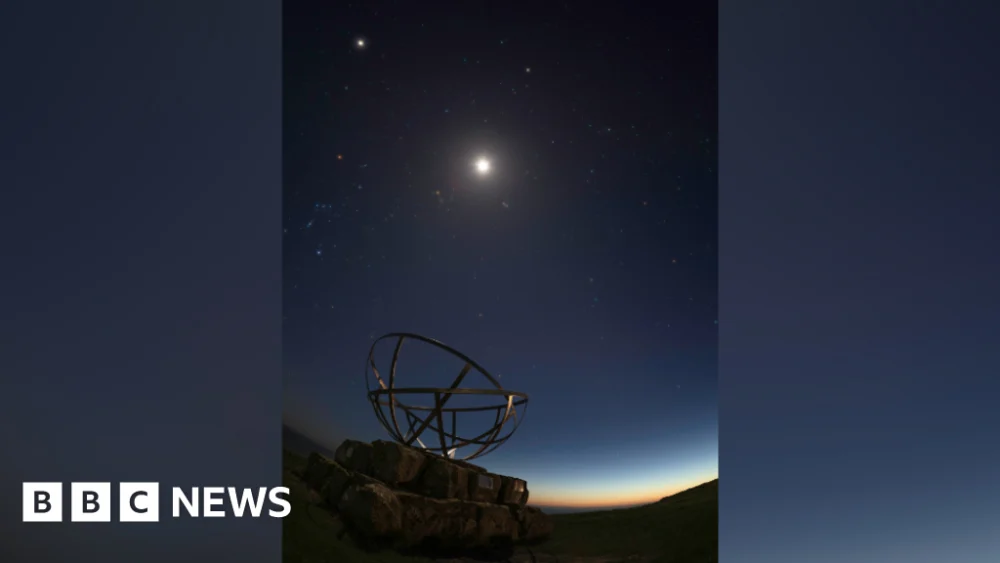
The phenomenon, known as a planetary parade, occurs when several planets appear to gather closely on one side of the Sun from Earth’s vantage point. While not a true physical alignment in space, which would be extraordinarily rare, the visual spectacle is nonetheless captivating, allowing skywatchers to witness multiple planetary bodies within a relatively small arc of the sky. For photographers like Dury, it represents a challenging yet deeply rewarding opportunity to document the dynamic beauty of our solar system. The chosen location, Worth Matravers, with its dramatic cliffs and designation as a radar memorial, provided an ideal, dark-sky environment, far from the light pollution that often obscures such delicate astronomical events. Its historical significance, once vital for monitoring the skies during wartime, now lends itself to observing the peaceful dance of distant worlds.
Dury’s journey to capture this elusive moment was itself an odyssey, a gruelling four-hour drive from Bristol that should have taken half the time, hampered by unexpected road closures and the relentless pressure of the setting sun. "It was a matter of arriving on location and seeing the sun go down to get into position to wait for the sky to darken," Dury recounted, describing the race against time as the window for optimal visibility rapidly narrowed. Astrophotography demands not only technical prowess but also immense patience and a keen understanding of celestial movements. The fading twilight and the planets’ low positions on the horizon meant that every second counted, transforming the pursuit of beauty into a high-stakes "battle against time."
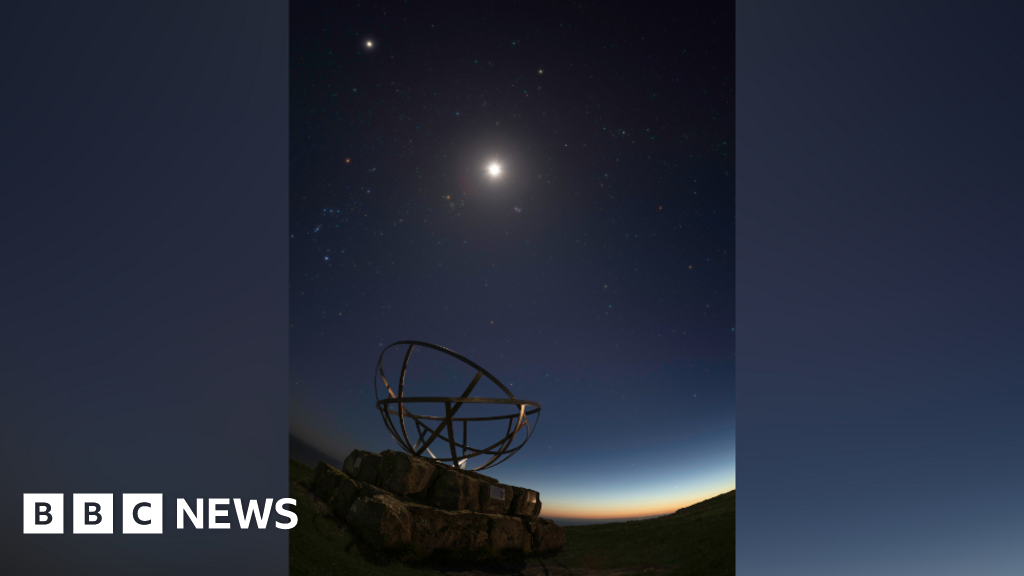
To achieve such a sweeping vista, Dury employed a specialized wide-angle lens, a crucial piece of equipment that allowed him to encompass a nearly 180-degree field of view. This enabled him to capture the entire arc of the planetary procession, rendering them visible as a "string of pearls in the sky" – a poetic description that perfectly encapsulates the ethereal beauty of the scene. The image is not merely a record of astronomical data but an artistic interpretation, highlighting the delicate interplay of light and shadow, the subtle colours of distant worlds, and the vast, inky canvas of space. Each planet, though tiny specks to the naked eye, becomes a distinct entity through Dury’s lens, a testament to the power of dedicated observation and advanced photographic techniques.
Upon reviewing his shots, Dury admitted to being "positively overwhelmed." The successful capture of such a rare configuration, especially after the arduous journey and the technical challenges, was a moment of profound satisfaction. "It was wonderful to see the developmental stages of the parade happen," he reflected, emphasizing the dynamic nature of the event as the sky darkened and the planets gradually revealed themselves. He highlighted the uniqueness of the photograph, noting, "It’s quite a rare photograph purely because it’s that line-up of how they appear in the night sky." Beyond its aesthetic appeal, the image carries a deeper, philosophical resonance. "It just really puts into perspective our place among the solar system," Dury concluded, articulating the humbling yet inspiring realization that such celestial events evoke in us.
For those eager to witness this cosmic spectacle firsthand, the good news is that another opportunity to observe a planetary parade is imminent. From sunset on Saturday, the skies over the UK will once again offer a chance to spot Mercury, Venus, Saturn, and Neptune, appearing low in the western sky, close to the horizon. This alignment, while perhaps not as comprehensive as the one Dury captured, still promises a memorable viewing experience. Aspiring skywatchers should prioritize finding a viewing spot with the clearest possible view of the horizon, as Mercury and Venus, in particular, will hug the edge of the sky. Locations away from city lights, similar to Worth Matravers, will significantly enhance visibility, allowing the fainter planets to emerge from the encroaching light pollution.
While some of these planets might be visible to the unaided eye under ideal conditions, having access to binoculars or a telescope will undoubtedly enrich the experience. For those without personal equipment, attending a local astronomy society event is highly recommended. These societies often host public viewing sessions, providing expert guidance and powerful telescopes that can bring distant worlds into sharper focus. Such events are not only opportunities to observe but also to learn from experienced astronomers, sharing in the collective wonder of the night sky.
Higher in the sky, Uranus will make an appearance, nestled within the constellation Taurus. This icy giant won’t set until around midnight, offering skywatchers with the right equipment a more extended window to track it down. Its distant glow, though faint, is a reward for persistent observers. The easiest of the six planets to locate, however, will be Jupiter. Shining brilliantly in the constellation Gemini, Jupiter will be high enough to remain in view for much of the night, cutting through even moderate light pollution. Its prominence makes it an excellent target for beginners, often revealing its four largest moons through binoculars or a small telescope.
To maximize the chances of a successful viewing, preparation is key. Check local weather forecasts for clear skies, dress warmly, and allow your eyes at least 15-20 minutes to adapt to the darkness for optimal night vision. Avoid looking at bright lights, including phone screens, during this adaptation period. Using a red-light flashlight can help preserve night vision while navigating. Stargazing apps can also be invaluable tools, helping to pinpoint the planets’ exact locations and guiding observers through the constellations. This weekend’s planetary parade is a reminder of the dynamic and ever-changing universe we inhabit, a chance to pause, look up, and connect with the cosmic ballet unfolding above us, just as Josh Dury did in Dorset.



 Roy Suryo
 Nakalama John


 atisusanti