Nana Banana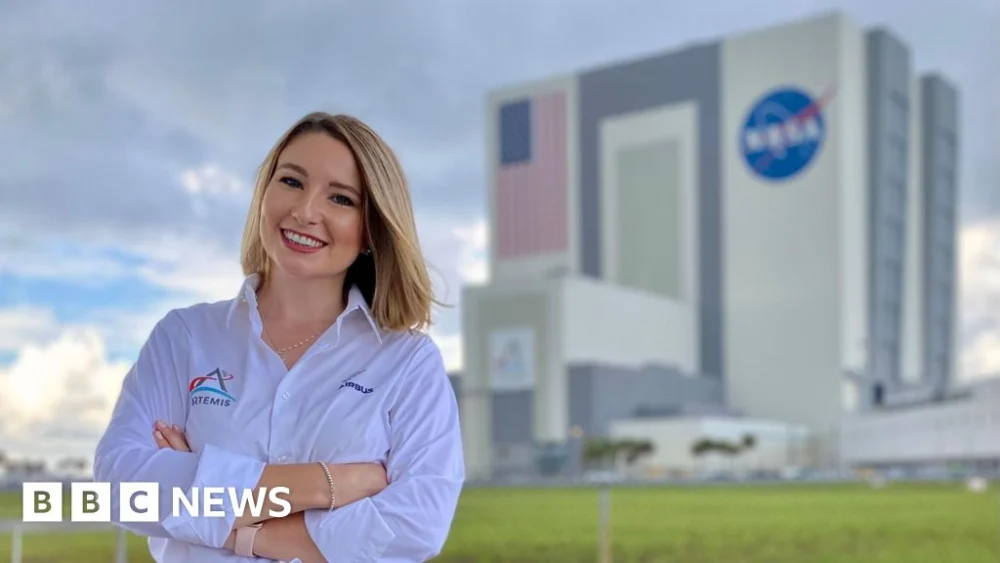
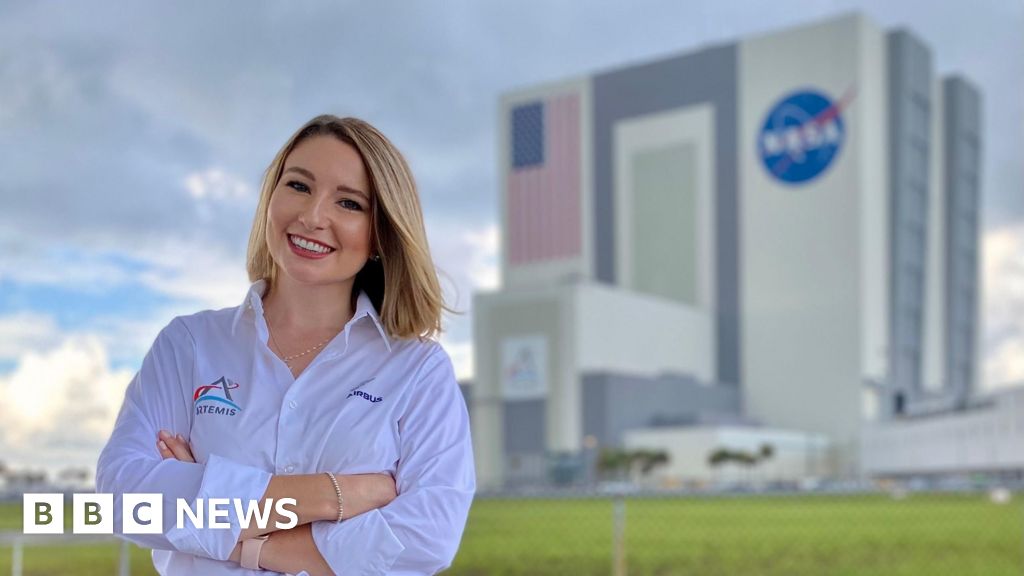
Sian Cleaver, a 36-year-old from Chelmsford, Essex, embodies a powerful narrative of ambition and resilience, proving that geographical stereotypes hold no sway over scientific aspiration. She asserts that the often-derogatory "Essex girl" stereotype has never hindered her relentless pursuit of a dream that transcends earthly boundaries: becoming an astronaut and working on a pioneering spacecraft designed to carry humans back to the Moon. Her journey stands as a testament to ignoring societal labels and forging one’s own path, even when that path leads to the stars.
Currently, Cleaver works as a highly respected spacecraft engineer for Airbus in Germany, a pivotal role in one of humanity’s most ambitious space exploration endeavors. Her expertise is channeled into the development of the propulsion system for the Orion spacecraft, a critical component of NASA’s groundbreaking Artemis II mission. This mission marks a significant leap in the effort to return humans to the lunar surface, and Cleaver’s contributions are literally powering that return.
"I don’t think stereotypes like that have ever bothered me," Cleaver stated, reflecting on the ‘Essex girl’ label, which often conjures images of superficiality, materialism, and a lack of academic inclination. "I’ve never worried about sticking to particularly girlie things. I don’t think I’ve ever been bothered by the trends because I’ve been so far removed from it." From an early age, her interests were firmly rooted in the cosmos, a world away from the often-caricatured preoccupations of the stereotype. This inherent drive towards scientific discovery provided a natural shield against the pressures of conforming to any pre-conceived notions.
Cleaver’s fascination with the universe blossomed during her formative years at Chelmsford County High School, where her passion for astronomy was nurtured. This early interest naturally led her to pursue higher education in physics at Durham University, a rigorous academic path that further solidified her foundation in the scientific principles governing spaceflight. Her academic journey was a clear indicator of her intellectual curiosity and dedication, qualities that directly countered the negative aspects of the ‘Essex girl’ trope.
With her remarkable career trajectory, Cleaver now actively encourages young girls and women to dismiss limiting stereotypes and wholeheartedly pursue their aspirations, no matter how grand. "If you’ve got big ambitions and it feels like people are bogging you down, just go for it anyway," she advises, drawing from her own experience. Her message is clear: personal drive and passion should always outweigh external judgments. "I always wanted to be an astronaut and that is always what inspired me and gave me drive, and I still have that dream," she confides, her eyes still set on the ultimate frontier.
The Artemis II mission, initially slated for launch in February, encountered a technical issue during a pre-test flight, necessitating a delay. The next possible launch window is now anticipated in early April. This mission is monumental: a four-person crew, including NASA astronaut Christina Koch, will embark on a 10-day journey to orbit the Moon, venturing closer to the lunar surface than any human has been since the Apollo 17 mission in 1972. This mission serves as a critical dress rehearsal for future lunar landings, paving the way for sustained human presence on the Moon.
Christina Koch, a veteran astronaut with a record-breaking spaceflight under her belt, shared a profound inspiration for her own journey into space: a striking picture of Earth taken by Bill Anders, a crew member of the Apollo 8 mission in 1968. This iconic "Earthrise" photograph ignited a spark in Koch, much like the allure of the cosmos captivated Cleaver. Both women exemplify how a single image or a deeply held passion can shape a life’s ambition. Cleaver, in turn, eagerly anticipates the future milestones of the Artemis program. "I want to see the first woman walk on the Moon," she declared. "Artemis II will see a woman orbit the Moon, which is an incredible step."
‘Diversity needs to be visible’
The Artemis II crew, comprising Reid Wiseman (commander), Victor Glover (pilot), Christina Koch (mission specialist), and Jeremy Hansen (mission specialist from the Canadian Space Agency), will be propelled towards the Moon by the European Service Module (ESM). This sophisticated module, for which Sian Cleaver and her team in Bremen built the large solar arrays, is the powerhouse of the Orion spacecraft. The ESM provides essential propulsion, power, water, air, and thermal control for the astronauts, demonstrating crucial international collaboration in space exploration.
While women like Cleaver are integral to the project’s success, she acknowledges that they remain a "minority" within the broader engineering and aerospace fields. "Diversity brings different perspectives and a different way of working, and it’s a real shame that it is not so visible," she lamented. This lack of visibility, she argues, not only deprives younger generations of relatable role models but also limits the richness of ideas and approaches that a more diverse workforce could bring.
To address this disparity, Cleaver actively engages in outreach, delivering talks at schools to inspire the next generation. "It’s good for younger people to see women doing jobs like mine," she explained. "So that when they start thinking of these jobs in the future, they don’t automatically picture a man doing them." This effort to normalize the presence of women in STEM (Science, Technology, Engineering, and Mathematics) is vital for breaking down ingrained gender biases.

However, the challenge remains significant. "There’s definitely not enough role models, particularly at higher levels," Cleaver added, highlighting a systemic issue within STEM leadership. Statistics from Women in Tech underscore this point: while over 9.4 million people work in STEM across the UK, women constitute only 25% of this workforce. This imbalance points to persistent barriers, including unconscious bias, lack of flexible working arrangements, and insufficient mentorship opportunities, which often hinder women’s progression into senior roles.
Cleaver’s personal journey, while deeply rewarding, has not been without its struggles. "I am still super excited and passionate about space, and that is what gives me the drive," she affirmed. Yet, she openly shared the additional effort often required to succeed. "It feels like I have to push and fight extra hard compared to some of my peers, and that has always frustrated me." This candid admission sheds light on the subtle yet pervasive challenges women can face in male-dominated industries, often having to prove themselves more rigorously than their male counterparts.
This sense of responsibility extends beyond her individual career. "I feel like a weighted responsibility because I feel like there are younger women who are looking up to me, but I wish there was more that I can look up to as well," she reflected. This highlights the critical need for a robust pipeline of female leaders and mentors across all levels of STEM, creating a more supportive and equitable environment for those following in their footsteps.
The broader significance of the Artemis program resonates deeply with Cleaver. "The fact that we are going back to the Moon, there is a whole generation of people on this planet who haven’t lived through a moon landing, and we are about to live that again," she enthused. This return to lunar exploration represents not just a scientific endeavor but a cultural touchstone, reigniting wonder and inspiring new generations.
For Sian Cleaver, being a part of this historic moment is a profound privilege. Her journey from Chelmsford to the forefront of lunar exploration, unburdened by outdated stereotypes, serves as a powerful beacon. It demonstrates that passion, perseverance, and a firm belief in one’s capabilities are the true determinants of success, not where one comes from or the labels society might attempt to impose. As Artemis II prepares for its launch, Sian Cleaver stands as a testament to the boundless potential of human ambition, reminding us that the sky is not the limit, but merely the beginning.




 Roy Suryo
 George Anjay
 Ramos Leo
 atisusanti