
 Ramos Leo
Writing in The Times, Ovenden articulated a critical view of the modern British state, asserting that it has paradoxically grown "bigger and bigger while simultaneously and systematically emasculating itself." He contended that this expansion in size has not translated into greater effectiveness but rather into a system riddled with external dependencies and bureaucratic inertia. His argument posits that the very mechanisms intended to ensure accountability and fairness have, in many instances, become impediments to decisive governance and the timely delivery of pledges made to the electorate.
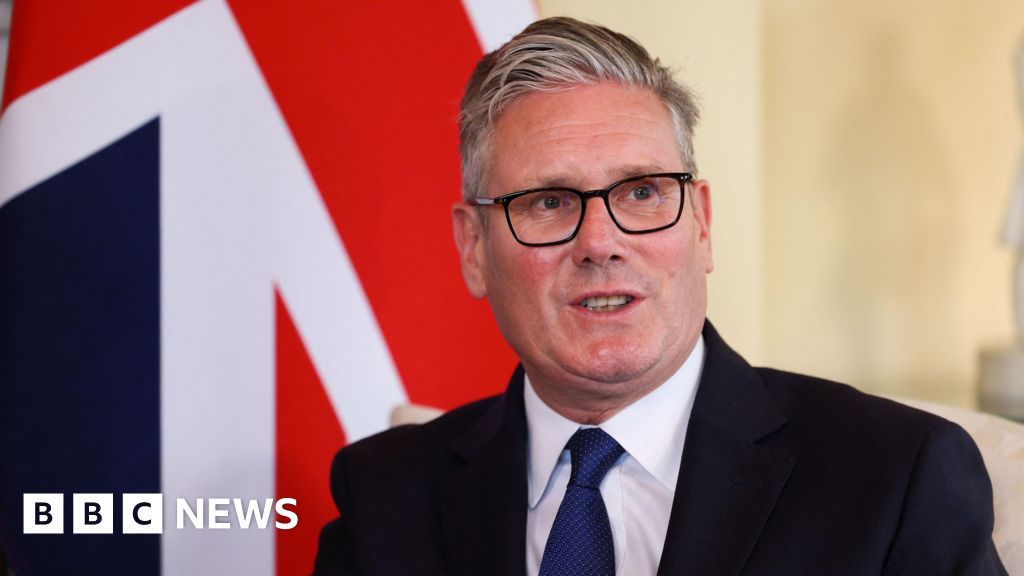
Ovenden specifically highlighted the complex and protracted case of the British-Egyptian activist Alaa Abd El Fattah as a prime example of what he described as "the sheer weirdness of how Whitehall spends its time." Speaking to the BBC, he further elaborated on his belief that, with a "stiffening resolve," politicians could indeed "take back control" of the levers of democracy, reclaiming the agency necessary to govern effectively. He expressed confidence that Sir Keir Starmer, whom he believes "does feel those frustrations very acutely," is "exactly the right person" to spearhead such fundamental changes, a sentiment he shared on Radio 4’s Today programme.
The critique from Ovenden is not isolated. Separately, Chris Powell, a seasoned political strategist who worked on four Labour general election campaigns and is the brother of Jonathan Powell, a former chief of staff to Tony Blair, has also called for a "fundamental reset" within the Labour government. Writing in The Guardian, Powell argued that such a drastic re-evaluation is essential if Labour is to effectively combat the growing electoral threat posed by Reform UK. He painted a picture of a disillusioned electorate, stating that voters are "fed up, think nothing works – and some are simply angry and feel ignored." These comments from two influential figures, both with deep ties to the Labour Party, underscore a palpable sense of concern regarding the current state of governance and public trust.
Their interventions come at the dawn of what is anticipated to be a particularly challenging year for the Prime Minister. The political calendar includes crucial local elections in May, which will serve as a significant barometer of public opinion. Furthermore, the Prime Minister faces the persistent threat of a leadership challenge from within the Labour Party, fueled by those dissatisfied with the government’s performance and direction thus far. This precarious political environment lends additional weight to the warnings from Ovenden and Powell, suggesting that their analyses resonate with broader anxieties about the government’s capacity to deliver.
The case of Alaa Abd El Fattah, which Ovenden cited as a symbol of governmental distraction, involved his imprisonment in an Egyptian jail for over a decade. He was convicted on charges of "spreading fake news" related to alleged torture in the country. His prolonged detention prompted extensive lobbying efforts by successive British governments, highlighting the diplomatic complexities involved in such cases. Following these sustained diplomatic pressures, Abd El Fattah was finally released in September and subsequently arrived in the UK last week.
His arrival was initially met with a welcoming statement from the Prime Minister, who expressed his delight and affirmed that Abd El Fattah’s case had been "a top priority for my government." However, this welcome quickly turned into a significant controversy when past social media posts by Abd El Fattah surfaced, in which he had called for the killing of Zionists and police officers. Sir Keir Starmer subsequently faced considerable criticism, stating that he had been unaware of the "absolutely abhorrent" posts. Abd El Fattah has since apologised for the remarks, and the government has announced a review into the "information failures in this case," acknowledging the serious lapse in due diligence.
Reflecting on this specific episode, Ovenden recounted on Radio 4’s Today programme how the case consumed significant government attention. "We’d be having long meetings on the priorities of the government and they would be railroaded by any other business into discussions about this gentleman," he explained. He noted that many on the political side of government were not intimately aware of the details, as "it didn’t impact us on a day-to-day basis." The situation, he revealed, "actually became a kind of running joke within government that people would always find a way to bring it back to this conversation." For Ovenden, the Abd El Fattah case "became sort of totemic of the distraction of issues that it felt like a different part of government were fascinated by," diverting focus from core policy objectives.
When pressed on why politicians found themselves unable to simply disregard such subjects, Ovenden’s answer was direct: they had "effectively handed away power." He elaborated, "What they’re really trying to do is hand away risk but they’ve handed away power to arm’s length bodies, to quangos, to activists, to lawyers, to regulatory framework, to well-networked organisations… who are able to basically stop the machinery of government doing things." This surrender of power, in his view, creates a complex web of external influences that can paralyse government action, even on matters that seem peripheral to the immediate concerns of the public.
Ovenden provided further examples of what he considered to be such "distractions," citing discussions around paying colonial reparations or the debate surrounding banning vaping in pub gardens. While these issues may hold some public interest, he argued that their disproportionate consumption of governmental time and resources diverts attention from more pressing matters that directly impact the daily lives of citizens. He concluded that it was "no surprise the public are fed up with politicians’ ability to get things done," but he maintained an optimistic outlook, believing that "we can change this and change quite quickly."
To reverse this trend, Ovenden proposed concrete steps. He argued that the government should proactively scale back some of its extensive legal obligations. Specifically, he highlighted environmental obligations for building projects, which often lead to protracted delays and increased costs, and the right to launch legal challenges against government policies through judicial reviews. While judicial reviews are a cornerstone of administrative law, ensuring accountability and adherence to the rule of law, Ovenden suggested their current application can be overly broad, allowing external groups to consistently challenge and impede policy implementation, thus slowing down the legislative and executive process to a crawl.
Ovenden’s comments find a significant echo in sentiments previously expressed by the Prime Minister himself. Before Christmas, during an appearance before the parliamentary Liaison Committee, Sir Keir Starmer was asked about the most challenging aspect of his time in government. His candid reply was: "Speed and ability to get things done in Parliament." He elaborated on the bureaucratic hurdles he encountered: "We have so many checks and balances and consultations and regulations and arm’s length bodies."
Sir Keir’s diagnosis of the problem was remarkably similar to Ovenden’s. He observed, "My own sense, after 12 to 18 months in the job – and this is a fault of governments of all political colours – is that every time something has gone wrong in the past, successive governments have put in place another procedure, another body or another consultation to try to stop ourselves ever making a mistake again." This risk-averse culture, while seemingly prudent, has cumulatively created a thicket of regulations and oversight bodies that stifle agility. "My experience as prime minister is of frustration that every time I go to pull a lever, there are a whole bunch of regulations, consultations and arm’s length bodies that mean the action from pulling the lever to delivery is longer than I think it ought to be, which is among the reasons I want to cut down on regulation generally and within government," Sir Keir concluded.
The convergence of these views from both a former insider and the current Prime Minister highlights a growing recognition within the political establishment that the machinery of government has become overly complex and self-limiting. The arguments suggest a deep-seated frustration with a system that, in its pursuit of comprehensive oversight and risk mitigation, has inadvertently sacrificed efficiency and responsiveness. The challenge now lies in finding a balance that allows for decisive action and pledge delivery, without undermining the essential principles of accountability, transparency, and the protection of rights that arm’s-length bodies and judicial reviews are designed to uphold. The proposed solutions, particularly those concerning the scaling back of legal obligations and the reform of regulatory frameworks, signal a potential shift towards a more streamlined, though potentially more contested, approach to governance in the years ahead.




 Roy Suryo

 Nakalama John
 atisusanti
