George Anjay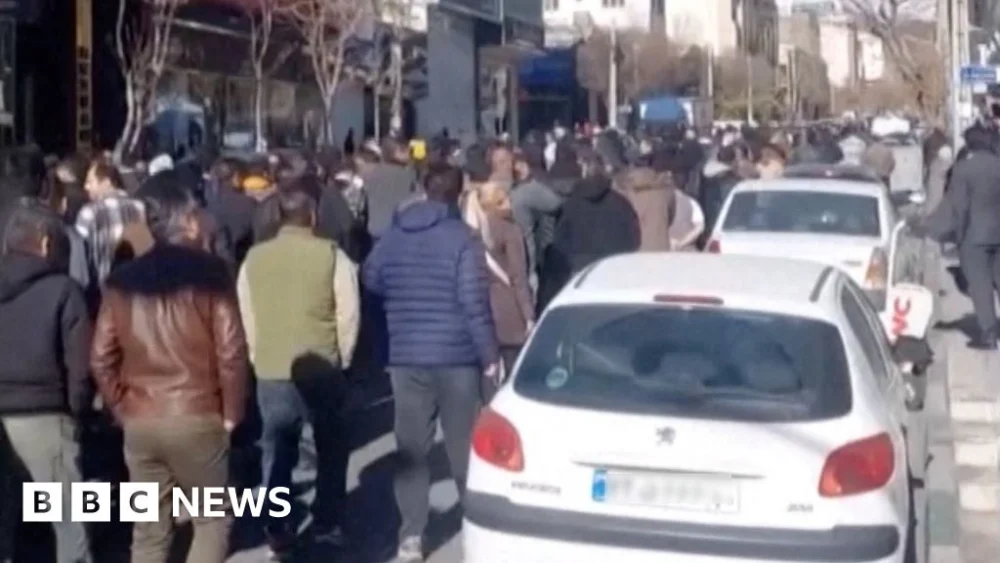
United States President Donald Trump has issued a stark warning to Iran’s authorities, declaring that Washington "will come to their rescue" if they resort to killing peaceful protesters. In a pointed and concise statement posted on social media, Trump asserted, "We are locked and loaded and ready to go," though he provided no further specifics regarding the nature or timing of any potential intervention. This bold declaration from the former president has ignited a predictable firestorm of reaction, both domestically and internationally, particularly within the already volatile Middle East.
A senior adviser to Iran’s Supreme Leader Ayatollah Ali Khamenei swiftly responded to Trump’s pronouncement, urging him to "be careful" about any contemplation of intervention. The Iranian official warned that such an action could precipitate widespread chaos across the Middle East, highlighting the potential for a regional conflagration. The exchange underscores the deep-seated animosity and strategic rivalry between the United States and Iran, a dynamic that frequently spills over into public rhetoric and has, in the past, led to direct military confrontation.
The current wave of unrest in Iran, which has seen mass protests erupt across the country, is reportedly linked to worsening economic conditions. At least eight individuals have been confirmed killed in the ongoing demonstrations, which have now entered their fifth day. The protests, initially sparked by a sharp decline in the value of the Iranian rial against the US dollar, have rapidly escalated, drawing in a diverse range of citizens, from shopkeepers to university students. The economic hardships, exacerbated by international sanctions and internal mismanagement, appear to have reached a critical tipping point, fueling widespread discontent with the clerical regime.
In his Friday post on Truth Social, Trump elaborated on his warning, stating, "If Iran shots [sic] and violently kills peaceful protesters, which is their custom, the United States of America will come to their rescue." The former president’s reference to this being Iran’s "custom" points to a perceived pattern of brutal suppression of dissent by the Iranian government. While Trump did not explicitly detail the actions Washington might take, his words evoke memories of past US military engagements and a willingness to project power in the region.
The historical context of US-Iran relations is crucial to understanding the gravity of Trump’s statement. In June, under Trump’s direct orders, the United States carried out strikes against Iran’s nuclear facilities. American officials at the time argued that these strikes had significantly impeded Tehran’s ability to develop nuclear weapons, a claim that Iran vehemently disputed. This act of aggression, in turn, provoked retaliation from Iran, which launched a missile attack on a major US military base in Qatar. This tit-for-tat escalation demonstrates the volatile nature of the relationship and the potential for miscalculation to trigger wider conflict.
Following Trump’s latest social media salvo, Ali Larijani, a senior adviser to Supreme Leader Khamenei, issued his own stern warning. Larijani stated, "Trump should know that US interference in this internal matter would mean destabilising the entire region and destroying America’s interests." This statement reflects Iran’s deep suspicion of US intentions and its conviction that any foreign intervention would serve to undermine regional stability and ultimately harm American interests. The rhetoric from both sides suggests a dangerous escalation of diplomatic and potentially military posturing.
The human toll of the protests in Iran is mounting. On Thursday alone, six people were reported to have been killed. In the southwestern city of Lordegan, clashes between protesters and security forces resulted in two deaths, according to reports from the semi-official Fars news agency and the human rights group Hengaw. Three more individuals were killed in Azna and one in Kouhdasht, both cities in the western part of the country, as reported by Fars. The news agency did not specify whether the deceased were demonstrators or members of the security forces. However, Hengaw identified the two killed in Lordegan as protesters, naming them as Ahmad Jalil and Sajjad Valamanesh. Additional casualties were reported in Fuladshahr in central Iraq and Marvdasht in the south. It is important to note that the BBC has not been able to independently verify all these reported deaths, underscoring the difficulty of obtaining accurate information from a country where media access is tightly controlled.
Footage circulating on social media has depicted scenes of intense unrest, with cars set ablaze during running battles between protesters and security forces. BBC Persian has confirmed the authenticity of videos showcasing protests in Lordegan, Tehran, and Marvdasht on Thursday, providing visual evidence of the widespread nature of the demonstrations and the violent confrontations.
A point of contention has emerged regarding the death of a young member of the country’s security forces in the western city of Kouhdasht on Wednesday. While Iranian officials initially stated that the individual was a member of the security forces killed in the line of duty, protesters claim that the man was, in fact, one of their own, shot dead by security forces. This conflicting narrative highlights the information war being waged alongside the physical confrontations and the deep distrust between the populace and the authorities. The tensions surrounding this death were palpable on Friday, with clashes reported during the man’s burial ceremony, attended by thousands of mourners. Reports indicate that uniformed members of the security forces attempted to carry the coffin, but the crowd wrested it from them and chased them away, signifying the depth of anger and defiance.
The protests themselves began on Sunday in Tehran, with shopkeepers expressing their outrage over another significant depreciation of the Iranian currency, the rial, against the US dollar on the open market. By Tuesday, the demonstrations had broadened to include university students and had spread to several other cities. The chants against the country’s clerical rulers have become increasingly vociferous, with many protesters openly calling for an end to Supreme Leader Khamenei’s rule. Some have even expressed a desire for a return to monarchy, a sentiment that would have been unthinkable just a few years ago.
These current protests are being compared to the widespread uprising in 2022, which was sparked by the death of Mahsa Amini in custody. Amini, a young woman, had been accused by morality police of not wearing her veil properly. While the current demonstrations have not yet reached the same scale as those in 2022, they represent a significant and sustained challenge to the authority of the Iranian government.
In response to the unrest, President Masoud Pezeshkian has stated his intention to listen to the "legitimate demands" of the protesters. However, this conciliatory tone is tempered by a stark warning from the country’s Prosecutor-General, Mohammad Movahedi-Azad, who has declared that any attempt to create instability would be met with a "decisive response." This dual approach – a seemingly open ear to grievances coupled with a firm threat of repression – reflects the complex balancing act the Iranian government is attempting to navigate.
The geopolitical implications of Trump’s interventionist rhetoric are significant. The United States, under Trump’s presidency, adopted a more confrontational stance towards Iran, withdrawing from the Iran nuclear deal and reimposing stringent sanctions. His current warning suggests a potential willingness to revisit that approach, especially in the context of internal unrest within Iran. This could further inflame regional tensions and complicate diplomatic efforts to de-escalate the situation. The coming days and weeks will be critical in determining whether Trump’s warning translates into concrete action or remains a potent, but ultimately rhetorical, threat. The fate of the protesters and the stability of the region hang in the balance.

 Roy Suryo