Ramos Leo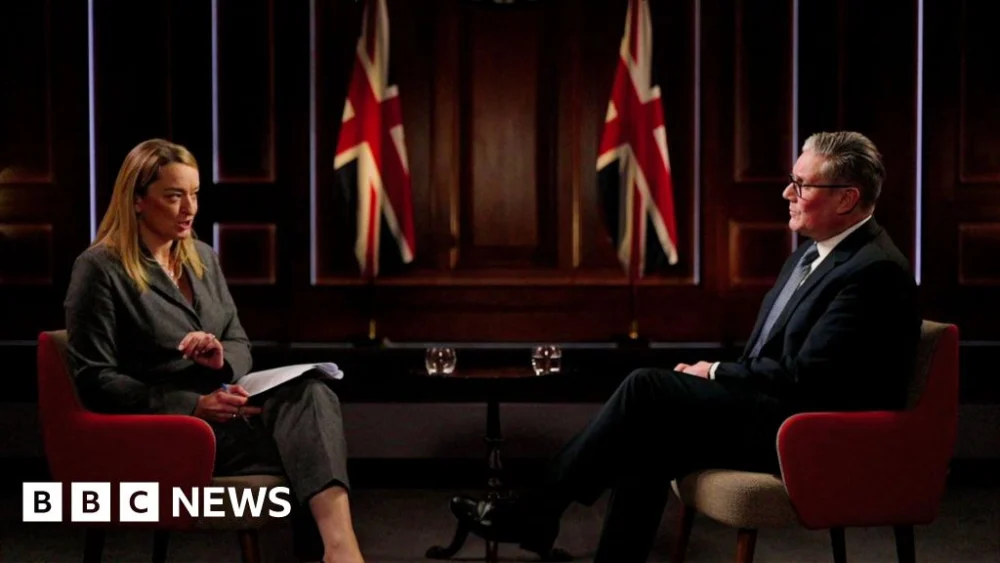
Sir Keir Starmer, in a defiant and candid interview with the BBC, has unequivocally dismissed lingering concerns about his leadership, confidently asserting that he will remain Prime Minister this time next year, a pledge made against a backdrop of a challenging political landscape. Speaking exclusively to Laura Kuenssberg on "Sunday with Laura Kuenssberg," the Prime Minister articulated a clear vision for stability and progress, directly addressing the turbulence that marked the preceding year.
The interview, conducted as the nation looked ahead to a new political year, saw Sir Keir confront head-on the narrative of a difficult 2025. That year had been characterized by an observable slowdown in economic growth, persistently poor poll ratings for his administration, and a swirling undercurrent of speculation regarding a potential leadership challenge from within his own party. Despite these pressures, Starmer remained resolute, framing the forthcoming elections in Scotland, Wales, and England in May not as a "referendum" on his government’s performance, but as distinct regional and local contests.
His comments resonate with the tone of his recent New Year’s Day message for 2026, in which he had vowed to "defeat the decline and division offered by others." In that address, the Prime Minister had passionately insisted that the year ahead would see the British public experience "positive change" in their daily lives, signalling an intent to shift the national mood and deliver tangible improvements. This commitment was reiterated in his BBC interview, where he linked his mandate directly to the trust placed in him by the electorate.
"I was elected in 2024 with a five-year mandate to change the country, and that’s what I intend to do, to be faithful to that mandate," Sir Keir declared, his voice firm and unwavering. He acknowledged the accountability inherent in his position, stating, "And I will be judged, and I know I’ll be judged, when we get to the next election, on whether I’ve delivered on the key things that matter most to people." This statement underscored his awareness of public expectations, particularly regarding the foundational pledges that propelled Labour to power. These included promises around revitalising the National Health Service, tackling the cost of living crisis, boosting economic growth, and investing in public services, all of which had been central to his 2024 campaign.
The interview aired just as Parliament prepared to return from its Christmas recess on Monday, with the Prime Minister scheduled to hold his first Cabinet meeting of 2026 the following day. During this crucial inaugural gathering, Sir Keir is expected to impress upon his ministers the urgency of their collective mission. He is anticipated to deliver a stark message: "I know families across the country are still worried about the cost of living. There will be no let-up in our fight to make life better for them." This directive signals the government’s continued focus on economic stability and alleviating the financial pressures felt by households, which have been a persistent challenge since his election. Analysts suggest this focus is a direct response to the economic headwinds of 2025, which saw inflation remain stubbornly high and consumer confidence dip, impacting the government’s approval ratings.
The Prime Minister’s defence of his leadership during the BBC interview was particularly emphatic, drawing a sharp contrast with previous administrations. "Under the last government, we saw constant chopping and changing of leadership, of teams, it caused utter chaos, utter chaos, and it’s amongst the reasons that the Tories were booted out so effectively at the last election," Sir Keir asserted, referring to the turbulent period under the Conservative Party’s tenure, which saw multiple Prime Ministers and frequent policy reversals. That era, marked by political infighting and a perceived lack of direction, had left a deep impression on the electorate, a sentiment Sir Keir is keen to avoid replicating.
He continued, driving home the importance of stability: "Nobody wants to go back to that. It’s not in our national interest. We know from that evidence what happens if you go down that chaotic path, and I’m not going to take us back to that kind of chaos." His commitment to a steady hand at the tiller was perhaps the most defining message of the interview, a deliberate attempt to project an image of calm authority and decisive governance, especially after a year where his own leadership faced scrutiny. The speculation of a leadership challenge, though never openly confirmed by any significant party figure, had nevertheless contributed to a sense of unease within Labour ranks and was widely reported in the media, with names of potential successors occasionally floated. Starmer’s direct challenge to this narrative aims to quash such rumours definitively.
In a bold concluding statement that encapsulated his confidence, Sir Keir looked directly into the camera and declared, "I will be sitting in this seat by 2027 and if this long-form interview works, we can try it again in January of next year as well." This audacious prediction not only underscores his belief in his own political longevity but also serves as a direct challenge to his detractors and a reassurance to his supporters. It is a calculated gamble, placing his personal political future firmly on the record for future evaluation.
The Prime Minister’s robust stance comes just over five months before a series of crucial electoral tests scheduled for 7 May. These include elections to the Welsh Parliament, known as the Senedd, the Scottish Parliament, and a significant number of local authorities across England. Each of these polls carries substantial weight and could have far-reaching consequences for the political landscape.
In Wales, Labour currently holds power in the Senedd, often governing in coalition or with a strong majority. A strong showing there would solidify their regional authority and provide a vital endorsement of the party’s broader agenda. However, a significant loss of seats could signal disaffection, potentially weakening Starmer’s national standing. The Welsh elections often serve as a barometer for public sentiment in a key Labour stronghold, making their outcome particularly watched.
Similarly, in Scotland, the elections to the Scottish Parliament present a complex challenge. While Labour’s fortunes have seen a resurgence in Scotland in recent national elections, the Scottish National Party (SNP) remains a formidable force. A strong performance by Labour could further erode the SNP’s dominance and bolster the argument against Scottish independence, a key tenet of Starmer’s unionist stance. Conversely, a poor result could re-energise the independence movement and complicate Labour’s national narrative.
In England, the local elections will see numerous councils across the country contested, with many urban areas, traditionally Labour heartlands, facing renewed challenges from opposition parties. Labour currently runs many of these urban councils, and retaining or expanding their control would be seen as a strong indicator of public approval for the government’s policies, particularly those aimed at local communities and the cost of living. A significant loss of councils, however, would inevitably be interpreted as a sign of discontent and could reignite questions about the government’s performance and popularity.
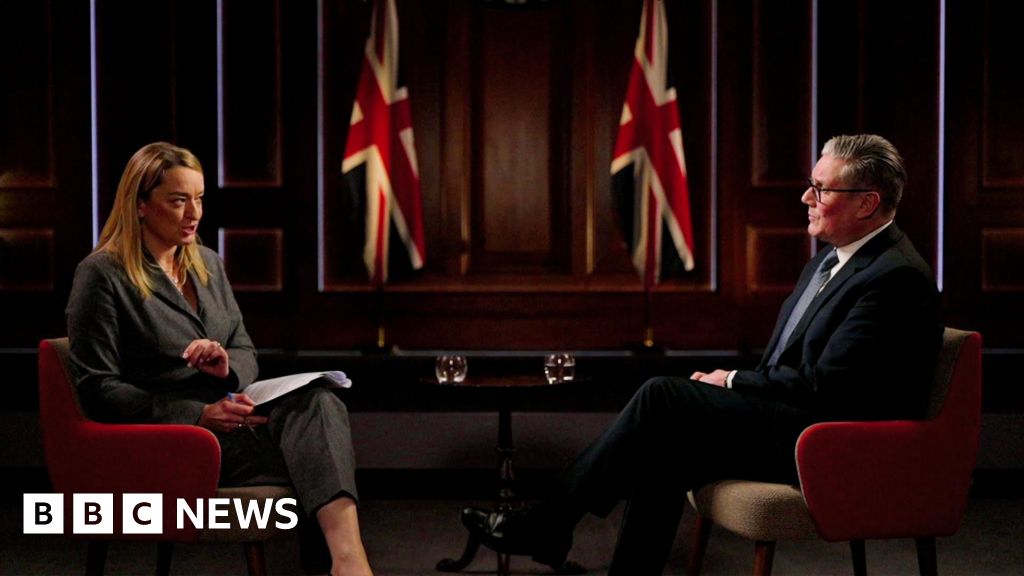
Sir Keir’s insistence that these are not "referendums" on his government is a strategic attempt to manage expectations and decouple local and regional issues from national approval. However, in the highly scrutinised world of British politics, any significant shifts in electoral outcomes will invariably be interpreted through the lens of national political sentiment, making the May elections a critical test for the Prime Minister’s leadership and the trajectory of his government. As the image of Laura Kuenssberg interviewing Sir Keir Starmer suggests, this high-stakes exchange with the BBC sets the stage for a pivotal year in British politics, with the Prime Minister betting his political capital on a promise of stability and delivery.



 Roy Suryo
 Nakalama John
 atisusanti