
 Ramos Leo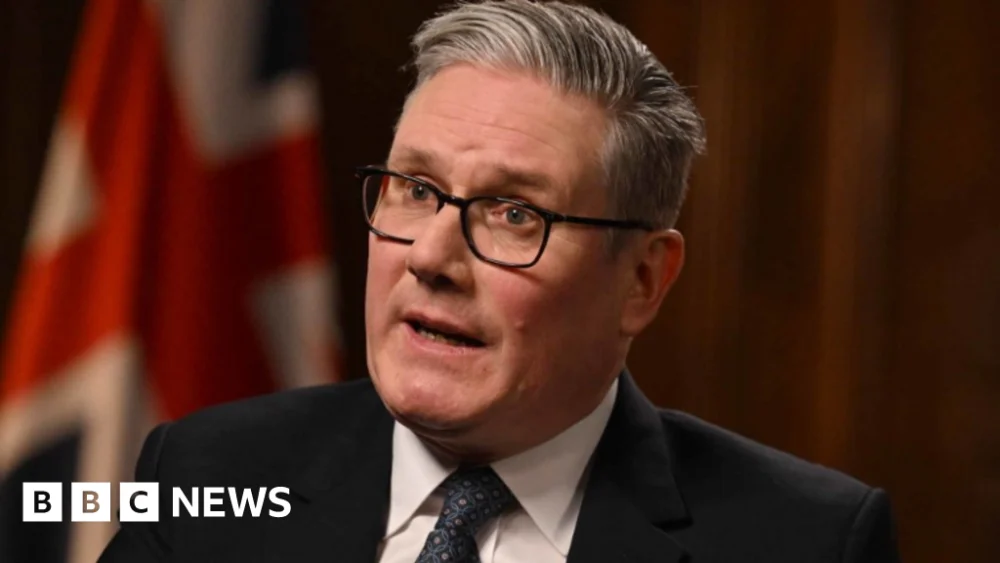
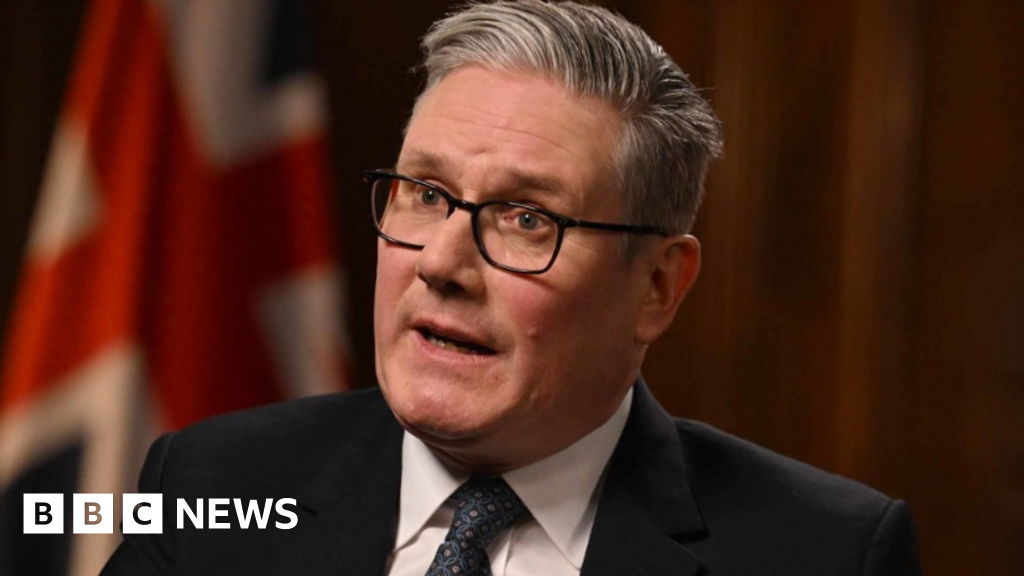
Prime Minister Sir Keir Starmer has delivered his clearest signal yet that a future Labour government would actively pursue a significantly closer relationship with the European Union, stating that the UK should move towards greater alignment with EU markets "if it’s in our national interest." Speaking to Laura Kuenssberg on the BBC’s "Sunday with Laura Kuenssberg" programme, Sir Keir outlined a pragmatic approach, emphasising economic benefits and strategic necessity over ideological divides that have dominated the Brexit debate for years. The interview, conducted by Laura Kuenssberg and reported with additional contributions from Jennifer McKiernan, marked a pivotal moment in Labour’s evolving stance on post-Brexit relations. An accompanying image, credited to Jeff Overs/BBC/PA Wire, depicted the Prime Minister during this significant interview, underscoring the weight of his statements.
During the extensive interview, Sir Keir articulated a vision where the UK would seek to align more closely with the EU’s single market on a sectoral basis, rather than revisiting the contentious issue of the customs union. "I think we should get closer," Sir Keir stated unequivocally, "and if it’s in our national interest to have even closer alignment with the single market, then we should consider that, we should go that far." He further elaborated, "I think it’s in our national interest to go further." This nuanced position aims to unlock economic advantages while safeguarding the UK’s ability to forge independent trade agreements with global partners like India and the United States. He explicitly highlighted that pursuing closer ties with the single market would be "better looking to the single market rather than the customs union for our further alignment," precisely "in order to protect trade deals with India and the US."
Crucially, Sir Keir was careful to delineate this new direction from any perceived reversal of Brexit. He was resolute in affirming Labour’s manifesto promises not to rejoin the EU single market or customs union, nor to re-establish freedom of movement for people. This commitment is designed to reassure voters who backed Brexit that Labour is not attempting to undo the 2016 referendum result, but rather to make Brexit "work" more effectively for the British economy. His earlier pledge that "Brexit is safe in my hands" was reiterated, with the explanation that this current approach is not "picking over the bones of Brexit" but "looking forward" to what genuinely serves the national interest.
The distinction between the single market and the customs union is vital to understanding Labour’s strategy. The EU’s single market allows for the free movement of goods, services, capital, and people across member states, requiring adherence to a common set of regulations and standards. Rejoining it wholesale would entail accepting EU rules without a say in their formulation and reintroducing freedom of movement, both red lines for Labour. In contrast, the customs union eliminates tariffs and quotas on trade between members and establishes a common external tariff for goods entering the bloc. While simplifying trade with the EU, it would restrict the UK’s ability to strike independent trade deals with non-EU countries, as any deal would need to align with the EU’s external tariff policy.
Sir Keir’s proposal of "closer alignment with the single market" on an "issue-by-issue, sector-by-sector basis" suggests a highly selective approach. The UK has already begun to align with Brussels on certain rules concerning food and agriculture, a move designed to facilitate access to the vast European trading zone. This alignment, which will be implemented this year, serves as a blueprint for potential future collaborations. The Prime Minister underscored this, noting, "What I’m saying is, there are other areas where we should consider whether it’s in our interest to do the same and align with the single market." He framed these decisions as "sovereign," asserting that such alignments are made by the UK in its own interest, rather than being imposed. This pragmatic flexibility, he argued, has led to the best relationship with the EU "for 10 years."
This evolving stance comes amidst growing pressure from various quarters. Within the Labour movement itself, there have been calls for a more ambitious approach to EU relations. Thirteen Labour backbenchers notably supported proposals in a December Commons vote that would have paved the way for a customs union arrangement, signalling a desire among some for deeper integration than the leadership has thus far endorsed. These internal pressures highlight the ongoing debate within the party about the optimal post-Brexit trajectory.
External stakeholders have also voiced their perspectives. Paul Nowak, the UK’s most senior trade unionist and General Secretary of the TUC, articulated at the end of last year that "the closest possible economic and political relationship with the European Union" was "essential" to boost economic growth. This sentiment reflects widespread concerns among businesses and workers about the economic headwinds faced since Brexit, including increased trade barriers, regulatory divergence, and labour shortages. The Office for Budget Responsibility and other economic forecasters have consistently pointed to Brexit as a drag on UK economic performance, lending weight to arguments for closer ties.
Deputy Prime Minister David Lammy also weighed in on the issue last month, telling the News Agents podcast that while rejoining the EU’s customs union was "not currently our policy," he highlighted the economic growth experienced by Turkey as a result of its own customs union with the bloc. Turkey’s arrangement is often cited as a potential model for the UK, as it removes point-of-origin checks, which have proven to be a significant logistical and financial burden for British businesses trading with the EU since Brexit. However, Turkey’s deal does not cover agricultural goods or services, pointing to the complexities and limitations of such bespoke arrangements.
Another area of discussion revolves around a proposed youth mobility scheme for British and EU students. Concerns have been raised that such a scheme might inadvertently require the UK to sign up to aspects of the free movement of EU citizens. Sir Keir directly addressed these fears, asserting, "That is not the return to freedom of movement, we’re not going back to freedom of movement." He clarified that while not a return to the pre-Brexit arrangements, he personally believes that "young people having that opportunity is a very good thing." He drew parallels with the recent decision to rejoin the Erasmus+ scheme, or a similar alternative, for education, training, youth, and sport, noting that this move, allowing young people to "study, exchange, research," was "widely welcomed." This demonstrates a desire to foster cultural and educational links without infringing on core Brexit principles.
The Prime Minister’s latest comments signal a strategic pivot, moving Labour from a position of cautiously accepting Brexit to actively seeking to mitigate its economic downsides through pragmatic alignment. By framing closer ties as a sovereign decision made "in the national interest," Sir Keir aims to depoliticise the debate, shifting the focus from re-litigating the past to optimising the future. This approach seeks to appeal to a broad spectrum of voters, including those who voted to leave the EU but now feel the economic pinch, and those who wished to remain but understand the political realities of not reversing Brexit entirely. As the UK navigates complex global challenges, Labour’s emphasis on stability, economic growth, and strategic partnerships through a more cooperative relationship with its largest trading bloc could define its approach to governance should it win the next general election. This move represents a significant evolution in British political discourse on Europe, suggesting that the era of stark "in or out" choices may be gradually giving way to a more nuanced, flexible engagement.



 Roy Suryo

 Nakalama John
 atisusanti
