George Anjay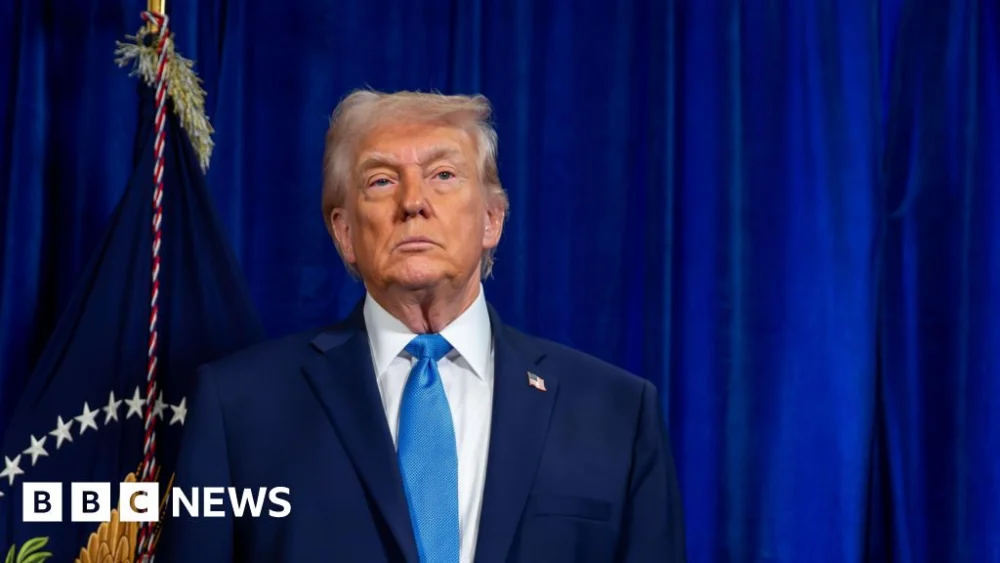
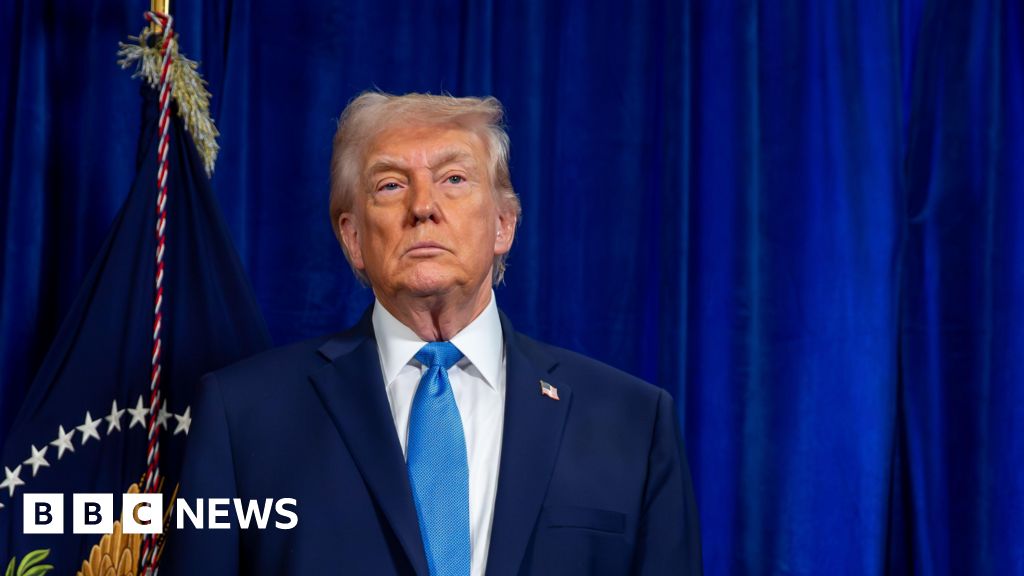
With the swift and decisive seizure of Venezuelan leader Nicolás Maduro, Donald Trump has projected an image of unwavering belief in his own will, buttressed by the formidable power of the US military. On his direct orders, Maduro has been apprehended, and the United States now asserts its intention to "run" Venezuela. This dramatic announcement, made at Trump’s opulent Florida estate and residence, Mar-a-Lago, carried profound implications for the future of US foreign policy on a global scale. Trump declared that the US would assume control in Venezuela "until such time as we can do a safe, proper and judicious transition." He further revealed that Secretary of State Marco Rubio had communicated with Venezuelan Vice-President Delcy Rodríguez, who, according to Trump, had expressed a willingness to cooperate, albeit without apparent choice. While Trump offered few specifics, he did not shy away from the possibility of military intervention, stating, "we’re not afraid of boots on the ground if we have to have [them]." The prevailing sentiment at Mar-a-Lago, amplified by the accolades from Rubio and Secretary of Defense Pete Hegseth, suggested a belief that this forceful demonstration of American resolve would be sufficient to reshape Venezuela and compel other Latin American leaders into compliance. However, the trajectory of such interventions suggests a far more complex and tumultuous path ahead.
The stark reality is that the path to stability following Maduro’s removal is far from assured. As early as October, the International Crisis Group, a highly respected think tank, had issued a stark warning about the potential for widespread violence and instability in Venezuela should Maduro fall. Similarly, The New York Times reported in the same month on war games conducted by defense and diplomatic officials during the initial Trump administration, which concluded that the collapse of Maduro’s regime could precipitate a period of violent chaos as competing armed factions vied for power. The apprehension of Nicolás Maduro represents a remarkable assertion of American military might, achieved through the deployment of a formidable armada without the loss of a single American life. For many of Venezuela’s long-suffering citizens, Maduro’s departure, following his disregard for the popular vote and his usurpation of electoral defeat, will undoubtedly be a welcome development. However, the far-reaching consequences of this American action are poised to reverberate well beyond Venezuela’s borders, casting a long shadow over international relations.
The atmosphere at the Mar-a-Lago press conference was undeniably triumphalist, a celebration of what was evidently a meticulously executed operation by highly professional US forces. Yet, the military action is merely the initial phase of a far more intricate and historically fraught process. The United States’ track record in orchestrating regime change through military force over the past three decades has been, to put it mildly, disastrous. The success of such endeavors hinges critically on the subsequent political follow-up, a stage where numerous interventions have ultimately faltered. The 2003 US invasion of Iraq, for instance, plunged the nation into a protracted and bloody catastrophe. Similarly, in Afghanistan, two decades and billions of dollars invested in nation-building efforts were undone within days following the US withdrawal in 2021. Neither of these interventions occurred in America’s immediate neighborhood.
The ghosts of past interventions in Latin America, and the specter of potential future ones, offer little solace. Trump, in a calculated move, introduced a new moniker for this policy, the "Donroe Doctrine," a deliberate twist on the 1823 Monroe Doctrine, which cautioned European powers against further colonization or interference in the Americas. "The Monroe Doctrine is a big deal, but we’ve superseded it by a lot," Trump declared at Mar-a-Lago. "Under our new national security strategy, American dominance in the Western hemisphere will never be questioned again." His rhetoric extended to issuing thinly veiled warnings to regional leaders, notably telling the President of Colombia, Gustavo Petro, to "watch his ass," and later suggesting that "something’s going to have to be done with Mexico." Cuba, a nation with deep historical ties to the US and a significant Cuban-American diaspora, is undoubtedly also on the agenda, with Rubio, whose parents emigrated from Cuba, playing a prominent role in shaping this policy.
The United States has a deeply entrenched history of armed intervention in Latin America. I myself witnessed the impact of such actions firsthand in Haiti in 1994, when President Bill Clinton deployed 25,000 troops and two aircraft carriers to enforce regime change. Astonishingly, the Haitian regime capitulated without a single shot fired. However, far from ushering in an era of prosperity, the subsequent three decades have been marked by unrelenting misery for the Haitian people, culminating in the nation’s current status as a failed state largely dominated by heavily armed gangs. Donald Trump’s pronouncements regarding Venezuela focused on the aspiration of "making Venezuela great again," but notably devoid of any commitment to democratic principles. He expressed skepticism regarding the leadership potential of Venezuelan opposition leader María Corina Machado, dismissing her chances of effective governance due to a perceived lack of support and respect. He also failed to mention Edmundo González, a figure widely considered by many Venezuelans to be the rightful winner of the 2024 elections. Instead, for the immediate future, the US appears to be aligning with Maduro’s Vice-President, Delcy Rodríguez.
While it is highly probable that some form of internal collusion provided the US military with the crucial intelligence needed for Maduro’s swift removal, the regime established by his predecessor, Hugo Chávez, appears to remain largely intact. It is unlikely that the Venezuelan armed forces, despite any potential humiliation felt by their generals at their inability to resist the US incursion, will readily acquiesce to American designs. The military establishment and the civilian cadres of the regime have grown wealthy through deeply entrenched networks of corruption, a system they have no vested interest in relinquishing. Furthermore, the regime has armed civilian militias, and Venezuela harbors other armed groups, including notorious criminal networks and Colombian guerrillas who have historically received sanctuary in return for their support of the Maduro regime.
The US intervention in Venezuela starkly illuminates some of the foundational elements of Trump’s worldview. He has never concealed his covetous gaze towards the mineral wealth of other nations. Indeed, he has previously attempted to leverage financial gains from Ukraine’s natural resources in exchange for military assistance. Trump openly expresses his desire to control Venezuela’s vast mineral reserves and his conviction that American oil companies were unjustly dispossessed when the nation’s oil industry was nationalized. "We’re going to be taking out a tremendous amount of wealth out of the ground, and that wealth is going to the people of Venezuela, and people from outside of Venezuela that used to be in Venezuela, and it goes also to the United States of America in the form of reimbursement," he declared, a statement that will undoubtedly amplify fears in Greenland and Denmark that his territorial ambitions may extend northward as well as southward. The US has not abandoned its interest in absorbing Greenland, drawn by its strategic location in the Arctic and the burgeoning accessibility of its natural resources as global warming continues to melt its ice.
The operation in Venezuela also represents a significant blow to the long-held ideal of a world governed by an agreed-upon set of rules, as enshrined in international law. While this principle had already been considerably eroded prior to Donald Trump’s presidency, he has repeatedly demonstrated, both domestically and on the international stage, a willingness to disregard laws he deems inconvenient. European allies, who are understandably anxious to avoid antagonizing him, including Prime Minister Keir Starmer, are grappling with the delicate task of expressing support for international law without explicitly condemning the Maduro operation as a blatant violation of the United Nations Charter. The US justification that its military was merely assisting in the execution of an arrest warrant for a drug lord masquerading as Venezuela’s president is demonstrably thin, especially in light of Trump’s explicit declarations that the US will now control the country and its vital oil industry.
Mere hours before Maduro and his wife were apprehended, he was engaged in discussions with Chinese diplomats at his palace in Caracas. Beijing has unequivocally condemned the US action, labeling it as "hegemonic acts of the US seriously violate international law and Venezuela’s sovereignty and threaten peace and security in Latin America and the Caribbean region." China urged the US to "stop violating other countries’ sovereignty and security." However, even China may perceive a dangerous precedent being set by the US action. Beijing regards Taiwan as a breakaway province and has unequivocally stated that its return to Chinese control is a national imperative. In Washington, this concern is echoed by Senator Mark Warner, the Democratic vice-chairman of the Senate Intelligence Committee, who issued a statement warning that China’s leaders, and others, will be observing these developments closely. "If the United States asserts the right to use military force to invade and capture foreign leaders it accuses of criminal conduct, what prevents China from claiming the same authority over Taiwan’s leadership? What stops [Russian President] Vladimir Putin from asserting similar justification to abduct Ukraine’s president? Once this line is crossed, the rules that restrain global chaos begin to collapse, and authoritarian regimes will be the first to exploit it." Donald Trump appears to operate under the belief that he dictates the rules, and that what applies to the US under his command does not grant similar privileges to others. However, this is a naive and dangerous misinterpretation of the dynamics of global power. His actions at the commencement of 2026 signal a year of further, profound global turbulence.

 Roy Suryo