
 atisusanti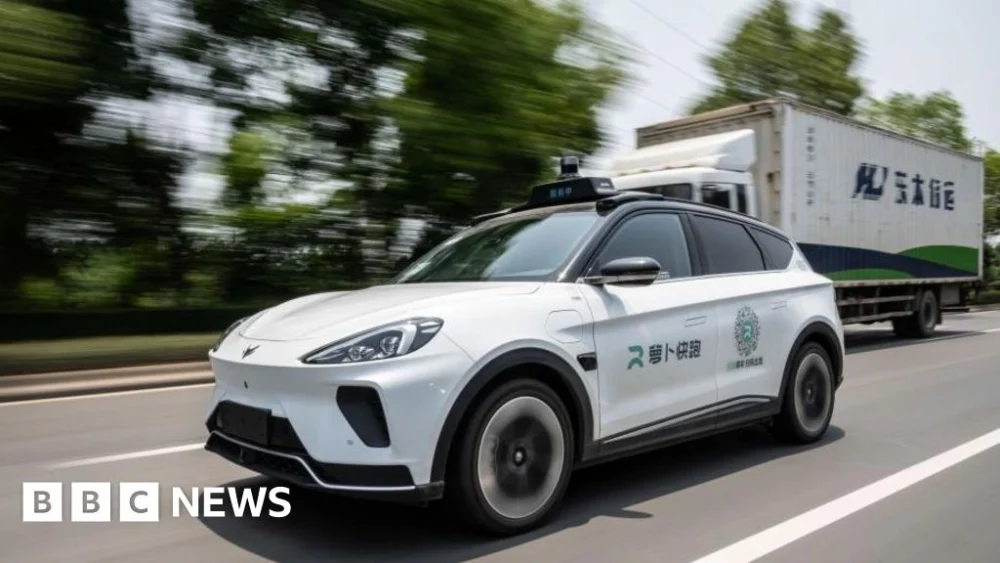
Chinese robotaxis are poised to potentially grace UK roads by 2026, following significant partnership announcements between major ride-sharing platforms Uber and Lyft and Chinese artificial intelligence giant Baidu. The collaboration aims to pave the way for extensive trials of Baidu’s autonomous vehicle technology in London, pending regulatory approval. Baidu’s established Apollo Go driverless taxi service, already a familiar sight in numerous cities, predominantly across China, has successfully completed millions of passenger journeys without human intervention, building a substantial track record in the autonomous mobility sector.
The prospect of these advanced driverless vehicles operating in the UK has been met with cautious optimism from government officials. Transport Secretary Heidi Alexander has hailed the news as "another vote of confidence in our plans for self-driving vehicles," underscoring the UK’s ambition to be at the forefront of autonomous transportation innovation. Alexander further elaborated on the government’s commitment, stating, "We’re planning for self-driving cars to carry passengers for the first time from spring, under our pilot scheme – harnessing this technology safely and responsibly to transform travel." This statement was shared via a post on X, highlighting the government’s proactive stance in developing a regulatory framework for autonomous vehicle deployment.
This move aligns with broader governmental initiatives to accelerate the adoption of self-driving technology. In June, Uber announced its intention to expedite its UK driverless car trials, responding to the government’s push to establish a framework for piloting small-scale, autonomous commercial services, such as "bus and taxi-like" operations, by 2026. Uber expressed enthusiasm for this development, stating, "We’re excited to accelerate Britain’s leadership in the future of mobility, bringing another safe and reliable travel option to Londoners next year." This sentiment underscores the company’s strategic focus on leveraging Baidu’s expertise to enhance its service offerings in a key global market.
Lyft, meanwhile, has also strategically positioned itself for European expansion, announcing in August its intention to deploy driverless taxis in both the UK and Germany through a European agreement with Baidu. This initiative builds upon Lyft’s existing experience with autonomous rides, which are already operational in Atlanta, USA. Notably, Uber also operates a robotaxi service in Atlanta, albeit through a separate partnership with Waymo, another prominent player in the autonomous vehicle space. Lyft’s Chief Executive, David Risher, expressed his excitement about London’s potential role in this technological advancement, tweeting, "London passengers would be ‘the first in the region to experience Baidu’s Apollo Go vehicles’." This suggests London is being targeted as a flagship location for the initial European rollout.
Should regulatory hurdles be cleared, Lyft plans to commence testing with an initial fleet of "dozens" of Baidu Apollo Go vehicles next year, with ambitions to scale up to "hundreds" thereafter. This ambitious scaling plan highlights the perceived readiness of Baidu’s technology for broader deployment.
However, the path to widespread adoption is not without its challenges, particularly concerning public perception and regulatory scrutiny. Despite the technological advancements and government support, significant skepticism remains regarding the safety and reliability of fully driverless vehicles. A recent YouGov poll conducted in October revealed that a substantial majority of UK respondents – almost 60% – would not feel comfortable riding in a driverless taxi under any circumstances. Furthermore, the poll indicated a deep-seated lack of trust in the technology, with 85% of respondents stating they would opt for a conventionally driven cab if offered at the same price and convenience.
Concerns about safety are further amplified by documented instances of autonomous vehicles making errors, occasionally leading to passenger entrapment, traffic disruptions, and even accidents. These incidents, which continue to make headlines, contribute to public apprehension. For example, Waymo, a self-driving taxi operator, reportedly suspended its service in San Francisco on a recent Saturday following operational failures of some of its vehicles during a power outage, illustrating the vulnerabilities that can arise even in established markets.
Academics and policy experts are urging a measured approach to the integration of driverless technology. Jack Stilgoe, a professor of science and technology policy at University College London, cautions against viewing autonomous vehicles as easily scalable digital technologies. He emphasizes the significant difference between limited test vehicles utilizing public streets for development and a fully operational, scaled system that becomes a practical transportation solution for the public. Stilgoe argues that the UK should take a leading role in "setting standards for the technology," particularly in light of ongoing safety concerns, privacy implications, and the potential for increased traffic congestion. He points to London’s success in reducing car traffic in its city center, suggesting that the introduction of zero-occupancy autonomous vehicles could exacerbate existing traffic issues, making them potentially more problematic than single-occupancy conventional cars.
The partnerships between Uber, Lyft, and Baidu signal a concerted effort to push the boundaries of autonomous mobility in the UK. While the technological prowess of Baidu’s Apollo Go system and the commercial ambitions of global ride-sharing giants are undeniable, the journey ahead will necessitate navigating complex regulatory landscapes, addressing public safety concerns, and fostering greater trust in self-driving technology. The coming years will be critical in determining whether the promise of robotaxis can be safely and effectively realized on British streets.



 Nakalama John
 Ramos Leo
 Roy Suryo
 Nana Banana
 George Anjay