
 Ramos Leo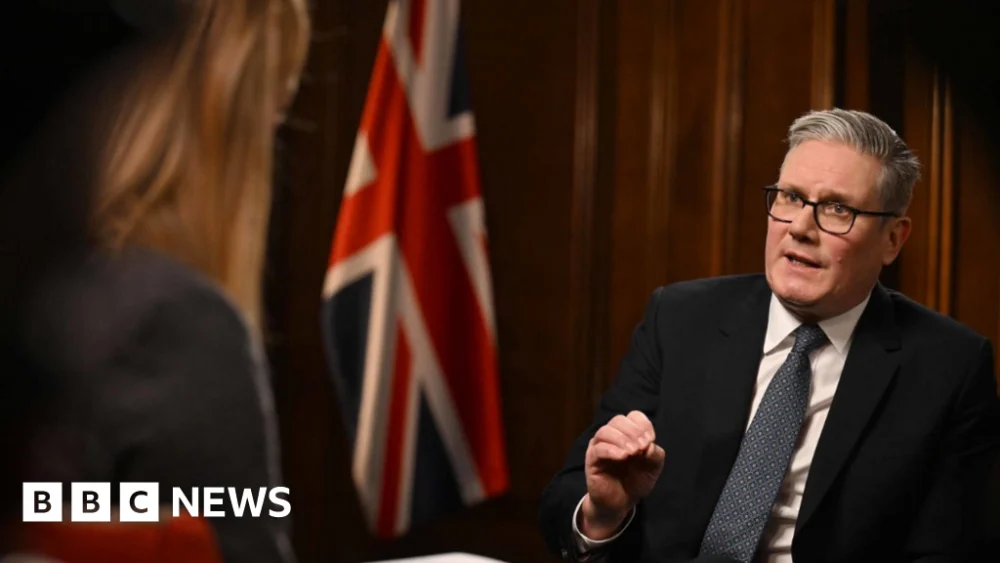
The controversy has ignited a fierce political firestorm, prompting calls from across the political spectrum – including the Conservatives, Reform UK, and even some senior Labour MPs – for Mr. Abd El Fattah to be stripped of his British citizenship. In response to what he has termed a "failing in the system," the Prime Minister has launched an urgent review to understand how such a critical oversight occurred, promising "remedial action" to prevent future incidents of this nature.
For years, the UK government, under both Conservative and Labour administrations, had tirelessly lobbied for Mr. Abd El Fattah’s release from an Egyptian jail and his safe passage to Britain. This bipartisan effort underscored the humanitarian aspect of his case, given his prominence as a political prisoner and allegations of unfair detention. However, the revelation of his incendiary social media history suggests that key figures at the apex of successive administrations were left in the dark about crucial aspects of his past.
The Prime Minister’s current stance marks a stark contrast to his initial reaction on Boxing Day, when he publicly declared he was "delighted" that the activist had arrived in the UK and been "reunited with his loved ones" after years of imprisonment. Reflecting on this earlier statement during the BBC interview, Sir Keir admitted, "of course I regret that," emphasizing that Mr. Abd El Fattah’s posts were indeed "abhorrent." He firmly reiterated, "As I’ve made clear, I didn’t know about those comments at the time of welcoming El Fattah to this country."
Pressed by Ms. Kuenssberg on the apparent failure of government departments to conduct proper background checks, Sir Keir acknowledged the validity of the question. He revealed that he had posed the very same query to the team involved, stating, "because I do think I should have been made aware and I wasn’t made aware." He elaborated on the gravity of the situation, adding, "Yes, it’s a failing within the system, it shouldn’t have happened and I wasn’t very pleased about it when I found out, hence we’re taking remedial action." The review aims to scrutinize the protocols for assessing individuals granted entry or assisted by the government, particularly in high-profile consular cases. It seeks to identify precisely where the information breakdown occurred, from embassy officials to Home Office processes and ultimately, to ministerial briefings.
Sir Keir also clarified that Mr. Abd El Fattah’s case had been handled primarily as a "consular case" by embassy officials. He explained that the government has a fundamental duty to intervene when a British national is "being treated in an improper way in another country." "That’s why I acted in this case," he asserted, drawing parallels with previous administrations. "Actually, previous prime ministers acted in exactly the same way in the actions they took to try and get him released, because that’s what happens in consular cases." This highlights the challenge of balancing humanitarian obligations with thorough security vetting, especially when a person’s political activism is intertwined with their citizenship status.
Alaa Abd El Fattah, 44, had become the most internationally recognized symbol of Egypt’s political prisoner crisis. Human rights organizations consistently argued that he had been unfairly detained for a cumulative period of 12 years across various charges. His latest conviction, for sharing a Facebook post about alleged torture in the country, drew widespread condemnation as an attack on free speech. He is a dual national, having been granted UK citizenship in December 2021 through his London-born mother. This occurred during the Conservative government’s tenure, with Dame Priti Patel serving as Home Secretary, underscoring the bipartisan nature of the UK’s commitment to his release.
His liberation from prison on Boxing Day, a culmination of an extensive campaign, brought immense relief to his family – including his 14-year-old son, whom he was reunited with in Brighton – and a host of high-profile supporters. Celebrities such as acclaimed actors Judi Dench and Olivia Colman lent their voices to the cause, alongside persistent lobbying efforts by the British government. However, the celebration was short-lived. Within days of his arrival, old social media posts, primarily from 2012, quickly resurfaced and circulated widely, casting a dark shadow over his welcome.
The content of these resurfaced posts was deeply inflammatory. In one particularly disturbing tweet, Mr. Abd El Fattah appeared to state his belief that "killing any colonialists and specially Zionists heroic, we need to kill more of them." Other posts attributed to him included overtly racist remarks, such as "I am a racist, I don’t like white people," and another alarming comment accusing police of lacking rights and suggesting "we should kill them all." These statements, coming from an individual welcomed by the British government as a human rights advocate, sent shockwaves through the political establishment and the wider public.
The Board of Deputies of British Jews swiftly condemned the revelations, describing the case as one of "profound concern" and highlighting an "astonishing lack of due diligence by the authorities." Adrian Cohen, the board’s senior vice-president, articulated the community’s alarm, stating, "His previous extremist and violent rhetoric aimed at ‘Zionists’ and white people in general is threatening to British Jews and the wider public." This sentiment was echoed by politicians across the aisle. Shadow Justice Secretary Robert Jenrick, a Conservative MP, argued that Mr. Abd El Fattah’s social media history revealed "extremist views that are completely incompatible with British values" and suggested he should "be made to live in Egypt or frankly anywhere else in the world." Nigel Farage, leader of Reform UK, seized on the opportunity to criticize both previous Conservative and Labour governments, asserting that they had "opened our doors to evil people." He advocated for a change in law to facilitate the stripping of Mr. Abd El Fattah’s British citizenship and his subsequent deportation.
In an attempt to quell the escalating outrage, Mr. Abd El Fattah issued an "unequivocal" apology for the tweets, dismissing the comments as "expressions of a young man’s anger." However, this apology was almost immediately undermined. Within hours of its publication, BBC News uncovered that his Facebook account had "liked" another user’s post. This post described the criticism directed at him as a "relentless smear campaign" being waged by entities including "the richest man in the world, a couple of Middle East intelligence services, and a few Zionist organisations." This subsequent action raised serious questions about the sincerity of his apology and whether his underlying views had truly evolved, further fueling the controversy and calls for action.
The debate surrounding the stripping of British citizenship is complex and fraught with legal and ethical challenges. Historically, this measure has been reserved for extreme cases, typically linked to terrorism, serious organised crime, or situations where an individual is deemed a clear national security threat. The legal threshold for such an action is high, often requiring evidence that the individual’s actions are "seriously prejudicial to the vital interests of the UK." To unilaterally revoke citizenship could set a significant precedent, potentially impacting how the UK handles future cases of dual nationals with controversial pasts. The Home Office would need to demonstrate not only that Abd El Fattah’s past views are antithetical to British values but also that his continued presence poses a tangible threat to national security, or that he obtained citizenship under false pretenses related to these views.
This incident has far-reaching implications. It not only puts Prime Minister Starmer in a difficult position, forcing him to address vetting failures within his government, but also reopens uncomfortable questions about the Labour Party’s own historical struggles with antisemitism. More broadly, it forces a re-evaluation of the processes by which the UK supports human rights activists globally, and the due diligence expected when extending a welcome to individuals with complex public profiles. The review launched by Sir Keir will be critical in restoring public confidence and ensuring that humanitarian efforts are not inadvertently compromised by a lack of rigorous scrutiny.



 Roy Suryo

 Nakalama John
 atisusanti
