
 Ramos Leo
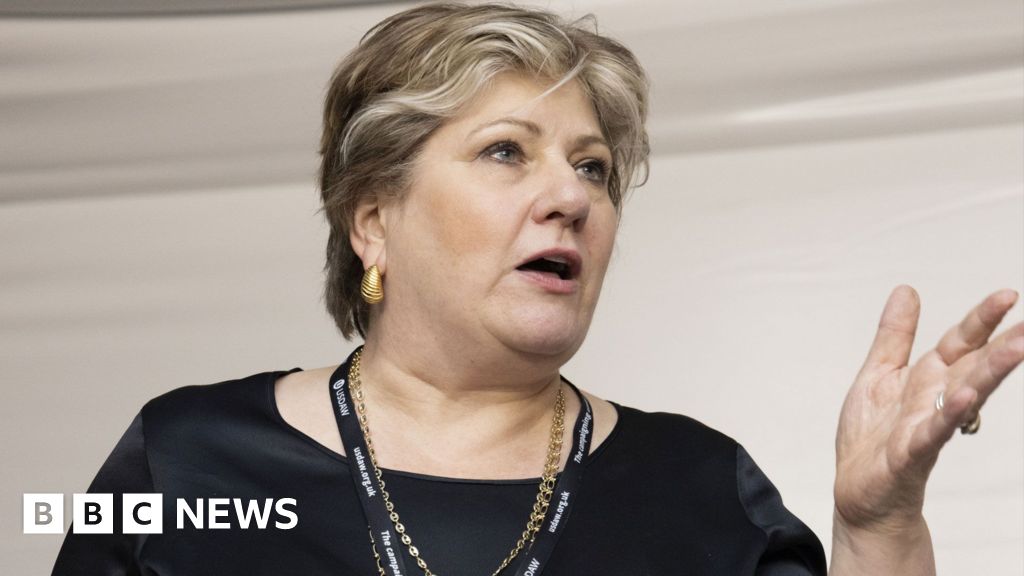
Dame Emily’s criticism carries significant weight given her position, which places her at the forefront of scrutinising the UK’s foreign policy. Speaking on BBC Radio 4’s Westminster Hour, she emphatically stated that the strikes were "not a legal action" and that she could "not think of anything that could be a proper justification" for such unilateral military intervention. Her remarks underscore a growing concern among some parliamentarians about the erosion of international norms and the potential for a dangerous precedent.
She urged the UK and its allies to present a united front, collectively declaring that "we cannot have breaches of international law like this. We cannot have the law of the jungle." Thornberry drew stark parallels with Russia’s actions, arguing, "We condemn Putin for doing it. We need to make clear that Donald Trump shouldn’t be doing it either. People just can’t do whatever they want. I mean, we really can’t have a kind of international anarchy." This comparison highlights a deep-seated fear that if powerful nations are permitted to act outside established legal frameworks, it risks undermining the entire global system of governance and fostering an environment where might makes right.
Further elaborating on the perilous implications, Dame Emily warned that the US action risked emboldening other authoritarian regimes, particularly Russia and China. She articulated a concern that this incident could reinforce "this growing idea that Trump thinks, and so does [Russian President] Putin and so does [Chinese President] Xi, that they should all have their spheres of influence and that other countries should not get involved and they should be able to essentially do what they think is the right thing to do, what they want to do in the interests of their country, in the countries in the surrounding area." She continued, "President Putin will presumably say, well, Ukraine is in my sphere of influence – what are you complaining about? And Xi may well say that about Taiwan. It sets a terrible precedent and [is] really worrying." Her comments reflect anxieties about a potential return to a geopolitical landscape dominated by spheres of influence, where national sovereignty is disregarded in favour of powerful states’ perceived interests.
While a handful of Labour MPs, predominantly from the party’s left wing, have publicly echoed Thornberry’s condemnation of the US action, the official Labour leadership has maintained a more nuanced and cautious stance. Prime Minister Sir Keir Starmer has notably refrained from directly criticising the US military intervention, a position that aligns with his stated foreign policy objective of fostering a strong working relationship with Donald Trump. In a BBC interview, Starmer repeatedly sidestepped questions regarding the legality of the strikes. He asserted that the UK would "always defend the international rule of law," but simultaneously insisted that the US would "have to justify the action it has taken." This careful phrasing suggests a desire to uphold the principle of international law while avoiding an explicit condemnation that could strain Anglo-American relations.
Starmer further commented on the Venezuelan situation, stating, "There was an illegitimate president who has now been removed, and I don’t think anybody is really shedding any tears about that," before calling for "a peaceful transition to democracy" as soon as possible. This acknowledges the widely held view that Nicolas Maduro’s presidency lacked democratic legitimacy, a point that some argue complicates the legal debate surrounding his removal. However, critics of Starmer’s position contend that even an "illegitimate" leader is protected by international sovereignty, and his removal through military force sets a dangerous precedent, regardless of the perceived justice of the outcome.
The UK government’s official position, as articulated by ministers, has been to await the US’s explanation of the legal basis for its actions. Minister Mike Tapp, when pressed on whether the UK would abstain in any potential UN Security Council vote on the legality of the operation, stated that a decision could not be made until London had seen the "legal basis" for the US strikes. This highlights the delicate diplomatic tightrope the government is walking, balancing its commitment to international law with its close alliance with the United States. The UN Security Council, of which the UK is a permanent member, is scheduled to convene shortly to deliberate on the US operation, where the UK’s vote and stance will be closely scrutinised.
Beyond Labour, other opposition parties have been more forthright in their condemnation. Sir Ed Davey, leader of the Liberal Democrats, while acknowledging Maduro as "a brutal and illegitimate dictator," unequivocally stated that "unlawful attacks like this make us all less safe." This perspective highlights the belief that while the end goal of removing an authoritarian leader might be desirable, the means employed must adhere to international legal frameworks to avoid destabilising the global order. Green Party leader Zack Polanski also branded the strikes a clear breach of international law, echoing concerns about the erosion of established norms. Similarly, the Scottish National Party’s leader, John Swinney, emphasised the critical importance that "all nations act within the international rules based system," directly challenging the US’s unilateral action.
In contrast, the Conservative Party has urged caution, advocating for a full understanding of the facts before reaching a definitive judgment. Shadow minister Alex Burghart argued that in an era characterised by the rise of strongmen leaders, it was "totally understandable" for the US to act decisively against a figure like Maduro. He further suggested that "Whatever international lawyers say about whether this was legal or not, Maduro had not been following international law for some considerable time," implying that Maduro’s own disregard for international norms might mitigate the perceived illegality of the US response. This perspective aligns with a more realist foreign policy approach, prioritising national interests and stability over strict adherence to legal frameworks when dealing with perceived rogue states.
Nigel Farage, leader of Reform UK, offered a pragmatic, if controversial, take on the situation. While conceding that the US action was "unorthodox and contrary to international law," he speculated that if it makes China and Russia "think twice, it may be a good thing." This viewpoint, often associated with a more confrontational approach to international relations, suggests that the perceived deterrence value of the US action could outweigh its legal shortcomings in the long run.
The US operation itself saw Venezuelan President Nicolas Maduro and his wife, Cilia Flores, apprehended and flown out of Caracas following a coordinated military and law enforcement action. They have since been transported to New York, where they face serious charges related to weapon and drug offences. Prosecutors allege that Maduro and Flores enriched themselves through a violent crime ring engaged in smuggling cocaine to the US, allegations Maduro has consistently dismissed as politically motivated pretexts designed to facilitate his removal from power. This backdrop of long-standing US accusations against the Maduro regime, including sanctions and calls for his resignation, provides crucial context to the recent military intervention.
Following Maduro’s removal, US President Donald Trump has declared his intention to "run the country" until a "proper" transition of power can be established. In the immediate aftermath, Venezuela’s Vice-President Delcy Rodríguez is slated to be sworn in as interim president, a move that is likely to be met with varied international recognition and further political complexities within Venezuela. The rapid unfolding of events in Venezuela has ignited a complex debate within the UK political landscape, exposing divergent views on the application of international law, the role of powerful states, and the future of global governance in an increasingly turbulent world.



 Roy Suryo

 Nakalama John
 atisusanti
