
 atisusanti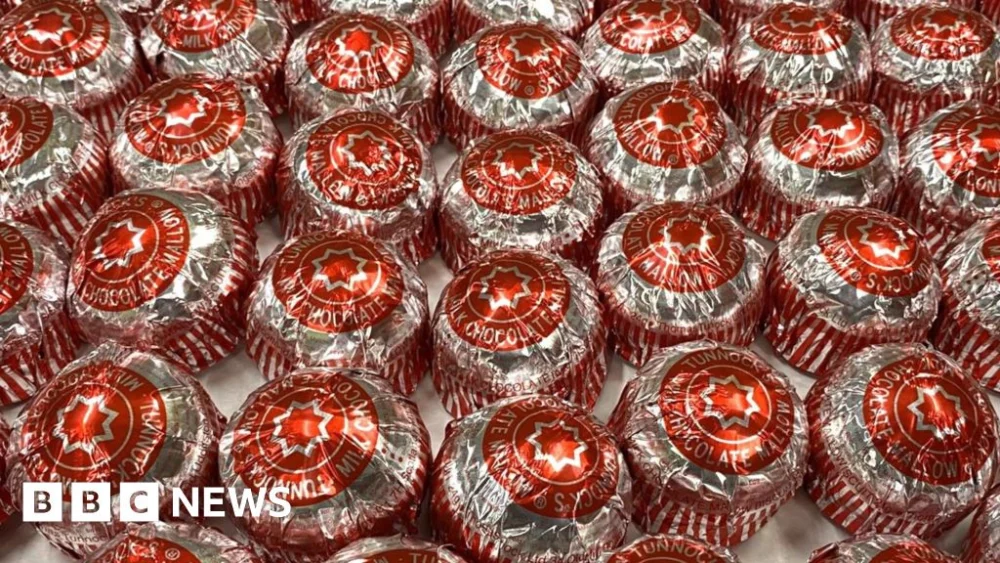
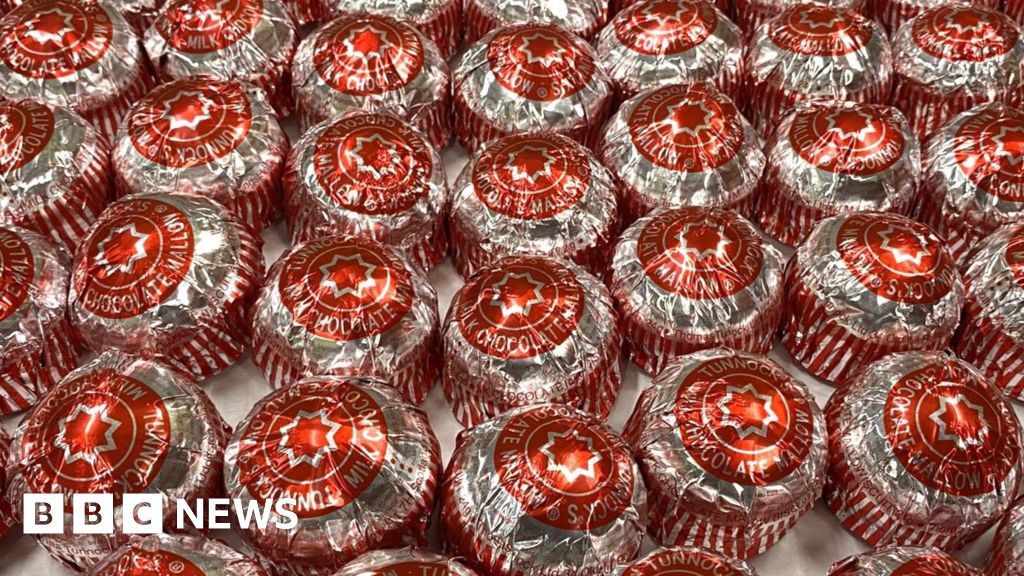
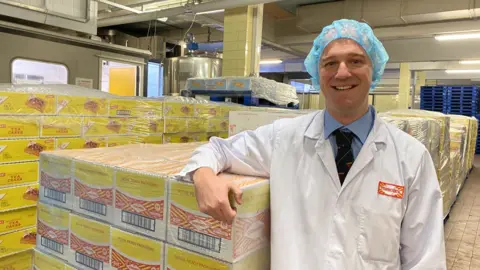
While this specific part of the Tunnock’s operation remains labour-intensive, a significant portion of the factory floor is already highly automated. The company has a long-standing commitment to embracing the latest technological advancements, a strategy essential for maintaining its competitive edge. Compared to confectionery giants like McVitie’s or Fox’s, Tunnock’s operates as a smaller entity within a vast market. "We are a small fish in a big pond, and to try and keep up with some of these bigger companies that we are competing against, you’ve got to have the good machines there to get the output," Mr. Louden explains. While automated machines are employed for caramel spreading, working primarily at night, the human workforce offers a vital element of flexibility and occupies less physical space on the production line. Collectively, these automated systems and dedicated staff manage to produce an impressive output of approximately seven million wafer bars and 4.5 million tea cakes every single week. The challenge for Tunnock’s, and indeed many traditional food manufacturers, lies in striking a delicate balance between preserving their cherished traditions and driving increased production volumes. For instance, much like their caramel preparation, the marshmallow used in Tunnock’s products is still crafted under close human supervision, a testament to the value placed on artisanal quality. Furthermore, the distinctive wrapping of the wafer bar is carefully folded around the product, rather than being sealed at the ends. A switch to end-sealing would undoubtedly accelerate the production line, but the company acknowledges the sentimental value attached to their current packaging. "It’s a nice thing. If you give people a caramel wafer, and somebody’s not had one for 20 or 30 years, they go, ‘I remember having one of these when I was a kid’," Mr. Louden reflects, underscoring the nostalgic connection many consumers have with their products.
Meanwhile, innovators in the food industry are striving to bridge the gap between modern efficiency and timeless tradition with the development of advanced robotics. Canada’s Unifiller, a division of Coperion, a prominent manufacturer of food production equipment, has dedicated years to perfecting a sophisticated robot arm named HIRO. This cutting-edge technology is specifically designed for decorating cakes and possesses the capability to handle a wide array of toppings, including viscous substances like caramel. "If you can squeeze it through a pastry bag… then it will go through our equipment and the decorating tips," states Derek Lanoville, the research and development manager at Coperion, highlighting the versatility of HIRO. However, the development of equipment for the food industry presents unique and significant challenges, with hygiene standards being paramount. "You have to make things easy to take apart, so that people clean them. The bottom line is, if it’s not easy to take apart, you don’t clean it," Mr. Lanoville emphasizes, underscoring the critical importance of design for maintainability. Unifiller’s robot arm is sourced from the renowned Swiss robotics firm Stäubli, known for its ability to produce arms that are exceptionally easy to disassemble and clean. Another considerable hurdle in integrating robotics into the baking sector is the inherent variability of food products like cakes. In most manufacturing industries, components are standardized, often differing by mere fractions of a millimeter. This uniformity is rarely found in baking, where cakes moving along a production line will inevitably exhibit slight variations in size, shape, or dome height – subtle differences that could potentially disrupt the precision of a robotic system. "The cake may not be perfectly centered on the cardboard it’s sitting on. It may be a little bit oval, may be a little bit higher or slightly domed. So, our solution has to accommodate that," Mr. Lanoville explains, detailing the sophisticated adaptive capabilities required for such applications.
For Anomarel Ogen, the head baker at The Bread Factory, where the popular café chain Gail’s sources its products, human hands remain indispensable to the baking process. The Bread Factory’s bakery, situated in northwest London, operates around the clock, 365 days a year, supplying artisanal sourdough loaves not only to Gail’s but also to a wide array of supermarkets, independent shops, and restaurants. The facility utilizes approximately 16 tonnes of flour daily, yielding up to 40,000 loaves, a substantial output that positions it as a medium-sized enterprise within the broader baking landscape. While machines are employed for the crucial initial stages of mixing the dough and dividing it into manageable, loaf-sized portions, the subsequent shaping of the bread remains a hands-on endeavor. The bakery prides itself on using a diverse range of flours, cultivated through sustainable farming practices that prioritize the health and vitality of the soil. Mr. Ogen explains that this dedication to quality ingredients results in dough that is particularly delicate and responsive to touch. Observing one of their skilled workers meticulously forming loaves from the dough provides a vivid illustration of this point. "Look at his hands, and look how gentle he actually is with the movement, how little pressure he is actually putting in. That requires years of skill. This is not fully replaceable by machines just yet," Mr. Ogen asserts, emphasizing the nuanced expertise that machines have yet to replicate. The presence of a human workforce on the factory floor also provides invaluable flexibility to the production process. Should a recipe be subtly tweaked or an unexpected variation in the dough arise, human bakers can immediately assess the impact and adapt the baking process accordingly. "You can automate more, but you still need to put in gatekeeping right along the path, to make sure that you can safeguard the process," Mr. Ogen concludes, highlighting the ongoing need for human oversight in a complex production environment.
The integration of new technology into any production line, particularly in the food sector, necessitates a careful and considered approach, according to Craig Le Clair, a principal analyst at the research firm Forrester and author of "Random Acts of Automation: How to Fight Back When Automation Threatens Your Work, Your Life, and Everything You Do." "The key in food as well as other industries is developing a hybrid model that integrates automation without losing the ‘soul’ of a handcrafted product, like a decorated cake," Le Clair states. He further elaborates, "Process transformation must apply automation only to areas that benefit from consistency, speed, and volume, while keeping core value-add elements strictly human." This philosophy underscores the importance of identifying specific operational areas where automation can enhance efficiency without compromising the intrinsic quality and artisanal character that defines many traditional food products.
Back at equipment maker Coperion, Mr. Lanoville is actively pursuing advancements for the HIRO robot arm. "What we’re focused on this year is really nailing down our scanning, vision and safety systems, so that our customers can work the way that they work, without the robot being intrusive," he reveals, pointing to the ongoing development of sophisticated sensing and safety protocols. Meanwhile, in Glasgow, Mr. Louden harbors ambitions for upgrading his production line, but these plans are heavily contingent on the prevailing financial climate. The volatile nature of cocoa prices over the past two years has had a significant impact on his company’s financial stability. "When it comes to investing another two-and-a-half million pounds in equipment, we just need to wait, because the last couple of years just have not been the right time, and we don’t want to put ourselves financially in a position that it could hurt us," he explains, illustrating the delicate economic tightrope that traditional food manufacturers must navigate when considering substantial technological investments. The ongoing interplay between embracing technological innovation and preserving the cherished traditions that define their products, coupled with economic realities, will continue to shape the future of bakers and biscuit makers.


 Nakalama John
 Ramos Leo
 Roy Suryo
 Nana Banana
 George Anjay