
 atisusanti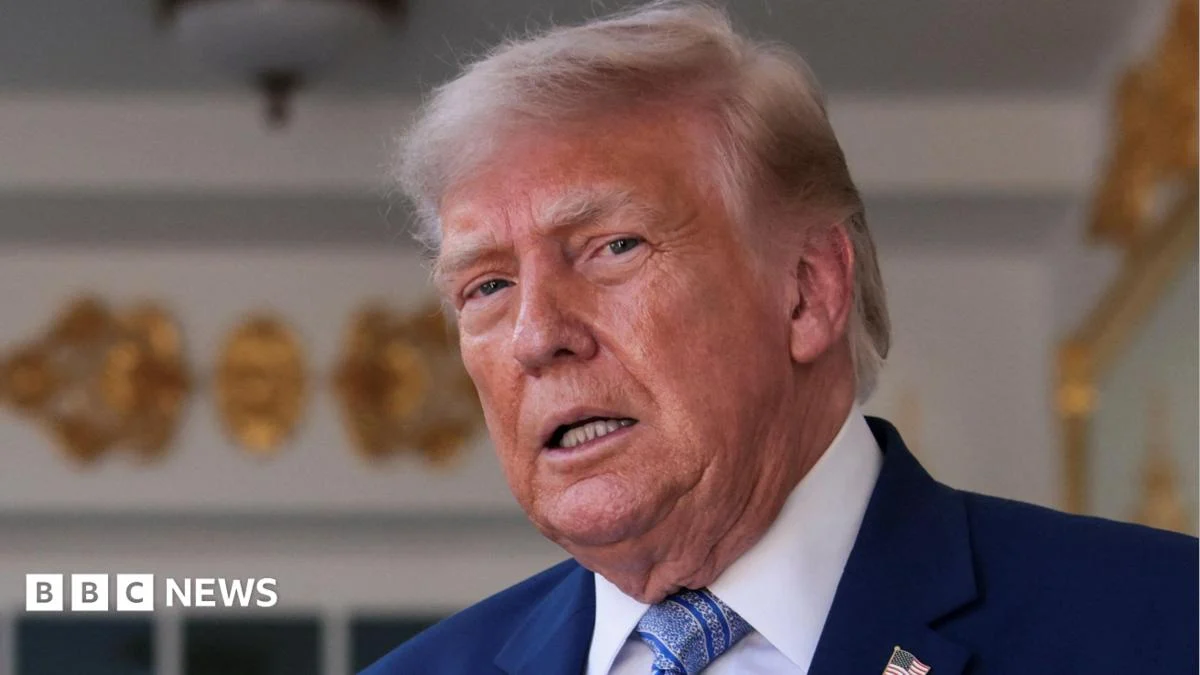
Former President Donald Trump has declared that the United States will launch a comprehensive investigation into the European Union, brandishing the threat of significant new tariffs in response to what he perceives as unfair financial penalties levied against major American technology firms. This aggressive stance comes in the wake of the European Commission imposing a substantial €890 million ($1 billion) fine on Google, a penalty rooted in the tech giant’s alleged monopolistic practices that stifled competition for its services. Trump, speaking through his social media platform Truth Social, unequivocally stated that the EU would face a "very big price" for its treatment of Google, as well as other prominent American tech companies including Apple, Meta, and Amazon, all of whom have been subjected to EU investigations.
In a forceful declaration, Trump articulated, "The United States of America is not a ‘PIGGYBANK’ for Europe, nor will we allow it to be!" He insisted that any fines imposed on these American corporations should be "entirely reversed." To underscore his commitment, Trump announced the initiation of a formal trade investigation into the European Union, while simultaneously exploring the imposition of "a substantial TARIFF." He further elaborated that the U.S. would "immediately initiate a 301 investigation" to scrutinize the European regulators’ alleged practices of "robbing American companies and, in turn, the American taxpayer." This reference to Section 301 of the Trade Act of 1974 signifies the Trump administration’s established playbook for responding to trade practices deemed unfair. This particular section grants the Office of the United States Trade Representative the authority to investigate and take action against such practices. Notably, the Trump administration had previously initiated several similar investigations since the previous year, demonstrating a pattern of assertive trade enforcement.
The threat of new tariffs is particularly noteworthy given that it emerges just a day after Trump revealed plans to implement new tariffs on approximately 60 trading partners, a list that conspicuously includes the EU, the United Kingdom, and China, with tariff rates ranging from 10% to 12.5%. This aggressive trade policy is a continuation of a strategy Trump has employed previously. Furthermore, in the preceding month, Trump had already issued a stark warning of a potential 100% import tariff on any European country that enacted a digital services tax targeting American technology giants. This threat was issued despite the fact that many European nations have, for years, already implemented such taxes, as documented by organizations like the Tax Foundation.
It is a complex geopolitical and economic landscape where these tensions are playing out. Major American technology corporations, including Google, Meta, Apple, and Amazon, have historically contributed significant financial resources to political campaigns and organizations supporting Donald Trump’s presidential aspirations and his administration. These contributions, while not directly linked to the current dispute, form part of the broader context of the relationship between these powerful entities and the U.S. political apparatus.
José Castañeda, a spokesperson for Google, addressed the situation, stating that the company had "worked hard to comply" with Europe’s Digital Markets Act. However, he also acknowledged that Google had "expressed our concerns about the impact of recent EC decisions." Castañeda further conveyed appreciation for the engagement from the U.S. administration and the U.S. government.
In his Truth Social post, Trump cited specific figures for the alleged EU fines, claiming that Apple had been fined $15 billion, Meta $3 billion, and Amazon $2.5 billion, in addition to the recent penalty against Google. However, it remains unclear where these precise figures originated, and representatives from Meta, Apple, and Amazon, as well as the European Commission, have been contacted for comment, indicating a pending response from these key players.
This issue has historical precedent in Trump’s presidency. Shortly before his election in 2024, Trump recounted that Tim Cook, the Chief Executive Officer of Apple, had personally contacted him to express grievances regarding fines levied against the company by European regulators. This call occurred not long after Apple had concluded a protracted legal battle concerning unpaid taxes in Europe.
Meta, the parent company of widely used platforms such as Facebook, Instagram, and WhatsApp, has faced multiple fines from EU regulators. These penalties have been imposed for various infringements, including violations of user privacy and competition laws. The company is also currently confronting new potential fines related to the alleged "addictive" features embedded within its applications. Last year, Meta had publicly stated its belief that the EU was "attempting to handicap successful American businesses," reflecting a clear perception of unfair targeting.
In contrast, Amazon, while having been subject to investigations by the European Commission at various times, has largely managed to avoid significant financial penalties. In 2022, the e-commerce giant reached an agreement with European regulators to modify certain business practices within the EU, a move that appears to have de-escalated tensions.
The European Union’s regulatory actions against U.S. tech giants are part of a broader global trend to address the immense power and influence wielded by these companies. These actions are often framed as efforts to ensure fair competition, protect consumer data, and uphold digital sovereignty. However, from the perspective of the U.S., particularly under the Trump administration’s "America First" trade policy, these regulations are increasingly viewed as protectionist measures designed to disadvantage American businesses and potentially serve as a revenue stream for the EU. The invocation of Section 301 investigations and the threat of tariffs represent a significant escalation of trade tensions, signaling a potential for protracted disputes that could impact global commerce and the digital economy. The scale of the fines mentioned by Trump, even if unconfirmed, highlights the substantial financial stakes involved and the depth of the perceived conflict between U.S. tech interests and European regulatory ambitions. The ensuing investigations and potential tariff impositions will be closely watched by governments, businesses, and consumers worldwide, as they could set precedents for future international trade relations in the digital age.



 Roy Suryo

 Nakalama John
 Ramos Leo
