
 Roy Suryo
Parents of babies born with Spinal Muscular Atrophy (SMA), a devastating and life-limiting genetic condition, are speaking out about the agonising delays they experienced in receiving a diagnosis for their children. Their stories echo the recent revelation by former Little Mix star Jesy Nelson that her newborn twins have SMA, highlighting a critical gap in newborn screening that is leaving families in distress and potentially impacting their children’s futures. For families like Charlie Brown’s and Samantha Williams’s, the wait for answers was not just agonizing, but demonstrably harmful, with symptoms being dismissed or overlooked for months, leading to irreversible muscle wasting and significant disability.

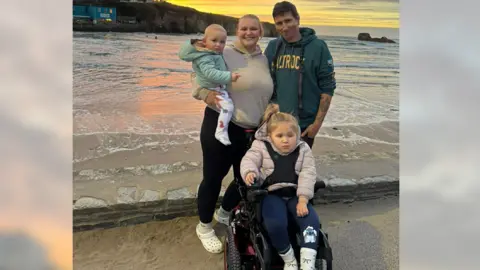
Dani-Rae Brown, now a young girl reliant on a wheelchair, began showing the first signs of SMA at just five months old. Her father, Charlie Brown, recalls the devastating progression of her condition. "People weren’t paying attention enough," he told BBC Radio Wales Breakfast, his voice heavy with emotion. "She was failed by the NHS because of how long it took to diagnose her." What started as her legs not moving quickly escalated to a point where Dani-Rae lost the ability to move anything from the neck down. "It went from Dani’s legs not moving, to pretty much from the neck down she couldn’t move anything," he explained. The delay in diagnosis meant treatment came too late to prevent severe muscle degeneration. "Had she been screened at birth and treated, potentially she could have been walking, running, playing and being your typical child," Mr. Brown stated, his words a stark indictment of the current system. Today, Dani-Rae is "completely weak" and faces constant health risks as her muscles continue to waste away. "No-one would ever choose this life. I don’t think anyone would want to put this life onto anyone. You wouldn’t put it onto your worst enemy," he concluded, his plea for change palpable.
Samantha Williams experienced a similar ordeal with her son, Lucian Neale. Her concerns about Lucian’s health began even before his birth, as she noticed reduced movement in her womb. Despite these early warning signs, it took weeks of persistent visits to the GP after his birth for Lucian to be diagnosed with SMA at just six weeks old. "I was completely ignored. I started going to the GP from four weeks old. By five [weeks old] he had stopped moving everything," she recounted. Tragically, she was often dismissed, told she was an "over-protective mum," a sentiment that clearly weighs heavily on her. Lucian, now two years old, is doing "really well" thanks to available treatments, but Ms. Williams believes his progress could have been even more significant had his condition been identified and treated sooner. "He would be even better if they’d listened to me," she stated.

The urgency of these parents’ experiences is amplified by the recent public announcement from Jesy Nelson. The former Little Mix singer revealed that her twin daughters, born prematurely in May, have been diagnosed with SMA. In an emotional Instagram video, Nelson described SMA as the "most severe muscular disease," affecting "every muscle in the body, down to legs, arms, breathing, swallowing." She noted that her daughters were not exhibiting the expected movement in their legs and were experiencing difficulties with feeding, symptoms that are hallmarks of the condition. The public nature of Nelson’s revelation has brought the plight of SMA-affected families into the spotlight, underscoring the critical need for improved diagnostic pathways.
Spinal Muscular Atrophy (SMA) is a rare genetic disorder that affects the nerves controlling muscles, leading to progressive muscle weakness and wasting. According to the NHS, there are four main types of SMA, categorized by the age of onset and the severity of symptoms, which can impact a child’s ability to sit, stand, and walk. In its most severe forms, SMA can be fatal within two years if left untreated. The condition is caused by a faulty gene inherited from both parents. While there is currently no cure for SMA, effective treatments are available, but their efficacy is heavily dependent on early diagnosis and intervention.
The current newborn blood spot test, administered when a baby is five days old, screens for nine serious conditions. However, SMA is not currently included in this routine screening panel. The UK National Screening Committee (UK NSC) reviewed the inclusion of SMA in 2018 but decided against it, citing limited treatments and insufficient evidence on cost-effectiveness at the time. While an "in-service evaluation," a pilot screening programme, was approved in February 2025 to gather UK-specific data, its rollout has been hampered by delays in formal agreement from NHS England to deliver the pilot.
SMA UK, a leading charity supporting individuals and families affected by the condition, is at the forefront of advocating for the inclusion of SMA in newborn screening. Giles Lomax, chief executive of SMA UK, emphasizes the critical role of early intervention. "Without early diagnosis and treatment, babies with the most severe forms of SMA can experience rapid and irreversible muscle weakness, leading to serious disability and, in some cases, life-threatening complications," he stated. "Today, we have effective treatments for SMA. But timing is everything. The evidence is clear: babies who are diagnosed and treated before symptoms appear have significantly better health outcomes. Many can meet developmental milestones that would not have been possible without early intervention. Once symptoms begin, damage to motor neurons cannot be undone."

The Welsh government stated that it adheres to the advice of the UK National Screening Committee, which does not currently recommend routine newborn screening for SMA. They are, however, "working to improve diagnosis of rare conditions and will consider any future recommendations from the committee." The in-service evaluation in Scotland is expected to inform a UK NSC recommendation on whether SMA screening should be integrated into routine newborn programmes across the UK. NHS England has expressed its support for further evaluation and is "determined to make" one-shot treatments available as quickly as possible for all children and their families. The NHS Generation Study is also exploring the potential for genomic sequencing in routine newborn screening, which could include testing for SMA.
Estimates from SMA UK suggest that approximately 47 babies were born with SMA in the UK in 2024. However, the prevalence of the altered gene that causes the disease is higher, with about one in 40 people being carriers. The stories of Dani-Rae Brown and Lucian Neale, now joined by the public concern surrounding Jesy Nelson’s twins, serve as a poignant reminder that the delay in implementing comprehensive newborn screening for SMA is having a profound and lasting impact on families across the nation. The call for action is clear: early diagnosis is not just preferable; it is essential for giving children with SMA the best possible chance at a healthy and fulfilling life.




 Nakalama John
 atisusanti
 Ramos Leo
