
 Ramos Leo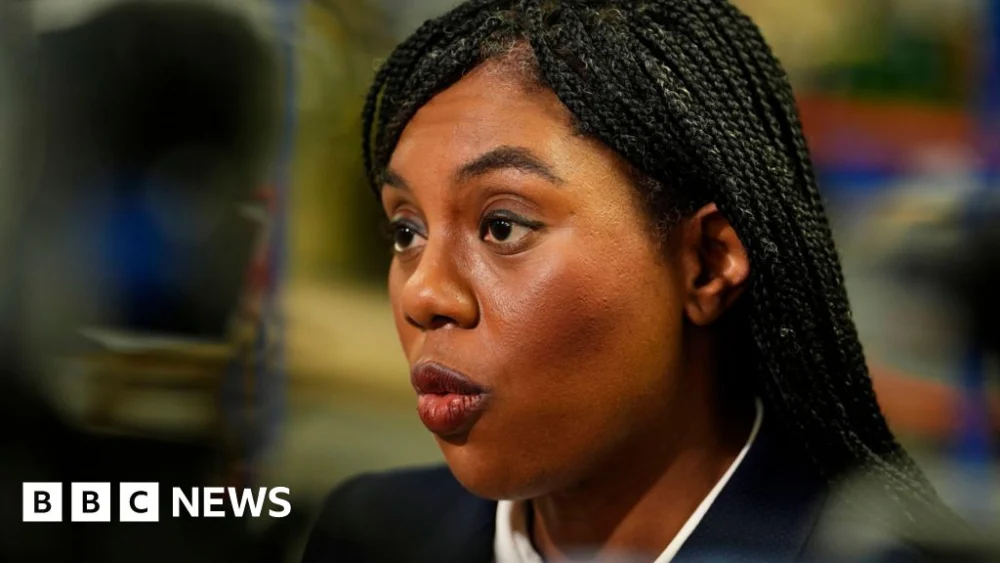
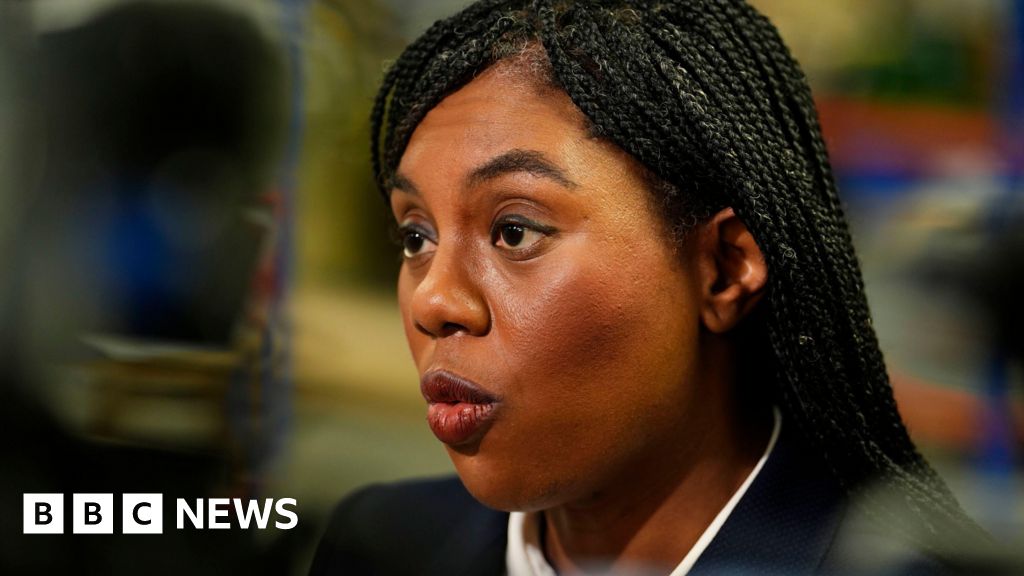
Kemi Badenoch, the prominent Conservative leader, has unequivocally stated that the recent US military intervention in Venezuela, which led to the removal of President Nicolás Maduro, was "morally the right thing to do." Speaking on BBC Radio 4’s Today programme, Badenoch acknowledged the significant legal ambiguities surrounding the operation but expressed profound relief at Maduro’s ousting, describing his administration as a "brutal regime." Her remarks provide a striking endorsement of the US action, even as the broader international community grapples with the implications for established norms of state sovereignty and international law.
Badenoch conceded that she did not fully comprehend the specific legal basis invoked by the Trump administration for its operation, which saw US forces seize Maduro and his wife from Caracas. However, she emphasized a moral imperative that, for her, transcended immediate legal clarity. "Where the legal certainty is not yet clear, morally, I do think it was the right thing to do," she asserted, underscoring a perspective rooted in a deep-seated opposition to authoritarian rule. This stance reflects a tension often present in international affairs between the desire to uphold the "rules-based order" and the perceived necessity of intervention in the face of grave human rights abuses or dictatorial oppression. Badenoch acknowledged this tension, adding that the move undeniably "did raise serious questions about the rules-based order."
Her personal background heavily informs her viewpoint. The Tory leader, who spent her formative years in Nigeria before relocating to the UK at the age of 16, drew a direct parallel to her own experiences. "I grew up under a military dictatorship, so I know what it’s like to have someone like Maduro in charge," she explained. This personal insight offers a powerful justification for her strong moral conviction, suggesting that the suffering inflicted by such regimes can outweigh concerns over procedural legalities in exceptional circumstances. She expressed palpable relief, stating she was "glad he’s gone."
The UK government, in contrast to Badenoch’s direct moral judgment, has adopted a more cautious and diplomatically nuanced approach. While London has refrained from directly criticising the US action or explicitly labeling it as a breach of international law, it has consistently maintained that Nicolás Maduro was an "illegitimate president." This position allows the government to tacitly approve the outcome of the US intervention – the removal of a leader they did not recognise – without having to formally endorse the method employed, which could set a problematic precedent.
However, this measured response has not satisfied all quarters of the British political spectrum. Several Labour MPs and opposition parties, including the Liberal Democrats, Green Party, and the Scottish National Party (SNP), have vociferously called upon the government to unequivocally condemn Trump’s actions and declare them illegal under international law. They argue that a failure to do so risks undermining the very foundations of the global legal framework and could embolden other powerful nations, such as Russia and China, to pursue similar unilateral interventions in the future. Emily Thornberry, a prominent Labour MP and chair of the Commons Foreign Affairs Committee, articulated these concerns, highlighting the dangerous precedent the US action might establish.
Further demonstrating the government’s delicate balancing act, Foreign Secretary Yvette Cooper addressed the House of Commons, stating that she had "reminded her US counterpart Marco Rubio of his obligations under international law." Yet, she reiterated the Prime Minister’s consistent position that it remains for the United States itself to articulate the specific legal basis for its actions in Venezuela. This stance effectively passes the burden of justification to Washington, allowing the UK to maintain its diplomatic lines while signaling its adherence to international norms.
The dramatic events in Venezuela unfolded on Saturday when US forces launched an operation that saw Nicolás Maduro, the country’s long-serving left-wing leader, and his wife, Cilia Flores, seized from the capital, Caracas. The intervention also reportedly involved targeted strikes on several military bases within Venezuela. The couple were subsequently transported to New York, where they face a litany of charges, including weapon and drug offences. Prosecutors allege that Maduro and Flores enriched themselves by orchestrating a violent criminal enterprise involved in smuggling cocaine into the United States. Maduro has vehemently rejected these allegations, consistently framing them as a cynical pretext by Washington to engineer his removal from power. Both he and his wife have pleaded not guilty to the charges brought against them in US courts.
In the wake of Maduro’s capture, US President Donald Trump publicly declared his intention to "run the country" until a "proper" transition of power could be established in Venezuela. The interim presidency has since been assumed by Venezuela’s Vice-President, Delcy Rodríguez, a move that has been met with varying degrees of international recognition and scrutiny. The US action marks a significant escalation in its long-standing campaign to unseat Maduro, whom it has accused of human rights abuses, corruption, and dismantling democratic institutions.
Badenoch also used her interview to draw a sharp distinction between the US action in Venezuela and President Trump’s recent, controversial threats to annex Greenland. In recent days, Trump has repeatedly floated the idea of acquiring Greenland, a semi-autonomous Danish territory, citing its strategic location and abundant mineral resources as vital for US national security. However, Badenoch was unequivocal in stating that it was right to tell Trump not to intervene in Greenland. "There is a big difference between democratic states" like Denmark and the "gangster state in Venezuela," she asserted. "What happens in Greenland is up to Denmark and the people of Greenland."
This distinction highlights the complex calculus of international relations, where sovereignty is generally respected among democratic allies but can be challenged in the context of perceived rogue states or brutal dictatorships. The UK, alongside France, Germany, Italy, Poland, Spain, and Denmark, has issued a joint statement firmly insisting that decisions regarding Greenland’s future rest solely with Denmark and the people of Greenland.
Health Secretary Wes Streeting, also weighing in on the issue, defended the Prime Minister’s differing approach to Greenland and Venezuela on BBC Breakfast. He explained that Denmark is a valued member of the NATO military alliance, and it is not in the UK’s national security interests to question the territory’s future. Streeting further articulated the Prime Minister’s stance on Venezuela, arguing that he was acting in the UK’s national interest, as well as the "best interests of the people of Venezuela." He acknowledged that "there are others who have been more strident and have been more critical of the United States," but stressed that "the prime minister has a different responsibility, and he is choosing his words carefully and wisely to try and influence how events unfold from here on." This statement underscores the delicate diplomatic tightrope the UK government is attempting to walk, balancing its alliance with the US with its commitment to international law and its own strategic interests in a rapidly evolving geopolitical landscape. The moral conviction articulated by Kemi Badenoch adds a compelling, albeit controversial, voice to this intricate debate, highlighting the profound ethical dilemmas inherent in contemporary global governance.



 Roy Suryo

 Nakalama John
 atisusanti
