atisusanti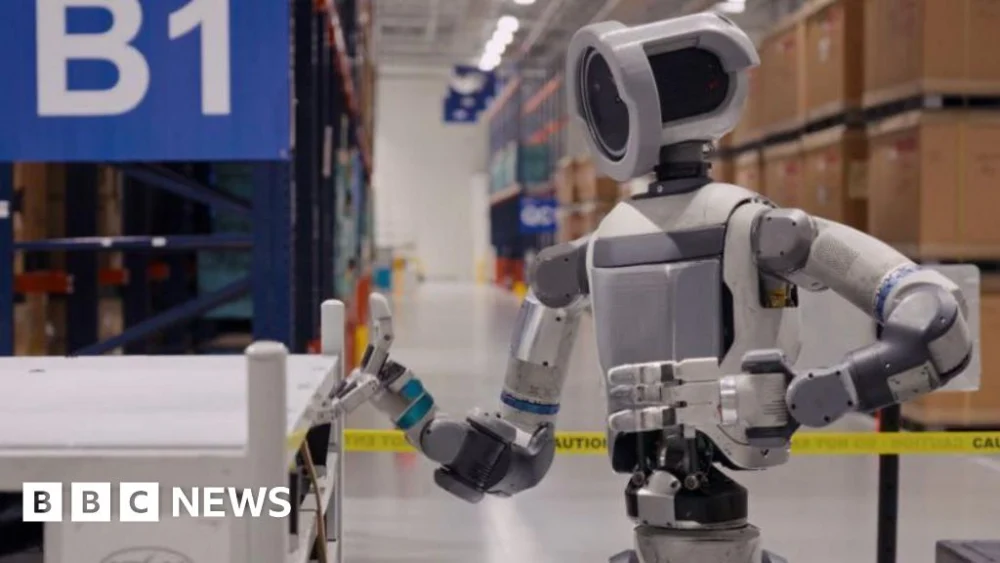
Hyundai Motor Group is poised to usher in a new era of automotive manufacturing, announcing its ambitious plan to deploy advanced human-like robots across its global factory network starting in 2028. This strategic move signals Hyundai’s commitment to embracing cutting-edge automation and positions the South Korean automotive titan at the forefront of a rapidly intensifying global race to integrate sophisticated robotic technology into industrial operations. The company recently showcased its vision at the Consumer Electronics Show (CES) in Las Vegas, unveiling the Atlas humanoid robot, a product of its subsidiary, Boston Dynamics. This unveiling underscores Hyundai’s dedication to leveraging its majority stake in the renowned robotics firm, famous for its agile "Spot" robot dog, to revolutionize its manufacturing processes.
The Atlas robots are not merely intended as replacements for human workers but are envisioned as collaborative partners, designed to work alongside people and autonomously manage complex machinery. Hyundai’s stated objectives for integrating Atlas are multifaceted: to alleviate the physical strain on its human workforce, to undertake tasks that are inherently dangerous or arduous for humans, and to serve as a crucial stepping stone for the broader adoption of advanced robotic technologies. While Hyundai has not yet disclosed the precise number of robots it plans to deploy initially or the substantial financial investment required for this undertaking, the intent is clear: to fundamentally reshape the landscape of automotive production.
The decision to deploy humanoid robots is part of a broader trend gaining momentum across major global corporations. Amazon, Tesla, and the Chinese automotive powerhouse BYD have all publicly declared their intentions to integrate similar robotic systems into their manufacturing and logistical operations. This collective push highlights a shared recognition of the potential benefits, including enhanced efficiency, improved safety, and increased production capacity, that advanced robotics can offer.
During his address at CES, Hyundai’s Vice Chair, Jaehoon Chang, directly addressed the prevailing concerns regarding potential job displacement for human workers. He reassured attendees that while robots will undoubtedly take on a significant number of tasks, humans will remain indispensable in critical roles, particularly in the training and supervision of these sophisticated machines. This perspective suggests a future where human and robotic labor are integrated, with humans shifting towards roles that require complex problem-solving, oversight, and adaptability.
This significant announcement follows a series of substantial investments and strategic initiatives by Hyundai in the United States. In 2025, Hyundai declared its intention to invest over $20 billion (approximately £15.5 billion) in the U.S., aligning with efforts to bolster domestic manufacturing. This investment is earmarked for expanding car production, advancing autonomous driving technology, and developing artificial intelligence capabilities. This commitment to the U.S. market is further exemplified by Hyundai’s significant presence, including its battery plant in Georgia, a facility operated in partnership with electronics giant LG.
The Georgia plant, however, has also been the site of a significant controversy. In September 2025, U.S. immigration authorities conducted a raid that led to the arrest of hundreds of workers, including a substantial number of South Korean citizens. The images of detained workers with shackled legs sparked considerable outrage in South Korea, raising concerns about potential deterrents to foreign investment. Both South Korean President Lee Jae Myung and Hyundai CEO José Muñoz voiced their concerns, warning of the negative impact on international business confidence in the U.S.
In the aftermath of the raid, Washington and Seoul managed to reach an agreement to facilitate the release of the detained workers. Former President Donald Trump, who had previously expressed opposition to the raid, emphasized the U.S.’s understanding of the necessity of bringing in foreign expertise for specialized facilities and training local workforces. This sentiment was echoed by Muñoz, who later confirmed in November that the White House had personally contacted him to offer an apology for the incident, underscoring the diplomatic efforts to mend relations and reassure international partners.
Hyundai’s strategic embrace of humanoid robots like Atlas is not an isolated endeavor. Elon Musk’s electric vehicle company, Tesla, has also made considerable investments in its own humanoid robot, Optimus, signaling a parallel pursuit of advanced robotic integration within the automotive sector. The convergence of these initiatives from major industry players indicates a transformative shift in manufacturing paradigms, where the line between human and robotic capabilities is increasingly blurred.
The integration of Atlas robots into Hyundai’s global operations is expected to yield significant improvements in production efficiency, quality control, and worker safety. By automating repetitive, physically demanding, and potentially hazardous tasks, Hyundai aims to create a more sustainable and ergonomic work environment for its human employees. This allows human workers to transition to more engaging and skilled roles, such as overseeing complex robotic operations, performing intricate quality checks, and contributing to the continuous improvement of manufacturing processes.
The development of Atlas represents a significant leap forward in robotics, moving beyond specialized industrial robots to create machines capable of more versatile and adaptable tasks. The robot’s design, with its human-like form factor, suggests an intent to navigate and interact within environments traditionally designed for human workers, facilitating a smoother integration into existing factory layouts. This adaptability is crucial for a company like Hyundai, which operates a vast and diverse global manufacturing network.
The long-term vision for Atlas, as articulated by Hyundai, extends beyond mere task automation. The robots are intended to play a role in predictive maintenance, identifying potential equipment failures before they occur, and in optimizing production line flow. Furthermore, their ability to learn and adapt through AI integration could lead to continuous enhancements in operational efficiency and innovation. This forward-thinking approach underscores Hyundai’s commitment to not only adopting new technologies but also to driving the evolution of robotics and artificial intelligence in industrial applications.
The implications of this widespread adoption of humanoid robots by major automotive manufacturers are profound. It suggests a future where factories are characterized by a seamless synergy between human ingenuity and robotic precision. While the transition will undoubtedly present challenges, including the need for extensive retraining of the workforce and the ethical considerations surrounding automation, the potential benefits in terms of productivity, safety, and innovation are immense. Hyundai’s bold move to deploy Atlas robots from 2028 signals a definitive step towards realizing this future, positioning the company as a leader in the next industrial revolution. The integration of these advanced robotic systems is poised to redefine manufacturing standards, enhance global competitiveness, and ultimately shape the way vehicles are produced for generations to come.




 George Anjay
 Nakalama John
 Ramos Leo
 Nana Banana