
 Ramos Leo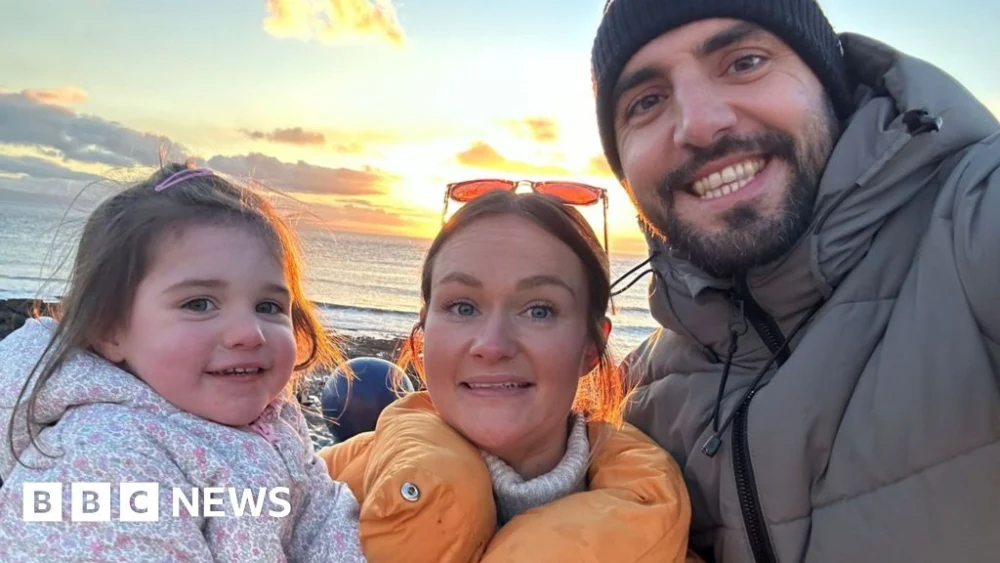
The profound grief and unwavering determination of Ellie James, a 36-year-old widow from Caerphilly, are at the heart of a national campaign aiming to revolutionise brain tumour treatment and research. Her husband, Owain James, tragically succumbed to a malignant stage four brain tumour at the age of 34 in June 2024, leaving behind Ellie and their young daughter, Amelia. Now, Ellie vows that her life cannot return to a semblance of normality until she helps enact changes to how brain tumour tissue is managed, ensuring future patients have every possible fighting chance. Her tireless advocacy, driven by Owain’s own fervent wish to "change things for the better for others," is set to culminate in a pivotal debate in the UK Parliament on Wednesday.
Ellie’s campaign, known as "Owain’s Law," proposes three critical amendments to current medical practice: first, that all patients undergoing brain tumour surgery provide explicit written consent regarding the storage and use of their removed tissue; second, that the excised tissue remains the legal property of the patient; and third, that all tumour tissue removed during surgery is automatically frozen for potential future use in personalised treatments or research. This initiative directly addresses a heartbreaking limitation Owain faced during his own battle: despite a significant portion of his tumour being removed, only a small fraction of it was preserved in a manner suitable for an experimental immunotherapy vaccine, an intervention that initially yielded remarkable results.

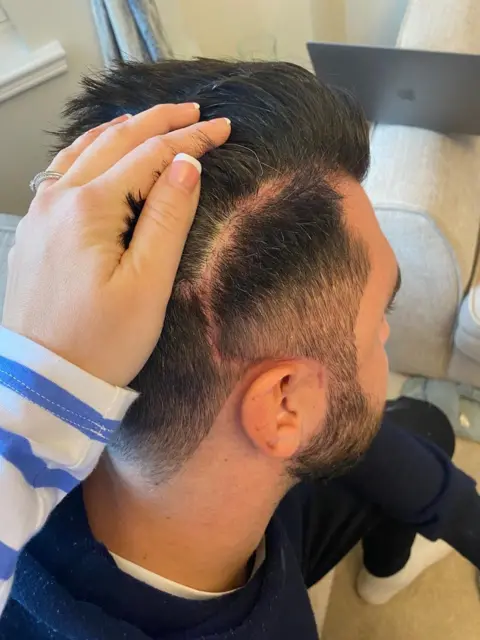
Owain’s journey began with the devastating diagnosis of a malignant stage four tumour in his brain. This aggressive form of cancer, often identified as glioblastoma multiforme (GBM), carries a particularly grim prognosis. Following initial surgery, which successfully removed half of the tumour, doctors conveyed the sobering reality that their best efforts could only temporarily control the remaining cancerous cells. Faced with limited conventional options and a desire to explore every avenue, Owain and Ellie made the courageous decision to pursue an immunotherapy vaccine. This cutting-edge treatment, not readily available on the NHS, works by educating the patient’s immune system to recognise and attack their specific tumour cells, using antigens derived from the tumour itself. The efficacy of such a personalised vaccine hinges entirely on the availability of sufficient, properly stored tumour tissue.
In Owain’s case, of the 7cm of tumour tissue removed during his operation, a mere 1cm was frozen and thus suitable for vaccine production. This critical shortage meant that his access to the potentially life-saving immunotherapy was severely constrained. Despite this limitation, the initial treatment with the vaccine showed incredible promise: the remaining tumour fully regressed, offering a precious period of hope and stability for the young family. However, this reprieve was tragically short-lived, as another tumour was discovered just nine months later, ultimately leading to Owain’s passing. Ellie firmly believes that had more of Owain’s tissue been properly frozen, allowing for a greater supply of the personalised vaccine, "we could have had more vaccine, then I believe he would still be here today." This profound "what if" fuels her unyielding resolve to prevent other families from experiencing the same devastating regret.
The campaign’s journey has not been without its challenges. Last year, Ellie’s efforts to persuade the NHS in Wales to adopt "Owain’s Law" were debated in the Welsh Parliament. However, the proposal was ultimately rejected, with the Welsh health secretary citing concerns about "unintended consequences" if such legislation were implemented. These potential consequences, often raised in similar medical policy discussions, can include increased logistical burdens on pathology departments, significant financial costs associated with new storage facilities and procedures, potential delays in routine diagnostic processes if all tissue must be frozen immediately, and even ethical complexities surrounding tissue ownership and research priorities.
Undeterred by this setback, Ellie, supported by her local MP, Chris Evans, is now taking her fight to the UK Parliament. The upcoming Commons debate marks a crucial escalation of her campaign, as she hopes to see these vital changes implemented across the entire United Kingdom. For Ellie, this is not merely a political endeavour; it is a deeply personal mission of profound significance. "It means everything," she stated, her voice imbued with a mix of exhaustion and absolute conviction. "It takes all my energy to do it, but I just cannot go back to ‘life’ without getting this changed." She envisions Owain’s immense pride, knowing that his experience is directly leading to systemic improvements for others. "Had we been properly informed we would have chosen to freeze the tissue, but that choice was taken out of our hands," she emphasised, highlighting the crucial element of informed patient consent.
The urgency of Ellie’s campaign resonates deeply with other patients facing similar battles. Matt Collins, a 38-year-old from Cardiff, was diagnosed with glioblastoma – the most aggressive form of brain tumour – in October 2023 after suffering a stroke that left him without the use of his left arm. Following a six-hour operation to remove his golf ball-sized tumour, Matt, like Owain, sought out the DcVax-L personalised vaccine, a treatment that relies heavily on the proper storage and availability of a patient’s own tumour cells. Through significant fundraising efforts, he managed to secure £100,000 for the treatment, which is not available on the NHS. However, due to the way his brain tissue was stored post-surgery, he was only able to receive four doses of the vaccine, significantly fewer than the initially planned ten.
"It wouldn’t have cured my cancer, but it could have given me a couple more months," lamented Collins, who has been given a life expectancy of 12-18 months. His experience underscores the immediate and tangible impact of current tissue storage practices on patient outcomes. "It’s so important to have the tissue stored properly, and that people are aware of the options they have. I was never told there was a vaccine available," he added, echoing Ellie’s call for enhanced patient information and autonomy. The lack of awareness surrounding the potential for personalised treatments and the critical role of tissue storage is a recurring theme for patients navigating complex brain tumour diagnoses.
The scientific and medical community increasingly recognises the vital role of comprehensive tissue preservation in advancing brain tumour research and treatment. Brain tumours are notoriously difficult to treat due to their location within the skull, the protective blood-brain barrier which limits drug delivery, and their inherent heterogeneity, meaning different parts of the same tumour can respond differently to treatments. Personalised medicine, tailored to an individual’s unique tumour characteristics, offers a promising frontier. Dr Karen Noble, Director of Research, Policy and Innovation at the charity Brain Tumour Research, strongly supports an increase in frozen tissue storage capacity across the UK. She explains, "Personalised treatments for brain tumours rely on gathering detailed genetic information about the tumour following surgery. The way tissue is stored post-surgery has a critical impact, because there is a real risk that powerful information is lost, closing down pathways to clinical trials and innovative treatments." Traditional pathology practices often prioritise tissue preservation for diagnostic purposes, frequently embedding samples in paraffin wax, which can degrade genetic material and limit its utility for advanced genomic testing and vaccine production. Freezing tissue, on the other hand, maintains the integrity of cellular components, making it invaluable for future molecular analysis and therapeutic applications. The establishment of robust biobanks for brain tumour tissue is therefore seen as fundamental to accelerating discovery and improving patient care.
In response to Ellie James’s campaign, the Welsh government reiterated its stance, stating that "the case had not been made for new legislation." A spokesperson elaborated, "Clinical teams already use their expert judgment to balance diagnostic needs with the potential for research and novel therapies, and overriding that clinical discretion with legislation could compromise timely diagnosis or create conflict where tissue volume is limited." While acknowledging the importance of research, the government maintains that existing practices, guided by clinical expertise, are designed to serve patients’ best interests. They committed to working with relevant bodies "to ensure NHS Wales practices in tissue archiving and access to genomic testing remain in the best interests of our patients," suggesting a preference for evolving guidelines rather than new laws.
Meanwhile, the UK’s Department of Health and Social Care (DHSC) emphasised its commitment to innovative research. "Innovative research is vital in our fight against brain cancer so patients are offered the most cutting-edge treatments," a DHSC spokesperson said. "To deliver this, we are investing £13.7 million in the National Institute for Health and Care Research’s [NIHR] UK-wide Brain Tumour Research Consortium to support groundbreaking research and develop new brain tumour treatments." This significant investment aims to foster collaborative research efforts across the UK, pushing the boundaries of scientific understanding and therapeutic development. While not directly addressing the specifics of tissue storage legislation, the DHSC’s statement implicitly highlights the importance of biological samples for research, reinforcing the core argument of Owain’s Law that maximising the utility of tumour tissue is paramount for both current patients and future scientific progress.
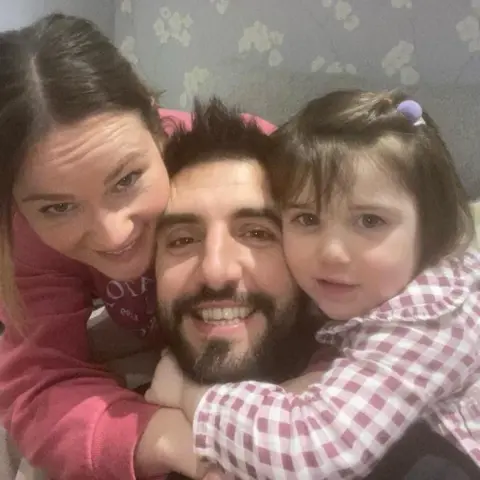
As the parliamentary debate approaches, Ellie James carries the torch of hope for countless families affected by brain tumours. Her campaign is a powerful testament to the enduring love between a husband and wife, and a widow’s unwavering commitment to transforming a personal tragedy into a catalyst for nationwide change. "Owain’s Law" seeks not only to enshrine patient autonomy but also to unlock the full potential of personalised medicine, ensuring that every precious piece of tumour tissue contributes to the fight against this devastating disease.



 Roy Suryo

 Nakalama John
 atisusanti
