George Anjay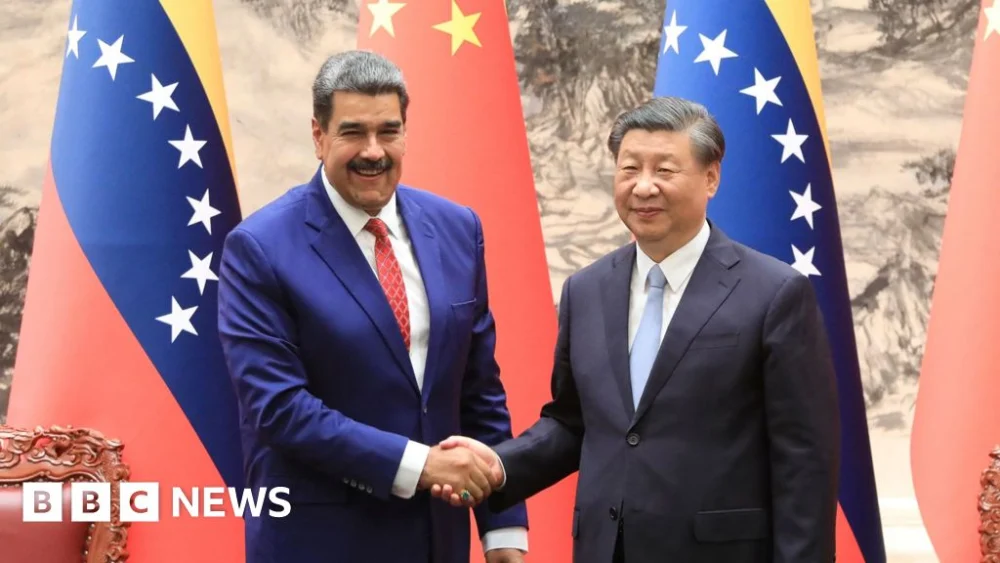
Donald Trump’s swift and decisive intervention in Venezuela, culminating in the overnight capture of President Nicolás Maduro, has sent seismic tremors through the geopolitical landscape, creating a new layer of complexity and risk for China’s long-term strategic ambitions. What had been a carefully cultivated relationship, built on decades of economic engagement and shared geopolitical positioning, has been thrown into disarray, forcing Beijing to recalibrate its approach in South America and beyond. The dramatic fall of Maduro, who had only hours before lauded Chinese President Xi Jinping as an "older brother" and a "powerful message to the world," starkly illustrates the volatile nature of international relations, a factor that China, a proponent of long-term stability, finds deeply unsettling.
China’s significant investments in the oil-rich nation, totaling over $100 billion in financing for infrastructure projects between 2000 and 2023, have positioned it as one of Venezuela’s closest South American partners. State media had proudly showcased footage of Maduro and Xi Jinping, highlighting the hundreds of bilateral agreements and the amiable relationship between their nations. The stark contrast between these images of diplomatic accord and the subsequent visuals of Maduro in handcuffs aboard a US warship has not gone unnoticed in Beijing. China, along with many other nations, has publicly condemned Washington’s actions, labeling them as an act of "bullying" and a violation of international law and national sovereignty. However, beneath the strong rhetoric, Beijing is engaged in meticulous calculations to safeguard its foothold in South America and navigate an already intricate relationship with a potentially re-elected Donald Trump, all while confronting an unforeseen shift in the great power competition.
While some may view this as an opportunity for China’s authoritarian Communist Party rulers to exploit perceived American overreach, the reality for Beijing is a complex mix of risk, uncertainty, and frustration. China, a nation that prides itself on meticulous long-term planning and strategic patience, is fundamentally averse to chaos. This is precisely what appears to be increasingly confronting it in a potential second Trump term. Beijing had weathered the on-again, off-again trade war, believing it had demonstrated the world’s dependence on Chinese manufacturing and technology. However, Trump’s bold move in Venezuela presents a new and formidable challenge.
Trump’s calculated play for Venezuelan oil resources has undoubtedly amplified China’s deepest reservations about American intentions, particularly regarding the extent to which the United States is willing to go to contain Chinese influence. U.S. Secretary of State Marco Rubio’s unambiguous declaration that "this is the western hemisphere. This is where we live – and we’re not going to allow the western hemisphere to be a base of operations for adversaries, competitors and rivals of the United States" sent a clear, albeit unstated, message to Beijing: cease and desist from encroaching on American interests in its "backyard." While Beijing is unlikely to heed this warning directly, it will be observing future developments with keen interest. The Chinese Foreign Ministry spokeswoman Mao Ning’s strong condemnation of a reported U.S. directive for the interim Venezuelan president to sever economic ties with China and Russia underscores Beijing’s commitment to defending its economic interests and its opposition to what it perceives as U.S. hegemonic behavior.
The dramatic events in Venezuela have also ignited discussions within China about the potential implications for its own strategic objectives, particularly concerning Taiwan. Some Chinese nationalists on social media have drawn parallels between the U.S. intervention in Venezuela and Beijing’s aspirations for Taiwan, the self-governing island that China considers a renegade province. Xi Jinping’s unwavering vow to achieve Taiwan’s "reunification" with the mainland, without ruling out the use of force, has led to questions about whether Beijing might be emboldened by the U.S. action in Caracas to consider a similar unilateral move against Taipei. However, analysts like David Sacks from the Council on Foreign Relations argue that China does not perceive these situations as analogous. Beijing views Taiwan as an internal matter, distinct from the international order that the U.S. intervention in Venezuela purportedly upholds. More importantly, Sacks contends that China’s decision to invade Taiwan will hinge on its assessment of its ability to succeed at an acceptable cost, rather than being dictated by perceived U.S. precedent. Until that strategic calculus shifts, China is expected to continue its strategy of coercion to pressure Taiwan into negotiations, a dynamic that the U.S. actions in Venezuela do not fundamentally alter.
Instead, the Venezuelan intervention represents an unwelcome and potentially disruptive challenge for China, jeopardizing its long-term strategy to cultivate influence and partnerships within the Global South. The bilateral relationship between Beijing and Caracas had been characterized by a clear and mutually beneficial exchange: China required oil to fuel its burgeoning economy, and Venezuela desperately needed cash to sustain its government and economy. Between 2000 and 2023, China channeled over $100 billion into Venezuela for infrastructure projects, in return receiving a significant portion of the nation’s oil exports. While approximately 80% of Venezuelan oil was destined for China last year, this still constitutes only about 4% of China’s total oil imports, suggesting that the direct financial risks for Chinese firms, such as CNPC and Sinopec, may be manageable. However, the risk of nationalization of assets or marginalization amidst the ensuing chaos remains a concern.
Outstanding loans totaling around $10 billion owed by Venezuela to Chinese creditors also represent a financial exposure, though experts urge caution in assessing the immediate risk to these investments. A more significant long-term concern for Beijing is the potential deterrent effect of U.S. intervention on future foreign investment in countries perceived as aligned with China. As Cui Shoujun of Renmin University’s School of International Relations noted on Chinese state media, "Chinese enterprises need to fully assess the risks and extent of potential U.S. intervention before investing in related projects." This puts Beijing in a precarious position, as it seeks to maintain its delicate trade truce with the United States while simultaneously safeguarding its strategic presence in Latin America, a task made considerably more challenging by the unpredictable nature of a Trump presidency.
The potential for other South American nations to shy away from significant Chinese investments due to the fear of attracting unwanted U.S. attention is a considerable worry for Beijing. This region is a vital source of food, energy, and natural resources for China, with bilateral trade exceeding half a trillion dollars. The U.S. has also made its intentions clear regarding Chinese holdings and investments related to the Panama Canal, a move that is undeniably concerning for China’s strategic interests in global trade routes. Consequently, Beijing may be compelled to seek alternative avenues to assert its influence within Washington’s sphere of influence.
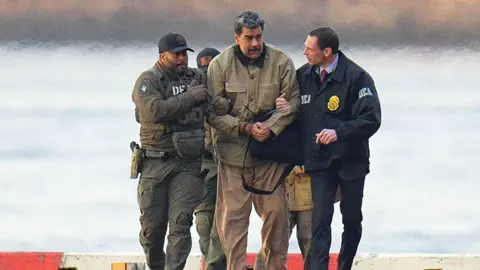
China has demonstrated remarkable patience and persistence in its efforts to woo South American nations, framing its engagement around the concept of a "community with a shared future" and advocating for opposition to "unilateral bullying." This message resonates with many governments that have grown increasingly wary of Western influence, particularly from the United States under Trump. Beijing has achieved notable success in persuading several Latin American states to switch diplomatic recognition from Taiwan to China over the past two decades, a testament to its strategic economic partnerships. In contrast, Trump’s foreign policy approach has highlighted the volatility of relationships with Washington, a factor that could inadvertently play into China’s hands as it seeks to project Xi Jinping as a stable and reliable leader on the global stage.
The situation in Venezuela could easily devolve into prolonged chaos, and the lessons from Iraq, where promises of economic reconstruction funded by oil revenues failed to materialize, serve as a cautionary tale. China, now the largest buyer of Iraqi crude, may find itself in a similar position in Venezuela. For years, China hawks in the U.S. Congress have urged Washington to counter Beijing’s growing influence in South America. While the U.S. has now made its move, the ultimate consequences and future trajectory remain uncertain, creating a climate of significant risk for all parties involved, including China, a nation that generally eschews speculative gambles.


 Roy Suryo