
 Nakalama John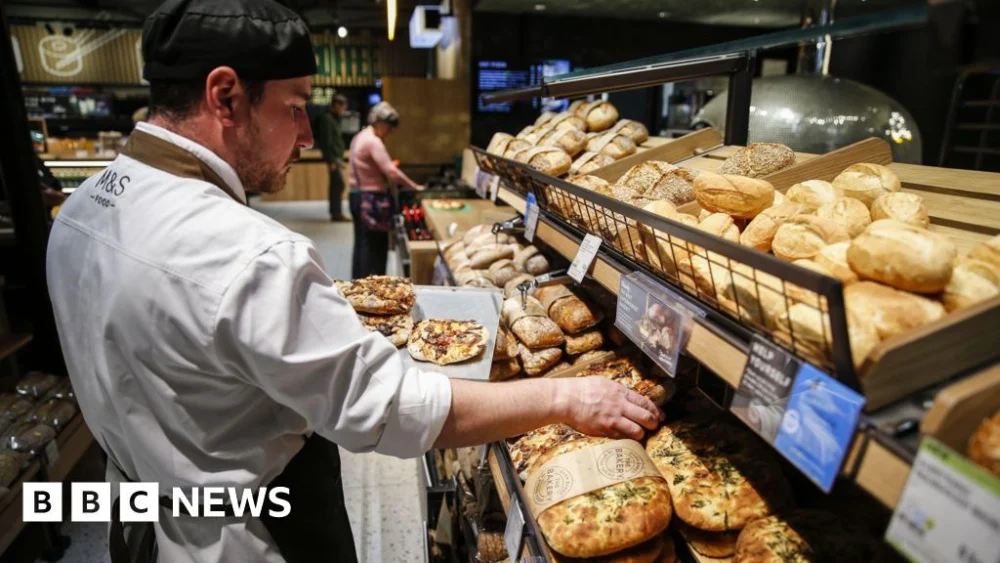
Retail giants Tesco and Marks & Spencer both experienced a significant uplift in their food divisions over the crucial Christmas trading period, navigating a landscape marked by persistent economic challenges. This festive season is traditionally the most vital for retailers, often dictating annual performance, and both supermarkets managed to capture a substantial share of consumer spending on food, despite a broader climate of cautious consumer confidence and inflationary pressures.
Tesco, the UK’s largest supermarket chain, announced impressive sales growth in the UK, with figures up 3.2% compared to the previous year. This robust performance allowed the retailer to achieve its highest market share in over a decade, a testament to its sustained strategic focus on value, loyalty, and quality. The company’s ability to gain market share amidst intense competition underscores its strong positioning and effective customer engagement strategies. This market share milestone is particularly significant, indicating that Tesco has successfully attracted new customers while retaining its loyal base, effectively fending off competition from discounters and other mainstream supermarkets.
Marks & Spencer also reported a positive festive period for its food business, noting a record number of customers flocking to its stores. M&S’s food sales were described as "strong," confirming its continued success in offering premium, high-quality, and convenient food options. This segment of M&S’s business has consistently been a bright spot, demonstrating resilience and growth even when other parts of the business face headwinds. The influx of customers suggests that M&S’s carefully curated Christmas ranges and reputation for quality resonate strongly with consumers looking for something special during the holidays.
However, the picture for M&S was not uniformly positive. Sales at its crucial clothing, home, and beauty business experienced a decline, contrasting sharply with its food division’s success. M&S attributed this fall to several factors, including lower footfall on the High Street and the lingering effects of a cyber-attack that occurred the previous year. The High Street continues to battle against the shift towards online shopping and a general reduction in discretionary spending on non-essential items, making it a challenging environment for physical retail. The cyber-attack, while not directly detailed in its full impact, likely caused disruptions to online operations, inventory management, and potentially customer trust, creating a ripple effect that persisted into the festive period.
Specifically, M&S suffered a sales fall of 2.9% in its fashion, home, and beauty products. The company openly acknowledged that this segment was still grappling with stock and inventory issues directly resulting from the cyber-attack. Such disruptions can lead to supply chain bottlenecks, difficulties in fulfilling online orders, and potentially stockouts of popular items, all of which would naturally depress sales. Furthermore, a compromised system can make it harder to track inventory accurately, leading to inefficiencies and missed sales opportunities.
In contrast, M&S’s food sales soared by 5.5%, a clear highlight of its trading update. Chief executive Stuart Machin pinpointed the success to its "Christmas hero lines," which likely encompassed a range of festive treats, gourmet party food, and premium ready meals designed to elevate at-home celebrations. The company also highlighted significant growth in its Italian ready meals, its in-store bakery offerings, and its deli counters, indicating a strong consumer appetite for convenient, high-quality, and indulgent food options. These categories cater to consumers seeking restaurant-quality food experiences at home, a trend that has accelerated in recent years.
Stuart Machin commented on the performance, stating, "Food sales were strong and the business continues to outperform, hitting a new market share milestone in the period." He also expressed cautious optimism about the recovery of the non-food division, adding, "Fashion, Home & Beauty is getting back on track as we work through the tail end of recovery." This suggests ongoing efforts to mitigate the issues caused by the cyber-attack and adapt to the changing retail landscape for clothing and homeware. The "new market share milestone" in food further solidifies M&S’s position as a leading premium food retailer.
Dan Coatsworth, head of markets at AJ Bell, offered a critical perspective on M&S’s non-food performance. He noted that the fall in fashion sales was "going to disappoint a lot of people as the past few years suggested that M&S had finally cracked the right formula to look smart with clothing." This sentiment reflects investor hopes that M&S was finally turning a corner in its long-struggling fashion segment. Coatsworth further highlighted that rival fashion chain Next, which had reported strong Christmas sales earlier in the week, seemed to possess an "edge" that M&S currently lacked. This comparison underscores the competitive pressures and the differing success rates among retailers in adapting to modern consumer preferences and operational demands. Next’s consistent performance often stems from its robust online infrastructure, efficient logistics, and agile response to fashion trends, areas where M&S has historically faced challenges.
Tesco’s chief executive, Ken Murphy, expressed his delight with the supermarket’s Christmas performance, acknowledging the "intense" competition within the sector. His positive remarks underline the achievement of maintaining strong growth in a highly competitive and price-sensitive market. The firm reported an overall food sales increase of 5.2%, with particularly robust sales in fresh produce and party food categories. This suggests consumers were prioritizing fresh ingredients for home cooking and entertaining, as well as opting for convenient party options for festive gatherings.
Murphy also specifically highlighted the exceptional performance of the Tesco Finest range, which saw an impressive sales growth of 13%. This significant increase in premium own-brand sales indicates that consumers are willing to spend more on quality and indulgence, especially during festive occasions, even amidst a cost-of-living crisis. It suggests a trend where consumers are treating themselves to higher-quality food experiences at home, possibly as an alternative to more expensive dining out options.
Buoyed by its strong festive trading, Tesco upgraded its profit outlook, now expecting to report annual operating profits at the upper end of the £2.9bn-£3.1bn range it had predicted in October. This revised guidance signals confidence in its full-year performance and suggests that the momentum from Christmas is expected to continue. Such upgrades are generally welcomed by investors as a sign of financial health and effective management.
Sofie Willmott, associate director at GlobalData Retail, provided further analysis on Tesco’s sustained success. She remarked, "Tesco has seen a consistently strong performance over the last couple of years really, where it’s really focused on price." Willmott elaborated that Tesco’s strategic initiatives, such as price-matching Aldi and offering exclusive lower prices to its Clubcard holders, had been instrumental in its success. These strategies have effectively allowed Tesco to "managed to retain its number one position at the top of the market," even when implementing heavy discounting on some products to compete fiercely with rivals. She also reiterated the strong performance of the Finest range, noting that shoppers might be opting for these premium options as a way of "not eating out as much or treating themselves" at home. This strategy allows Tesco to cater to both value-conscious shoppers and those looking for affordable luxury.
Despite Tesco’s positive profit guidance, the market’s reaction was somewhat muted, with some analysts hoping for an even more significant upgrade. Aarin Chiekrie, an analyst at Hargreaves Lansdown, commented that "many had been hoping for a bigger upgrade," attributing the slight disappointment to the performance of the group’s wholesale business, Booker. Booker, which supplies food to caterers and independent retailers, suffered from a decline in tobacco sales. This specific drag highlights changing consumer habits and regulatory environments impacting certain product categories within the wholesale sector. The shift away from tobacco products is a long-term trend that affects various parts of the retail supply chain.
This nuanced market sentiment was reflected in Tesco’s share price, which fell nearly 5% in early trading following the announcement. This reaction underscores the high expectations of investors and the sensitivity of the market to any perceived shortfalls, even when overall results are strong. While the performance was robust, the market often prices in future growth, and any indication that the pace of improvement might not meet ambitious forecasts can lead to a dip in share value.
In summary, the Christmas trading period delivered a mixed but generally positive outcome for these two retail giants. Tesco solidified its market leadership through a combination of competitive pricing, loyalty programs, and a strong premium own-brand offering, albeit with a slight drag from its wholesale arm. M&S demonstrated continued strength in its food division, leveraging its reputation for quality and indulgence, even as its fashion and home business continued to navigate challenges stemming from broader retail trends and past operational disruptions. Both companies highlighted the enduring importance of food retail during festive seasons, proving their ability to adapt and thrive in a complex economic climate.



 atisusanti
 Ramos Leo
 Roy Suryo
 Nana Banana
 George Anjay