Nakalama John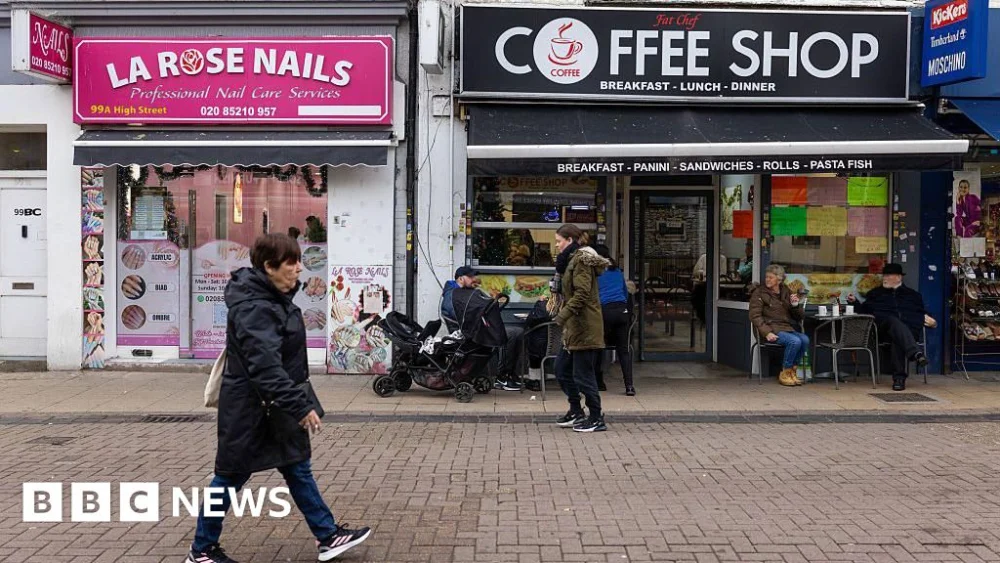
The controversy surrounding business rates has been simmering for months, reaching a boiling point with landlords and pub owners vehemently criticising the impending hikes. This discontent escalated into a notable protest where more than 1,000 pubs symbolically banned Labour MPs from their premises, a powerful display of the sector’s frustration and its ability to exert political pressure. While this targeted activism appears to have yielded results for pubs, it has simultaneously ignited a broader debate about fairness and equity across other struggling business sectors. Lobby groups representing a wide spectrum of enterprises, alongside a growing number of backbench MPs, are now pressing the government to widen the scope of any relief, arguing that countless other businesses are equally ill-equipped to absorb the burden of higher bills.
At the heart of the crisis are the changes introduced in the November Budget. The Chancellor, Jeremy Hunt, had announced a scaling back of business rate discounts that had been a vital lifeline since the pandemic. The discount, previously at 75%, was reduced to 40%, with the stark announcement that it would be entirely abolished from April. This reduction in relief, coupled with significant upward adjustments to the rateable values of commercial premises – particularly pubs – left landlords staring down the barrel of drastically higher bills. The Independent Valuation Office, responsible for assessing these rateable values, determines the theoretical annual rent a property could achieve, which then forms the basis for calculating business rates. For many businesses, these new valuations, combined with the shrinking relief, meant an unsustainable surge in operational costs. While initial reports suggest the government’s anticipated climbdown will apply exclusively to pubs, thereby excluding the broader hospitality sector and other commercial enterprises, this narrow focus has sparked outrage and a unified call for broader consideration.
Andrew Goodacre, chief executive of the British Independent Retailers Association (Bira), voiced strong disapproval, questioning the rationale behind excluding his members from similar relief. Bira represents a vast network of businesses, including vital High Street shops, independent restaurants, and cafes – all integral to local economies and community life. Goodacre asserted that independent retailers "face exactly the same challenges as pubs but have been left out of discussions about additional support." He highlighted the shared struggles of soaring energy costs, persistent inflationary pressures, the ongoing cost-of-living crisis impacting consumer spending, and the relentless competition from online retailers. His pointed suggestion that "Perhaps independent retailers need to follow the pubs’ example and start banning MPs from their premises too" underscores the depth of frustration and the feeling of being overlooked. This sentiment hints at a potential escalation of protest if their demands are not met, illustrating the growing politicisation of the business rates issue.
The "not right or fair" sentiment resonated across other industries. Surinder Arora, chief executive of the Arora Group, which operates numerous hotels across the UK, condemned a potential carve-out solely for pubs. Speaking on BBC Radio 4’s Today programme, Arora revealed the staggering impact on his own operations, stating that the business rates bill for just one of his hotels had increased by an "eye-watering" £12.4 million after the discounts were scaled back. He warned that such astronomical increases inevitably lead to higher costs being passed on to customers and necessitate "belt-tightening" within businesses, potentially hindering investment and job creation. While acknowledging the Chancellor’s stated growth ambitions, Arora cautioned that such high tax burdens could force businesses "the other way" – towards contraction rather than expansion, stifling economic recovery and development.
The British Retail Consortium (BRC), a prominent voice for the retail industry, echoed these concerns with its chief executive, Helen Dickinson, declaring the current business rates system "is not fit for purpose." Dickinson lambasted the anticipated partial relief as "another sticking plaster on a broken system rather than the more fundamental reform required." The BRC has long advocated for a complete overhaul of business rates, arguing that the system disproportionately burdens physical retail, disincentivises investment in high streets, and relies on outdated property valuations that fail to reflect current economic realities. The call for "fundamental reform" suggests a desire for more equitable taxation across different business models, potentially including an online sales tax to level the playing field between brick-and-mortar and e-commerce.
The ripple effect of the proposed rate hikes extends far beyond retail and hospitality. Jon Collins, chief executive of LIVE, the representative body for music venues, issued a stark warning: "If the government is preparing a U-turn on business rates for pubs, it must not leave live events and arenas behind." Music venues, still recovering from the devastating impact of the pandemic and operating on notoriously thin margins, are cultural cornerstones that face closure without adequate support. Similarly, Henry Gregg, chief executive of the National Pharmacy Association (NPA), highlighted the critical situation facing pharmacies, which could see a staggering 140% increase in rates. Pharmacies play a vital role in community healthcare, often serving as the first point of contact for medical advice, especially with increasing pressures on the NHS. Such increases threaten the viability of these essential services, potentially leading to closures and reduced access to healthcare in communities.
The lobby group for gyms, pools, and leisure centres, ukactive, also raised alarm bells, with chief executive Huw Edwards stating that these businesses faced potential rate increases of 60%. Edwards warned that "Failure to provide a business rates support package to gyms, pools and leisure centres will lead to higher prices, reduced services, redundancies and in some cases the loss of gyms from our communities." These facilities are crucial for public health and well-being, providing accessible spaces for physical activity and community engagement. Their closure would have significant social and health consequences.
These widespread concerns have found resonance within political circles. Conservative MP Dame Caroline Dinenage articulated her anxieties in a letter to the Chancellor, emphasising that "Venues, clubs and cinemas up and down the country are already struggling for survival." She cautioned that the planned rates reforms risk "pushing many over the edge," underscoring the potential for widespread business failures and job losses. Dame Dinenage called for greater transparency from the Treasury regarding the decisions behind the changes and urged for more details on the "alternative support promised by the Prime Minister." This internal pressure from within the ruling party highlights the cross-sectoral nature of the problem and the political imperative to address it comprehensively.
Responding to the broader debate, Shadow Chancellor Rachel Reeves commented earlier in the week that while the government had previously reduced the rate of tax on pubs and hospitality, the Independent Valuation Office had subsequently increased the perceived value of those properties, leading to higher bills. This statement, while acknowledging the government’s previous actions, also highlights the complexity of the business rates system, where the tax rate itself is only one component of the final bill. Reeves affirmed that Labour was "working with the sector to look at the implications of a range of policies and looking at planning and licensing" – suggesting a holistic approach beyond just rates. She reiterated her commitment, stating, "I want to support our pubs; I want to support our High Streets. That’s why we made the change to the rates. But I recognise that many paths are still struggling and we’re working with them." This indicates an awareness of the ongoing challenges and a desire for continued engagement.
As the government prepares its announcement regarding pubs, the chorus of voices from across the business landscape grows louder. The message is clear: a piecemeal approach, offering relief only to one sector, will be seen as inadequate and unfair. The diverse array of High Street shops, pharmacies, music venues, hotels, gyms, and leisure centres are united in their demand for equitable treatment and a comprehensive solution to the business rates crisis. Failure to provide broader support risks not only pushing countless businesses to the brink but also undermining the vitality of communities, eroding local economies, and delaying the UK’s overall economic recovery. What is needed, many argue, is not just a temporary fix but a fundamental reform of a system widely considered broken and ill-suited to the demands of a modern economy.


 George Anjay
 Ramos Leo
 Nana Banana