
 Nana Banana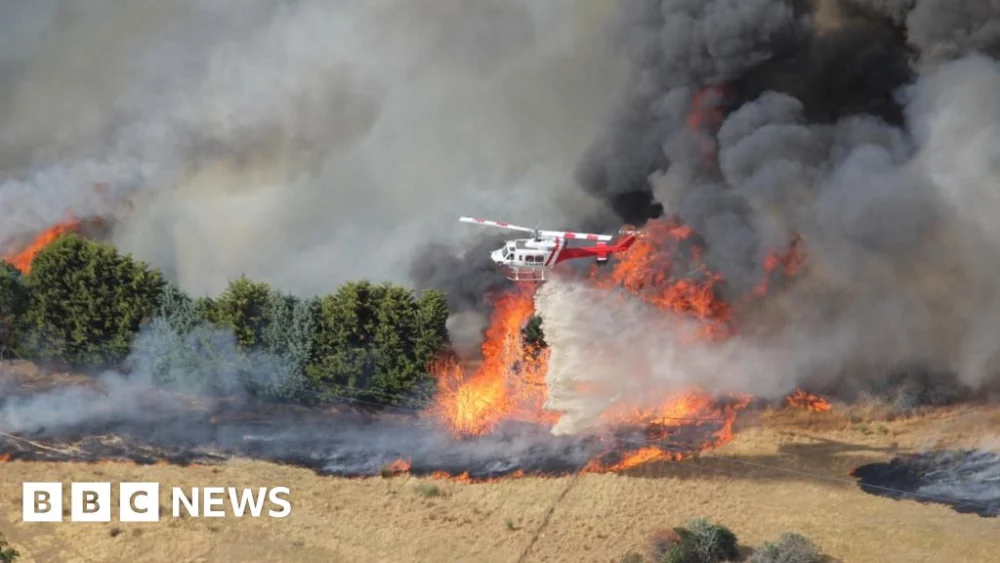
Australians in the southeastern state of Victoria have been issued a dire warning, urged to prepare for "property loss or worse" as a relentless and record-breaking heatwave grips much of the nation. The extreme conditions, fuelled by a combination of scorching temperatures and powerful winds, have ignited a series of dangerous bushfires, pushing emergency services to their limits and leaving communities in a state of high alert.
Forecasts for Friday and Saturday indicate that temperatures are set to shatter historical records across most states and territories. Victoria and South Australia, in particular, find themselves in the eye of the storm, bracing for what authorities describe as catastrophic fire conditions. The combination of intense heat, prolonged drought, and strong, dry winds creates an environment ripe for rapid fire spread, making containment incredibly challenging. The dry landscape, parched from insufficient rainfall, offers an abundance of fuel, transforming once-lush areas into tinderboxes.
In Victoria, a comprehensive total fire ban has been enforced across the entire state, a stark measure reflecting the gravity of the situation. Every single region within Victoria has been assigned either a "catastrophic" or "extreme" fire danger rating, the highest possible classifications. These ratings are not merely meteorological terms; they represent an explicit warning that should a fire ignite, it will be virtually unstoppable, moving with incredible speed and intensity, posing an immediate threat to life and property.
Jason Heffernan, the Chief Officer of the Country Fire Authority (CFA), delivered a sobering assessment to the Australian Broadcasting Corporation (ABC) on Friday, encapsulating the escalating danger. "The conditions were extreme yesterday. They’re catastrophic today," Heffernan stated, his words underscoring the rapid deterioration of the situation. He reiterated the profound warning, urging all residents to comprehend the potential scale of devastation: "Victorians should brace themselves for more property loss or worse." This blunt message serves as a stark reminder of the inherent risks, where "worse" tragically implies the potential for serious injury or loss of life.
Melbourne, the state capital, was expected to endure a scorching 42C on Friday, with the mercury soaring even higher to a blistering 45C in parts of north-west Victoria. The relentless heat places immense strain on infrastructure, public health, and the resilience of communities. While a temporary cool change is forecast for the state’s south-west, offering a brief reprieve, the fire threat remains omnipresent, with shifting wind patterns capable of reigniting dormant embers or altering fire fronts unpredictably.
One of the most devastating blazes currently ravaging the state is a bushfire near Longwood, in central Victoria. Authorities confirmed that this inferno has already consumed nearly 36,000 hectares, leaving a trail of destruction in its wake. The small, rural town of Ruffy has borne the brunt of this fire’s ferocity, with at least 20 homes confirmed destroyed. The scale of loss in such a tight-knit community is immeasurable, extending far beyond brick and mortar.
George Noye, the CFA captain for Ruffy, painted a grim picture of his town’s plight in an interview with the ABC. He described Ruffy as having been "severely" affected, his voice conveying the profound shock and sorrow gripping the community. "The main street looks like a bomb’s gone off, we’ve lost a school," Noye recounted, the imagery evoking scenes of a war zone rather than a peaceful rural township. The impact on residents is deeply personal and multifaceted. "Some properties have lost everything. They’ve lost their livelihoods, they’ve lost their shearing sheds, livestock, just absolutely devastating," he elaborated. For farmers and rural families, the loss of sheds, machinery, and livestock represents not just financial ruin but the destruction of generations of hard work and the very foundation of their existence. Amidst the despair, Noye offered a glimmer of desperate hope, adding, "But thankfully, at the moment, no lives have been lost."
However, this fragile hope was tempered by a chilling update from Victoria’s state control centre. A statement released on Friday described the Longwood fire as "incredibly dynamic, with the fire spreading in multiple directions," indicating its unpredictable and aggressive nature. The control centre warned that the blaze may spread further than initial estimates, highlighting the ongoing threat and the challenge faced by firefighters attempting to contain it. The vastness of the fire ground and the volatile conditions make accurate prediction and effective intervention exceptionally difficult.
Adding a further layer of profound concern, Victoria Police Deputy Commissioner Bob Hill revealed that three individuals – two adults and a child – remain unaccounted for in the Longwood area. Hill explained the agonizing circumstances: authorities had spoken to them at their property the previous day, issuing a critical warning that it was too late to evacuate and advising them to seek shelter. When fire officials returned later, they discovered the home had been completely destroyed by the blaze, but the three occupants could not be located. The search for them continues, a desperate race against time. Deputy Commissioner Hill articulated the delicate balance between hope and grim reality, stating, "They may be safe, they may be alive, let’s not get ahead of ourselves, but we are keeping an open mind." The uncertainty casts a long shadow over the entire community, as emergency services intensify their efforts to locate them.
The crisis extends beyond Victoria’s borders, painting a picture of a nation under fire. In the Australian Capital Territory (ACT), which encompasses the nation’s capital, Canberra, a total fire ban was declared for the first time in six years, a clear indication of the unprecedented danger facing the region. Sydney, Australia’s largest city, is also bracing for an onslaught of heat, with temperatures expected to peak at a scorching 42C on Saturday before dropping to a more manageable 26C by Sunday. While this cool change offers a temporary reprieve, it does not diminish the fire risk entirely, as dry conditions persist.
Another significant fire is raging near Walwa, in north-east Victoria, having already consumed more than 17,000 hectares. This blaze, though less widely reported than Longwood, contributes to the overwhelming strain on firefighting resources and the widespread threat across the state. The sheer number and scale of these fires demand a coordinated and sustained response from all emergency agencies.
Chief Officer Heffernan underscored the critical need for vigilance from every Victorian, not just those in the immediate vicinity of active fires. "That is how severe these conditions are at the moment, not only at the Longwood fire but across the state," he emphasized to the ABC. His message was unequivocal: "My message at the moment to Victorians is yes, we are talking about Longwood and Walwa, but we have many other fires that have started this morning in and around communities… I am expecting more as the day goes on." This highlights the dynamic and rapidly evolving nature of the crisis, with new ignitions occurring frequently under the prevailing extreme conditions. The widespread nature of the threat necessitates that every household has a well-practised bushfire survival plan, knows the fire danger ratings for their area, and is prepared to act immediately if advised to evacuate.
Meanwhile, in South Australia, local fire authorities reported battling numerous small fires across the state overnight, a testament to the pervasive danger. Temperatures in some areas of South Australia were anticipated to hit an astonishing 46C, creating ideal conditions for rapid fire development and spread. The strain on resources, both human and mechanical, is immense, with firefighters working tirelessly in grueling conditions to protect communities and contain the blazes. The collaborative effort across states, with interstate assistance and resource sharing, becomes crucial in managing such a widespread and severe emergency. The current heatwave and associated fire crisis serve as a stark reminder of the escalating challenges posed by extreme weather events and the ongoing need for preparedness and resilience in the face of a changing climate.




 Roy Suryo

 Nakalama John
 atisusanti
 Ramos Leo
