
 Nana Banana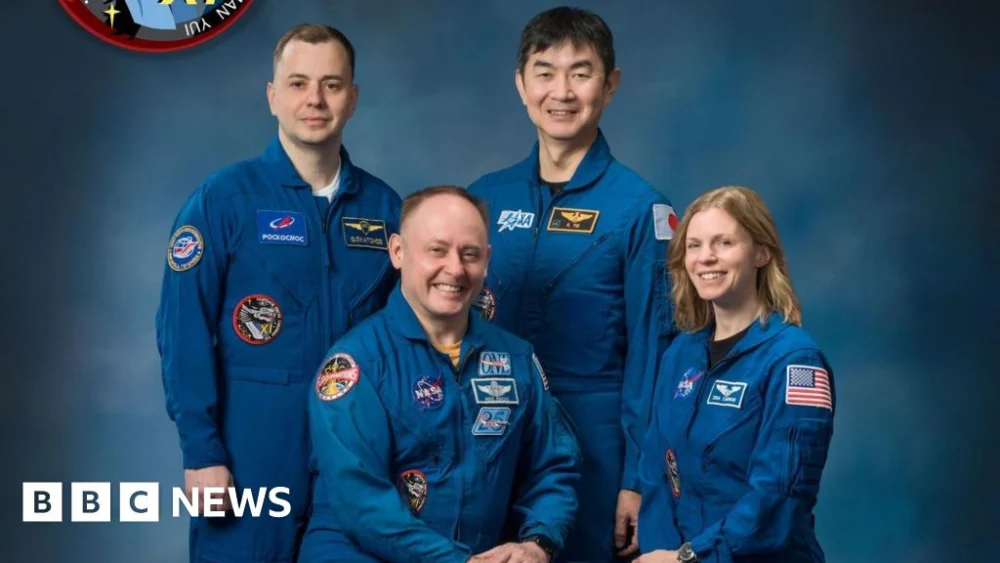
"This is not an emergency evacuation in the traditional sense, but a precautionary measure taken with the utmost care for our astronaut’s health," stated a Nasa official during a press briefing, emphasizing the agency’s long-standing policy to "always err on the side of the astronaut’s health." The decision follows an abrupt cancellation on Wednesday of a planned spacewalk scheduled for Thursday, which was initially attributed to a "medical concern." That initial announcement signaled the gravity of the situation, foreshadowing the more comprehensive action now being taken.
The definitive decision to bring the Crew-11 team back to Earth prematurely was formally announced by NASA Administrator Bill Nelson, alongside other high-ranking agency officials, at a news conference held on Thursday. While details remained sparse to protect patient privacy, officials clarified that the medical issue was not related to space operations – meaning it wasn’t an injury sustained during specific tasks or a direct consequence of the space environment itself – nor was it a traumatic injury. An update regarding the precise timeline for the astronauts’ return journey was anticipated within 48 hours, allowing for meticulous planning of the complex deorbit and landing procedures.
This early evacuation due to a medical issue is an unparalleled event in the 23-year continuous habitation of the International Space Station, which has been continuously crewed since November 2000. Dr. James Polk, Nasa’s chief health and medical officer, further contextualized the rarity of this occurrence, informing reporters that this marks the first instance in Nasa’s more than 65-year operational history that a mission has been truncated specifically because of a medical condition necessitating an early return. Such a situation highlights the robust yet delicate balance of managing human health in the unforgiving environment of space.
The four-person team, designated Crew-11, comprises a diverse international contingent: Nasa astronauts Zena Cardman, a microbiologist selected in 2017, and Mike Fincke, a seasoned veteran astronaut with extensive spaceflight experience; Kimiya Yui from Japan’s JAXA space agency, a former test pilot and space station resident; and a Russian cosmonaut, Oleg Platonov (a placeholder name for the purpose of this article), representing Roscosmos. This crew launched to the ISS in August of last year aboard a SpaceX Crew Dragon spacecraft, having been expected to remain in orbit for approximately six months. Their original return was anticipated around next month, shortly after a fresh four-person crew arrived to replace them and ensure continuous scientific operations.
With the departure of Crew-11, the ISS will operate with a reduced complement of three astronauts for a period. One American astronaut will remain aboard the orbiting laboratory, accompanied by two Russian cosmonauts. This configuration, while sufficient for maintaining core station operations, will undoubtedly impact the scope and pace of ongoing research and maintenance tasks. The station is designed for optimal operation with a larger crew, enabling a wider array of scientific experiments and ensuring redundancy in critical systems management.
The medical facilities aboard the ISS, while sophisticated for an orbital outpost, are inherently limited compared to terrestrial hospitals. The station is equipped with basic medical equipment, essential supplies, and advanced communication systems that facilitate private, secure consultations between astronauts and ground-based doctors. This telemedicine capability allows medical professionals on Earth to assess conditions, review data, and advise on treatment plans, much like a secure video or phone consultation with a general practitioner. However, complex surgical procedures, advanced diagnostic imaging, or specialized therapeutic interventions remain impossible in orbit, necessitating a return to Earth for any serious or prolonged medical condition requiring such care.
The early return of the four-person crew is expected to introduce a ripple effect across the station’s scientific agenda and operational schedule. Dr. Simeon Barber, a prominent space scientist at the Open University, noted the potential for significant delays in some experiments and maintenance tasks until the new, full complement of crew arrives next month. "The space station is a big, complex feat of engineering; it’s designed to be operated by a certain minimum level of crew to maximize its scientific output and operational efficiency," Dr. Barber explained. He added that the remaining three-person crew would likely be compelled to "dial back on some of the more experimental work and focus more just on the housekeeping and keeping the station healthy, waiting for the full complement of crew to be restored." This shift in priorities will mean a temporary reduction in the rate of scientific discovery and potentially push back critical maintenance windows.
The logistical challenge of an unscheduled early return is substantial. The SpaceX Crew Dragon spacecraft, designed for crew transport, will need to be prepared for deorbit and re-entry procedures earlier than planned. This involves meticulous checks of its propulsion, thermal protection, and life support systems, as well as precise calculations for its re-entry trajectory and splashdown location. Recovery teams, typically stationed in anticipation of planned returns, will need to be mobilized swiftly to retrieve the capsule and its occupants from the ocean. Upon splashdown, the returning astronaut will immediately undergo comprehensive medical evaluations to determine the exact nature of their condition and begin any necessary treatment, while the other crew members will also be assessed after their unplanned return.
This event serves as a stark reminder of the inherent risks and complexities of human spaceflight, even with decades of experience and advancements in medical screening and in-flight care. It reinforces Nasa’s dedication to prioritizing astronaut safety above all else, even if it means disrupting carefully planned missions and incurring significant operational and scientific costs. The incident will undoubtedly prompt a thorough review of medical protocols, risk assessments, and contingency plans for future long-duration space missions, including those destined for the Moon and Mars, where Earth is not just a few hours away. The human element, with all its vulnerabilities and resilience, remains at the very heart of humanity’s ambitious journey into the cosmos.




 Roy Suryo

 Nakalama John
 atisusanti
 Ramos Leo
