
 George Anjay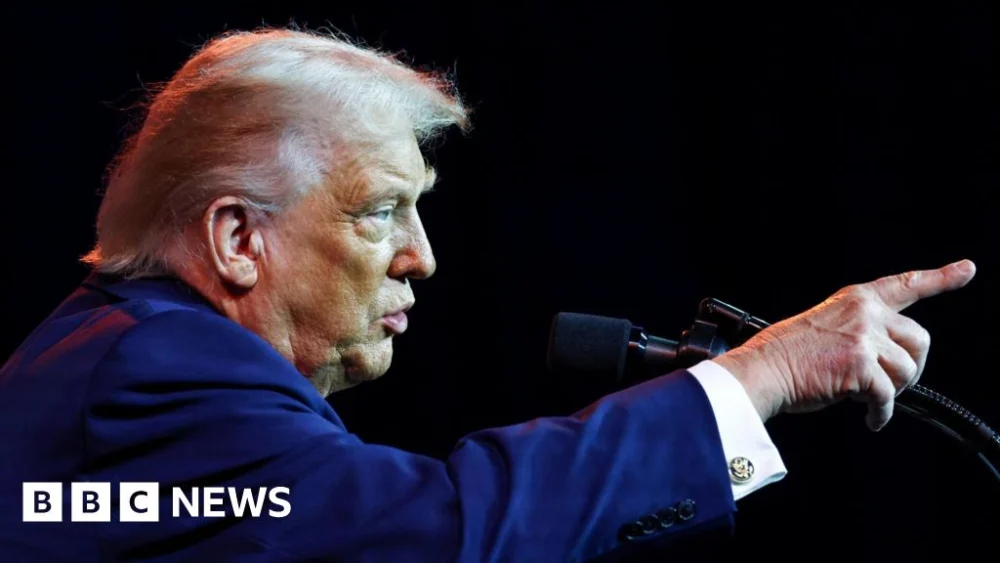
Makuochi Okafor, BBC Africa, Lagos and Jean Otalor
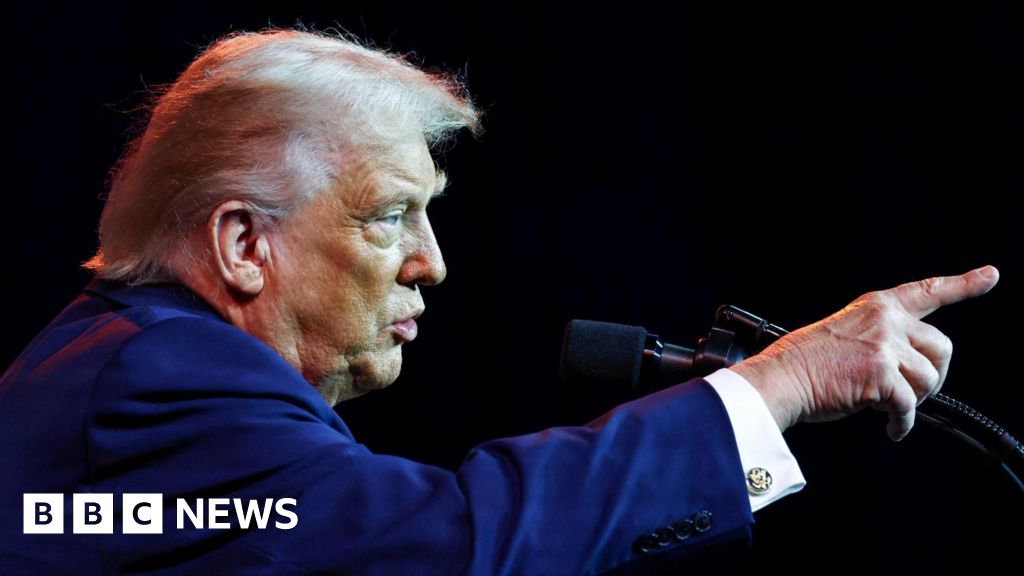
US President Donald Trump has issued a stark warning, declaring that further airstrikes could be ordered against Nigeria if Christians in the West African nation "continue to be killed." The remarks, made in a wide-ranging interview with The New York Times, have ignited fresh controversy surrounding the US military’s engagement in Nigeria and the complex security landscape of the country. When questioned about the Christmas Day strikes in Nigeria’s northern Sokoto state, which targeted Islamist militants, Trump explicitly linked the potential for future military action to the ongoing violence against Christians. "I’d love to make it a one-time strike. But if they continue to kill Christians it will be a many-time strike," he stated, underscoring his administration’s framing of the conflict.
This intervention by the US President arrives amidst persistent claims, particularly amplified within some right-wing circles in the United States, that Nigeria is experiencing a genocide against its Christian population. These narratives often cite the activities of jihadist groups as the primary perpetrators of violence. However, organizations that meticulously monitor political violence within Nigeria present a different picture, indicating that a significant majority of victims of these extremist groups are, in fact, Muslims. When confronted with this discrepancy during the interview, which was published on Thursday, Trump acknowledged the broader impact of violence but reiterated his focus on the Christian demographic: "I think that Muslims are being killed also in Nigeria. But it’s mostly Christians."
The Nigerian government has consistently refuted accusations that it is failing to protect its Christian citizens from jihadist attacks. Officials maintain that the violence is indiscriminate, affecting individuals of all faiths, including Muslims and those with no religious affiliation. In response to President Trump’s latest comments, a spokesperson for Nigeria’s foreign minister, Alkasim Abdulkadir, declined to comment directly on the prospect of further airstrikes. However, he emphasized Nigeria’s commitment to international cooperation and its sovereign right to self-determination. "We will continue to engage constructively and work with partners, including the United States, on the basis of mutual respect, international law, and Nigeria’s sovereignty," Abdulkadir stated. He further affirmed, "Nigeria remains committed to protecting all citizens, Christians and Muslims alike, without discrimination."
Nigeria, a nation of over 230 million people, exhibits a religious and regional duality, with Christians predominantly residing in the southern parts of the country and Muslims forming the majority in the north. For the past fifteen years, the northeastern region has been engulfed in a brutal Islamist insurgency, primarily driven by militant factions such as Boko Haram and affiliates of the Islamic State (IS) group, which are largely based in Borno state. The security challenges in Nigeria, however, extend far beyond this insurgency. The country grapples with a multifaceted array of security threats across various regions, including widespread criminal kidnapping for ransom, recurrent clashes over land and resources, and persistent separatist unrest in certain areas.
The specific airstrikes that President Trump referenced occurred on Christmas Day in two camps belonging to a jihadist group known as Lakurawa, situated in the predominantly Muslim state of Sokoto, in northwestern Nigeria, near the border with Niger. The exact casualty figures from these strikes remain unconfirmed, as neither the US nor the Nigerian government has released official numbers, and no subsequent updates on the operation’s outcome have been provided. The Lakurawa group is understood to have established a presence in the border region in recent years, with its origins tracing back to areas north of Nigeria in the Sahel. Both the US and Nigerian governments initially stated that the targeted militants were affiliated with IS groups operating in the Sahel. However, IS itself has not officially claimed responsibility for any activities linked to Lakurawa, nor has it announced direct ties with the group, a pattern it has followed with other regional groups it supports.
Following the Christmas Day strikes, Nigeria’s Foreign Minister, Yusuf Maitama Tuggar, informed the BBC that the operation was a "joint operation" and had "nothing to do with a particular religion." He also clarified that the timing of the strikes was coincidental and not related to the Christmas holiday, a point contradicted by President Trump, who described them as a "Christmas present." Minister Tuggar underscored that the airstrikes had received the explicit approval of Nigeria’s President Bola Tinubu and involved the active participation of the country’s armed forces, highlighting a coordinated effort rather than an unilateral action.
The framing of the conflict by President Trump, particularly his emphasis on the persecution of Christians and his threat of further military action, has drawn attention to the complex geopolitical dynamics at play. While the US administration’s focus on religious freedom is a recurring theme, critics point to the broader humanitarian impact of conflict in Nigeria, where civilian populations, regardless of faith, often bear the brunt of violence. The involvement of external powers in internal security matters, especially when framed through a religious lens, raises concerns about potential escalation and unintended consequences. The Nigerian government’s position emphasizes its commitment to protecting all its citizens and its desire for a partnership based on mutual respect and adherence to international law. The situation underscores the intricate interplay of internal security challenges, international relations, and domestic political narratives in shaping foreign policy decisions.



 Roy Suryo

 Nakalama John
 atisusanti
 Ramos Leo
