Nana Banana
The episode brought together a formidable panel of scientific luminaries: Penny Sarchet, the Managing Editor of New Scientist magazine, offering a broad perspective on cutting-edge research; Mark Maslin, Professor of Earth System Science at University College London, providing expertise on our planet’s complex processes; and Catherine Heymans, the Astronomer Royal for Scotland and Professor of Astrophysics at the University of Edinburgh, ready to delve into the mysteries of the cosmos. Together, they tackled a diverse range of inquiries, demonstrating the far-reaching scope of scientific wonder, from the microscopic intricacies of human biology to the grandest questions of universal origins.
One of the most intriguing questions came from a master of mind reading and illusion, whose profession relies on understanding the subtleties of human perception and memory. Their query delved into the fundamental persistence of change within the human body and mind: "Why do memories and scars not disappear?" This question beautifully bridges neuroscience and physiology, prompting the panel to unpack the complex mechanisms behind two seemingly disparate phenomena.
For memories, the experts likely explained that they are not stored as static files in a single location, but rather as distributed patterns of neural connections across various brain regions. The permanence of a memory isn’t about its physical presence but the strength and efficiency of these neural pathways, reinforced through repeated recall and emotional significance – a process known as memory consolidation. While some memories fade due to synaptic pruning or lack of reinforcement, others, particularly those linked to strong emotions or frequent use, become deeply embedded. The brain is a dynamic, reconstructive organ, meaning each time a memory is accessed, it can be slightly altered, yet the underlying ‘trace’ can remain remarkably resilient, shaping our identity and understanding of the world. The illusionist’s perspective, perhaps appreciating the brain’s capacity for misdirection and suggestion, would find resonance in the fluid nature of memory retrieval.
The persistence of scars, on the other hand, speaks to the body’s remarkable yet imperfect healing mechanisms. When skin is damaged, the body initiates a complex cascade of events to repair the wound. This process involves inflammation, proliferation of new cells, and eventually, remodelling. Scars form when the body produces new collagen fibres to mend the injured tissue, but these fibres are laid down in a more haphazard, basket-weave pattern compared to the organized, cross-hatched structure of normal skin. Furthermore, scar tissue often lacks the hair follicles, sweat glands, and elasticity of the original skin, making it distinctly different and, crucially, permanent. Factors such as genetics, the depth and location of the wound, and even nutritional status can influence scar formation. The panel would have highlighted that while the body strives for repair, it prioritizes structural integrity over perfect aesthetic restoration, leading to the lasting marks we call scars. The question elegantly juxtaposes the ephemeral nature of some mental constructs with the physical tenacity of bodily repair.
Moving from the personal to the cosmic, a well-known comedian, often lauded for their intellectual curiosity, posed a question that sits at the very frontier of theoretical physics: "What came before the Big Bang?" This inquiry plunges into the deepest mysteries of cosmology, challenging our understanding of time, space, and existence itself. The Big Bang theory describes the universe’s expansion from an extremely hot, dense state approximately 13.8 billion years ago, giving rise to all matter, energy, space, and time as we know it. However, the theory itself describes what happened after this initial singularity, not necessarily what precipitated it.
Professor Catherine Heymans, as an astrophysicist, would have been pivotal in guiding listeners through the various theoretical frameworks attempting to address this profound question. She and her fellow experts would likely have explained that "before the Big Bang" might be a meaningless concept within our current understanding of physics, as time itself is thought to have begun with the Big Bang. However, this doesn’t stop cosmologists from hypothesizing. Theories such as the "Big Bounce" propose a cyclic universe, where the current expansion might eventually reverse into a "Big Crunch," only to rebound into another Big Bang, making our universe one in an infinite series. Another compelling idea comes from "M-theory" or "brane cosmology," suggesting our universe is a "brane" (a multidimensional membrane) existing within a higher-dimensional space, and the Big Bang was the result of the collision of two such branes.
The concept of the "multiverse" also offers a potential answer, positing that our universe is just one of many, perhaps infinite, universes that constantly bubble into existence through processes like eternal inflation. In this scenario, there isn’t a "before" for our universe, but rather an ongoing process of universe creation within a larger cosmic landscape. The panel would have emphasized that these are highly speculative, mathematically driven theories, currently beyond direct observational proof, but represent humanity’s persistent drive to understand its ultimate origins. The comedian’s question, therefore, wasn’t just about a timeline but about the very nature of reality and the limits of scientific inquiry.
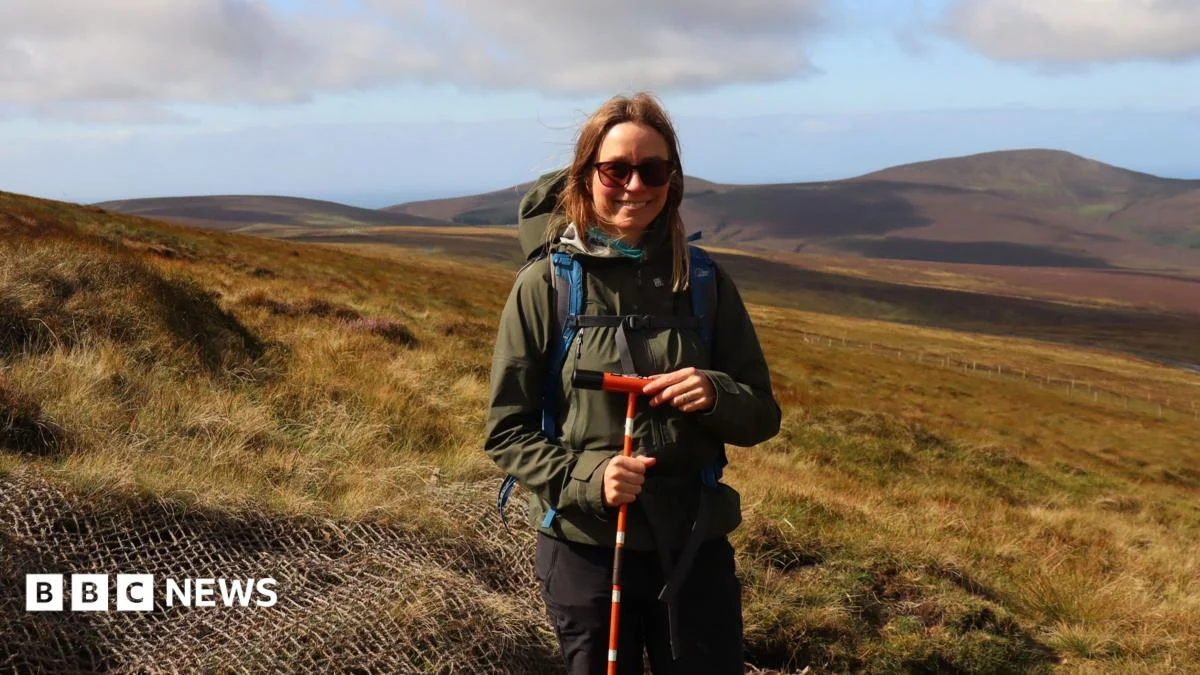
Finally, the episode took a turn towards human endurance and environmental interaction with a question from the adventurous Anneka Rice. Known for her dynamic challenges and "Challenge Anneka" series, she found herself "on top of a mountain considering what to do next." Her implicit question revolved around the scientific principles guiding human decision-making, resilience, and survival in extreme, isolated natural environments. How do humans make optimal decisions under pressure, adapt to physiological challenges like altitude and extreme weather, and formulate effective next steps when faced with the raw, unpredictable forces of nature?
Professor Mark Maslin, with his expertise in Earth System Science, combined with the other panelists’ insights, would have shed light on the multifaceted aspects of this scenario. Physiologically, being on a mountain presents challenges like hypoxia (reduced oxygen at altitude), extreme temperatures, and potential dehydration. The body undergoes complex adaptations, but these also impact cognitive function, making decision-making more arduous. Psychologically, isolation, the vastness of the landscape, and the inherent risks can trigger stress responses, affecting judgment and problem-solving abilities. The panel would likely have discussed how experienced mountaineers and adventurers develop mental strategies, rely on ingrained skills, and meticulously plan to mitigate these factors.
Environmentally, understanding meteorology specific to mountain ranges – sudden weather shifts, avalanches, and unpredictable wind patterns – is crucial. Geological knowledge about terrain stability, rockfall, and glacial movements also plays a vital role. Anneka’s question speaks to the science of human factors in extreme environments, combining elements of physiology, cognitive psychology, risk assessment, and environmental prediction. The experts would have explored how humans, despite their biological limitations, leverage scientific understanding, technology (like advanced navigation and communication), and innate resilience to overcome daunting natural obstacles, transforming the unknown "what to do next" into a calculated, if challenging, course of action.
This special "Answering Celebrity Science Questions" episode of BBC Inside Science brilliantly showcased the universal appeal of scientific inquiry. By inviting public figures to voice their genuine curiosities, the programme successfully bridged the gap between popular culture and complex scientific discourse, demonstrating that science is not just for specialists but for anyone with a wondering mind. Presenter Victoria Gill adeptly steered the conversation, ensuring accessibility without compromising scientific integrity. The episode was produced by Ella Hubber and Debbie Kilbride, edited by Martin Smith, with production coordination by Jana Bennett-Holesworth, all contributing to its engaging and informative delivery. For those eager to explore further fascinating science content, the BBC encourages listeners to search for "BBC Inside Science" on bbc.co.uk and follow the links to The Open University for additional resources and learning opportunities.



 Roy Suryo
 Nakalama John
 atisusanti
 Ramos Leo