
 Nakalama John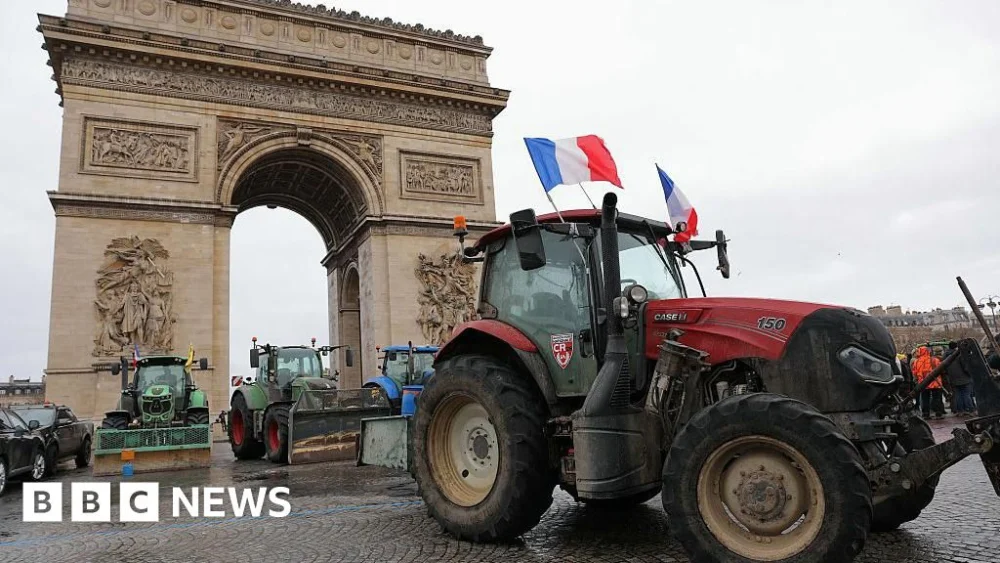
After a quarter-century of complex and often fraught negotiations, the European Union has finally concluded a landmark free trade agreement with the Mercosur trading bloc, comprising Brazil, Argentina, Paraguay, and Uruguay. This monumental deal, hailed by proponents as a strategic victory for multilateralism and open trade, now awaits the crucial approval of the European Parliament within the coming months, a process anticipated to be closely contested. The agreement’s conclusion arrives despite significant and vocal opposition from agricultural sectors across several European nations, who fear the economic repercussions of increased competition from South American imports.
Brazil’s President Luiz Inacio Lula da Silva, speaking from Brussels where the four South American nations finalized the pact, declared it a "historic day for multilateralism." His sentiment resonated deeply in a global economic landscape increasingly characterized by protectionist tendencies and unilateral trade actions. The deal, at the time of its conclusion, stood in stark contrast to the prevailing geopolitical currents, which included former US President Donald Trump’s imposition of tariffs on various countries and his administration’s military intervention in Venezuela, underscoring a period of heightened international tension and trade fragmentation. President Lula further emphasized this point in a post on X, stating, "In an international scenario of growing protectionism and unilateralism, the agreement is a signal in favour of international trade as a driver of economic growth, with benefits for both blocs."
For the European Union, this accord represents its largest free trade agreement to date, potentially establishing a vast market of over 780 million consumers. The EU Commission lauded it as a "win-win" scenario, promising substantial benefits for businesses and consumers on both sides of the Atlantic. EU Commission President Ursula von der Leyen affirmed that the deal would "bring meaningful benefits to consumers and businesses, on both sides," citing improved market access, reduced trade barriers, and a more diverse range of goods and services. The Commission estimates that the deal could save European companies approximately €4 billion ($4.7 billion, £3.5 billion) annually in export duties, translating into lower costs for imported goods and potentially boosting European competitiveness in global markets.
However, the path to this agreement has been anything but smooth, particularly due to intense resistance from European farmers. Critics vehemently argue that the influx of cheaper agricultural products from Mercosur nations, including beef, poultry, and sugar, could severely undercut European producers. Farmers across France, Belgium, and other EU countries staged last-ditch protests, deploying tractors to block motorways and conducting demonstrations to voice their profound concerns. Judy Peeters, a representative for a Belgian young farmers’ group, captured the widespread sentiment of distress at a protest south of Brussels, telling AFP, "There is a lot of pain. There is a lot of anger." Their fears extend beyond price competition to differing production standards, particularly concerning environmental regulations, animal welfare, and pesticide use, which they argue create an unfair playing field.
Acknowledging these deeply held concerns, President von der Leyen assured that the Commission had "listened to the concerns of farmers" and had actively addressed them through the introduction of "robust safeguards" within the agreement. While the precise details of these safeguards remain subject to scrutiny, they are expected to include mechanisms such as quotas for sensitive agricultural products, transition periods for certain sectors, and potentially stricter traceability requirements to ensure imports meet EU health and environmental standards. These measures aim to mitigate the immediate impact on European agriculture and provide a framework for fair competition.
Beyond economic advantages, the agreement carries significant strategic and environmental dimensions. The European Commission highlighted the deal’s potential to bolster efforts against climate change, incorporating commitments from Mercosur countries to halt deforestation, particularly concerning the Amazon rainforest. This aspect is crucial for Europe, which has increasingly prioritized environmental sustainability in its trade policy. Furthermore, the deal is expected to ensure a "reliable" flow of raw materials, critical for the global green transition. South American nations boast substantial deposits of essential minerals such as gold, copper, and other critical elements vital for renewable energy technologies, electric vehicle batteries, and other green industrial applications. Securing access to these resources is a strategic imperative for the EU as it strives to reduce its dependence on other global suppliers and achieve its ambitious climate targets.
Cecilia Malmström, a former European commissioner for trade who spearheaded EU trade negotiations for five years, underscored the enforceability of these environmental commitments. Speaking on World Business Express on BBC World Service, she revealed that parts of the trade agreement could be suspended if Mercosur countries failed to adhere to their pledges regarding environmental protection. This "suspension clause" represents a significant tool for ensuring compliance and addressing environmental concerns, potentially setting a new benchmark for future trade agreements. Malmström also emphasized the broader geopolitical implications of the deal, stating, "[This agreement] is also a very strong geopolitical signal today to other powers who do not appreciate rule-based trade in the same way as we do." This statement implicitly points to nations like China and Russia, positioning the EU-Mercosur deal as a robust affirmation of the international rules-based order and multilateral cooperation.
Despite the broad majority of EU member states confirming their support for the free trade agreement on a recent Friday afternoon, the deal’s journey is far from over. Its implementation hinges on the approval of the European Parliament, where political divisions and lobbying efforts from various interest groups are expected to make the vote a tight one. Jack Allen-Reynolds, deputy chief Euro-zone economist for Capital Economics, echoed this sentiment, predicting a close vote in the parliament.
However, Allen-Reynolds also cautioned against overstating the deal’s immediate macroeconomic impact. He pointed to the Commission’s own estimate that the agreement would raise EU economic output by a modest 0.05%. "The bigger point though is that even if the agreement is eventually implemented, it will be macroeconomically insignificant," he stated. Furthermore, the economist highlighted the protracted timeline for the benefits to materialize, noting that the agreement is set to be phased in over 15 years, meaning its full advantages would likely not be realized until 2040 at the earliest. This long implementation period suggests that while the deal holds significant symbolic and strategic value, its tangible economic effects on the broader EU economy might be incremental and long-term rather than immediate and transformative. Nevertheless, proponents maintain that even a small percentage increase in output, spread across such a large economic bloc, translates into substantial absolute gains over time, alongside the crucial strategic benefits of diversifying trade relationships and reinforcing a commitment to open markets.



 Roy Suryo

 atisusanti
 Ramos Leo
