
 George Anjay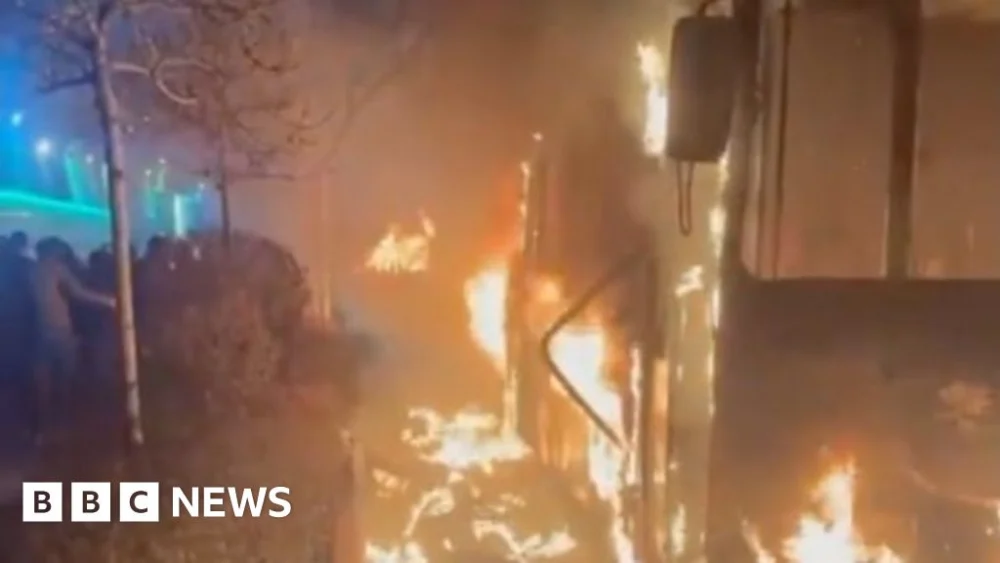
Protesters in Iran continued to defy a brutal government crackdown on Saturday night, taking to the streets despite mounting evidence suggesting hundreds have been killed or wounded by security forces in the preceding three days. Verified videos and firsthand accounts obtained by the BBC indicate the government is escalating its violent response, further tightening an already pervasive internet blackout. The nation’s attorney general, Mohammad Movahedi Azad, issued a stark warning on Saturday, declaring that any individual engaging in protest would be deemed an "enemy of God"—a charge carrying the death penalty. Since the demonstrations commenced over two weeks ago, hundreds of protesters are believed to have been arrested.
The current wave of protests, ignited by soaring inflation, has rapidly spread across more than 100 cities and towns, encompassing every province of Iran. The demands of the demonstrators have evolved significantly, now explicitly calling for an end to the clerical rule of Iran’s Supreme Leader, Ayatollah Ali Khamenei. In response, Khamenei has disparaged the protesters, labeling them a "bunch of vandals" motivated by a desire to appease US President Donald Trump.
In an effort to quell the unrest, the Iranian government has implemented a comprehensive internet shutdown. Iran’s data infrastructure is under the stringent control of state and security authorities, with internet access largely confined to a domestic intranet and heavily restricted external links. Over the past few years, the government has progressively tightened its grip on global internet access. However, during the current protests, authorities have, for the first time, not only severed access to the worldwide internet but have also severely curtailed the functionality of the domestic intranet. Alireza Manafi, an internet researcher, informed BBC Persian that the current shutdown is more severe than that imposed during the "Women, Life, Freedom" uprising three years ago, describing internet access in Iran, in any form, as "almost completely down." He cautioned that the only potential means of connecting to the outside world might be through Starlink, but warned users of the inherent risks of their activities being traced by the government.
The pervasive censorship makes it exceedingly difficult for the BBC and most international news organizations to report from within Iran, complicating the process of obtaining and verifying information. Despite these challenges, some video footage has emerged, and the BBC has managed to connect with individuals on the ground. Verified videos from Saturday night depict protesters occupying streets in Tehran’s Gisha district. Multiple videos, independently verified and confirmed as recent by BBC Verify, show intense clashes between protesters and security forces along Vakil Abad Boulevard in Mashhad, Iran’s second-largest city. In these recordings, masked protesters can be seen taking cover behind wheelie bins and bonfires, while a line of security forces is visible in the distance. A vehicle, appearing to be a bus, is engulfed in flames. The sounds of multiple gunshots and what resembles banging on pots and pans echo through the scene, illuminated by a green laser beam. A figure positioned on a nearby footbridge appears to be firing gunshots in various directions, while individuals seek refuge behind a fence along the boulevard.
Additional video footage has surfaced from the capital, Tehran. One authenticated clip by BBC Verify shows a large gathering of protesters in Punak Square in west Tehran, a focal point of this week’s demonstrations, accompanied by the distinct sound of banging on pots. Another video, filmed in the Heravi district in north-east Tehran and corroborated by BBC Persian and BBC Verify, captures a crowd of protesters marching along a road, vocally demanding an end to the clerical establishment.
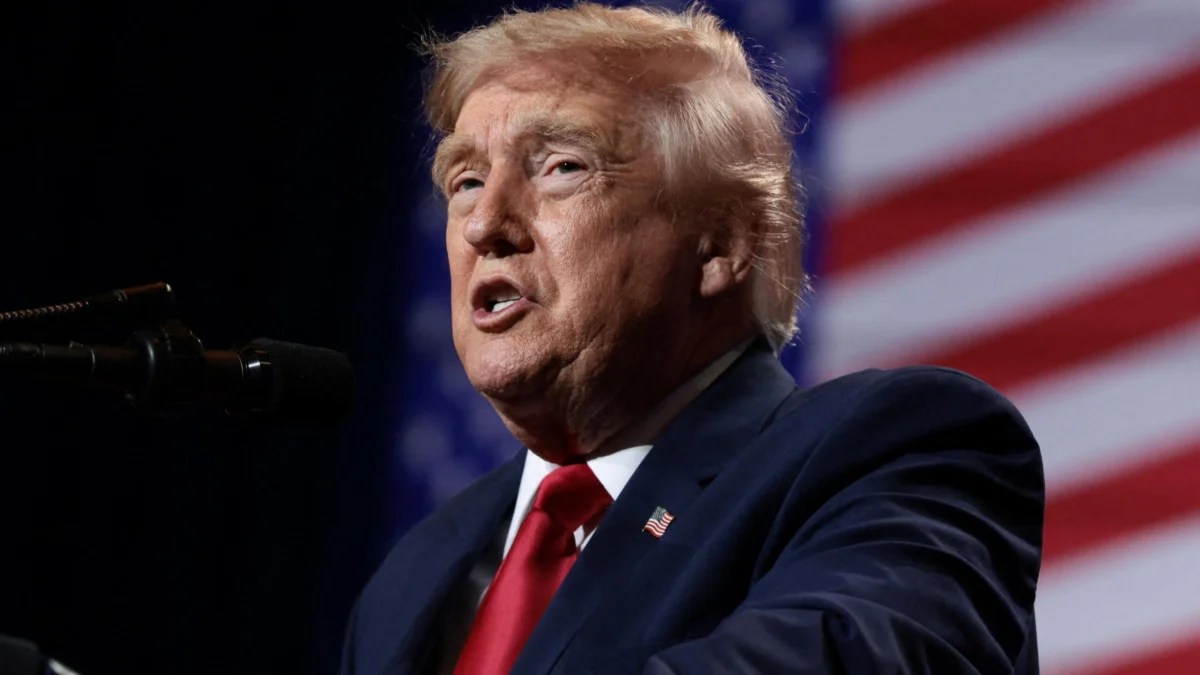
On Saturday, President Donald Trump tweeted his support for the Iranian people, stating, "Iran is looking at FREEDOM, perhaps like never before. The USA stands ready to help!!!" While he offered no further details, US media outlets reported that Trump had been briefed on potential military strike options in Iran. The New York Times and The Wall Street Journal (WSJ) reported on these briefings, with the Journal characterizing them as "preliminary discussions." An unnamed official informed the WSJ that there was no "imminent threat" to Iran. Last year, the US conducted airstrikes on Iranian nuclear facilities.
US Senator Lindsey Graham also expressed his solidarity with the protesters on social media, posting, "To the Iranian people: your long nightmare is soon coming to a close." He added that their "bravery and determination to end your oppression" had been "noticed" by the US president, and that "Help is on the way." Earlier, he had declared, "To the regime leadership: your brutality against the great people of Iran will not go unchallenged."
As dawn broke on Sunday in Iran, Reza Pahlavi, the exiled son of Iran’s last shah, whose return many protesters are calling for, posted a video to X. The caption read, "Know that you are not alone. Your compatriots around the world are proudly shouting your voice… In particular, President Trump, as the leader of the free world, has carefully observed your indescribable bravery and has announced that he is ready to help you." He further stated, "I know that I will soon be by your side." Pahlavi, based in the US, has been actively encouraging people to take to the streets and has indicated he is preparing for a return to Iran. He claimed the Islamic Republic is experiencing a "severe shortage of mercenaries" and that "many armed and security forces have left their workplaces or disobeyed orders to suppress the people," claims that the BBC has not been able to verify. Pahlavi urged continued protests on Sunday evening, advising participants to remain in groups or crowds to avoid endangering themselves.
Amnesty International reported that it was analyzing "distressing reports that security forces had intensified their unlawful use of lethal force against protesters" since Thursday. UK Foreign Secretary Yvette Cooper stated that those speaking out against Khamenei’s government should not face "the threat of violence or reprisals." Since Friday night, hospital staff in three locations have informed the BBC that they have been overwhelmed with casualties. BBC Persian has verified that 70 bodies were brought to a single hospital in Rasht city on Friday night. BBC Persian has confirmed the identities of 26 individuals killed, including six children. Members of the security forces have also sustained casualties, with one human rights group estimating the number at 14.
A hospital worker in Tehran described "very horrible scenes," detailing an influx of wounded individuals to the extent that staff had no time for CPR, and morgues were insufficient to accommodate the deceased. "Around 38 people died. Many as soon as they reached the emergency beds… direct shots to the heads of the young people, to their hearts as well. Many of them didn’t even make it to the hospital." The hospital worker emphasized that the victims were young, stating, "Couldn’t look at many of them, they were 20-25 years old."
The current protests represent the most widespread unrest since the uprising in 2022, which was triggered by the death in custody of Mahsa Amini, a young Kurdish woman detained by morality police for allegedly violating hijab regulations. According to human rights groups, over 550 people were killed and 20,000 were detained by security forces during that period.
Additional reporting by Soroush Pakzad and Roja Assadi.



 Nakalama John
 atisusanti
 Ramos Leo
 Roy Suryo
 Nana Banana