
 Nakalama John
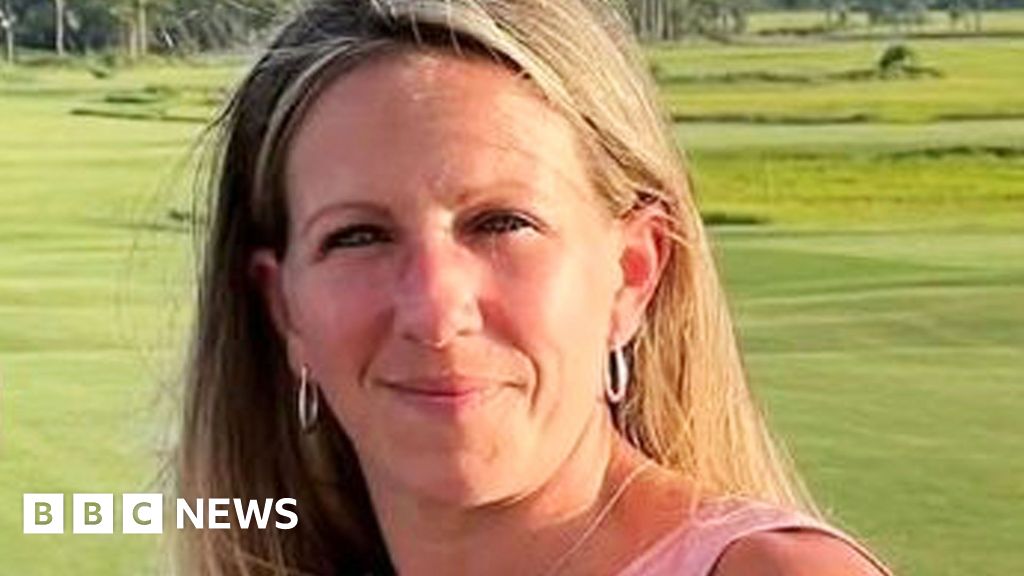
Kristy Hallowell, a 44-year-old mother of two and caregiver to her own mother, faced an unimaginable crisis last year. Having just lost her job, she was suddenly confronted with an energy bill that had tripled, skyrocketing to an unsustainable $1,800 a month. The shock was immediate and devastating. Unable to meet the exorbitant demand, her utility company cut off both her gas and electricity. For a harrowing six months in 2025, Kristy, her two children, and her elderly mother were plunged into a daily struggle for basic comfort and survival in their Greenwood Lake, New York home, relying solely on a noisy, fuel-guzzling generator to provide intermittent light and heat. The ordeal was, in her own words, "traumatic, to say the least."
Kristy’s story is a stark illustration of a widespread and deepening crisis across the United States. Millions of American households are buckling under the weight of surging energy prices, falling dangerously behind on their utility bills. The consequences range from accumulating debt to complete disconnections, forcing families into precarious living conditions. While Kristy’s electricity has since been reconnected, thanks to the intervention of a local non-profit that negotiated a partial payment plan with the utility, her gas remains off. The specter of another shut-off looms large, as electricity bills continue to mount through the winter months, leaving her with approximately $3,000 in utility debt and a pervasive sense of fear.
This personal tragedy is mirrored in national statistics, revealing a critical cost-of-living concern for American consumers. A recent report, compiled by the Century Foundation and Protect Borrowers through an analysis of consumer credit data, indicates that nearly one in 20 households are at risk of having their utility debt sent to collections as winter deepens. This debt is not merely a few overdue payments; it often signifies severely overdue amounts that can damage credit scores and lead to further financial instability. The report highlighted a disturbing trend: the number of households with severely overdue utility debt increased by 3.8% in the first six months of what it termed ‘Trump’s second term’, underscoring the escalating nature of this financial burden.
Official economic data from November painted a grim picture, showing that electricity prices had surged by 6.9% year-over-year. This increase significantly outpaced the overall inflation rate, meaning that while other costs were rising, electricity was becoming disproportionately more expensive for families already struggling with tight budgets. The escalating energy costs have become a flashpoint in the national political discourse, contributing to waning consumer confidence and widespread dissatisfaction with US President Donald Trump’s handling of the economy.
During his campaign, Trump had famously pledged to cut energy bills in half. Yet, despite his social media assertions in November that "Costs under the TRUMP ADMINISTRATION are tumbling down, helped greatly by gasoline and ENERGY," the reality for many Americans like Kristy Hallowell tells a different story. The White House, in turn, has sought to deflect blame, attributing the lingering economic pain to policies enacted under former President Joe Biden and the US central bank’s interest rate hikes. However, in the wake of recent Democratic wins in state and city elections, coupled with polls consistently showing voter anxiety about the cost of living, the Trump administration has notably shifted its messaging to prioritize "affordability" in a bid to allay public concern.
Paradoxically, even as the administration publicly addresses affordability, it has proposed significant cuts to federal funds allocated to states for assisting low-income residents with their utility bills. Experts warn that such reductions would exacerbate the crisis, pushing more families into debt and disconnection. Adding to these concerns, the Trump administration’s rollback of clean energy projects further threatens to drive electricity bills even higher. This includes a recent controversial decision to pause leases for offshore wind energy projects planned near the Atlantic coastline. Alex Jacquez, chief of policy and advocacy at the progressive economic think tank Groundwork Collaborative, emphasized the gravity of these decisions: "This is going to be a huge deal, both as a policy matter and a political matter."
Laurie Wheelock, executive director of the Public Utility Law Project of New York, a non-profit dedicated to helping low-income utility customers, has witnessed the deepening crisis firsthand. She noted that many of her clients, often facing a brutal choice between essential expenses, have been forced to let utility bills fall by the wayside as the costs of rent, health insurance, and groceries continue their relentless climb. In 2025, her organization observed a significant increase in utility account terminations due to unpaid bills. Before the pandemic, clients typically carried utility debts ranging from $400 to $900. Today, it is not uncommon for individuals to owe upwards of $6,000. "There’s been this difficult mix of increased costs and financial instability," Ms. Wheelock explained, capturing the essence of the economic pressures facing vulnerable households.
The outlook for the upcoming winter heating season is equally bleak. The National Energy Assistance Directors Association projects a 9.2% jump in heating costs, driven by a combination of rising electricity and natural gas prices and forecasts of unusually cold weather. While the Northeast US typically experiences some of the highest energy bills, the strain of rising costs is now a nationwide phenomenon, impacting households from California to Georgia to South Dakota.
Power-hungry tech companies

Analysts point to several interconnected factors contributing to the escalating residential energy costs. A primary driver is the price of natural gas, which serves as a crucial fuel for nearly half of all electricity generation in the US. Over the past year, natural gas prices have surged, partly due to increased global demand and the growing export of liquefied natural gas (LNG) from the US to overseas markets. This diversion of domestic supply to more lucrative international markets reduces the available gas for domestic power generation, pushing up prices for American consumers. John Quigley, a senior fellow at the Kleinman Center for Energy Policy at the University of Pennsylvania, observed that electricity generation is "being saddled with ever-increasing costs of fuel."
Another significant factor, according to climate advocacy groups, is the recent shift away from clean energy investments. A report from Climate Power specifically highlights the Trump administration’s cancellation of projects that collectively would have generated enough electricity to power the equivalent of 13 million homes. This rollback, the report argues, has contributed to a 13% jump in electricity bills since Trump’s return to the White House, forcing the US to increase its dependence on more expensive and volatile fossil fuels.
Adding a new dimension to the energy demand equation is the explosive growth of artificial intelligence. The AI boom has triggered an unprecedented demand for electricity, primarily driven by the massive power requirements of data centers. Tech giants, from Alphabet to Amazon and beyond, are rapidly expanding their AI infrastructure, building vast complexes of servers that require immense amounts of electricity for operation and cooling. These energy-hungry data centers, often operating 24/7, are placing an enormous strain on existing power grids. John Quigley warns that this "continued and increasing electricity demand for data centers is pushing up prices for everyone," as the overall supply struggles to keep pace with this burgeoning industrial appetite.
‘You can deal with people’s frustrations’
In November, Treasury Secretary Scott Bessent stated on ABC News that electricity prices were a "state problem," asserting, "There are things that the federal government can control. Local electricity prices are not one of them." However, many analysts counter that federal policies, particularly regarding clean energy investment and regulation, have a direct and substantial impact on state-level electricity costs. A robust federal commitment to clean energy, they argue, would ultimately help stabilize and lower prices for consumers.
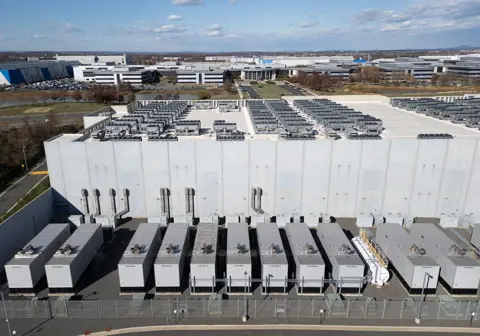
On the state level, some lawmakers are proposing innovative solutions to address the disproportionate energy consumption of large data centers. In Virginia, a state that has seen a massive proliferation of data centers, Governor-elect Abigail Spanberger has announced plans to ensure that tech companies are "paying their fair share." Her initiatives include encouraging clean on-site and off-site generation and storage at data centers, effectively requiring them to contribute more directly to their own power needs. Virginia utility regulators have already taken a step in this direction, authorizing a separate rate category for the biggest electricity customers, such as data centers, compelling them to bear a larger share of the costs to shield other ratepayers. "You can deal in the near term with people’s frustrations around prices while dealing with these long-term structural fixes," noted Groundwork Collaborative’s Alex Jacquez, highlighting the dual approach needed.
Despite these efforts, any significant relief for consumers is likely to take time. Residential energy prices are broadly expected to remain elevated in the coming months, continuing to squeeze household budgets.
Ibrahim Awadallah, a 30-year-old resident of Charlotte, North Carolina, took proactive steps last year to mitigate his energy costs by installing solar panels on his home. His plan largely worked, resulting in electricity bills that were generally lower than his neighbors’, even after factoring in the $180 monthly payment for his solar panel loan. However, in October, Awadallah noticed an alarming trend: his bill from the utility company increased by approximately 10%, despite him being out of town for much of the month.
His concern deepened with the proposal of a telecommunications developer to build a large data center nearby in east Charlotte. Awadallah fears that if the project is approved, it will inevitably drive up electricity costs even further for his community. "I don’t think things are getting better anytime soon," he remarked, echoing the sentiment of countless Americans grappling with an uncertain and increasingly expensive energy future.




 Roy Suryo

 atisusanti
 Ramos Leo
