Ramos Leo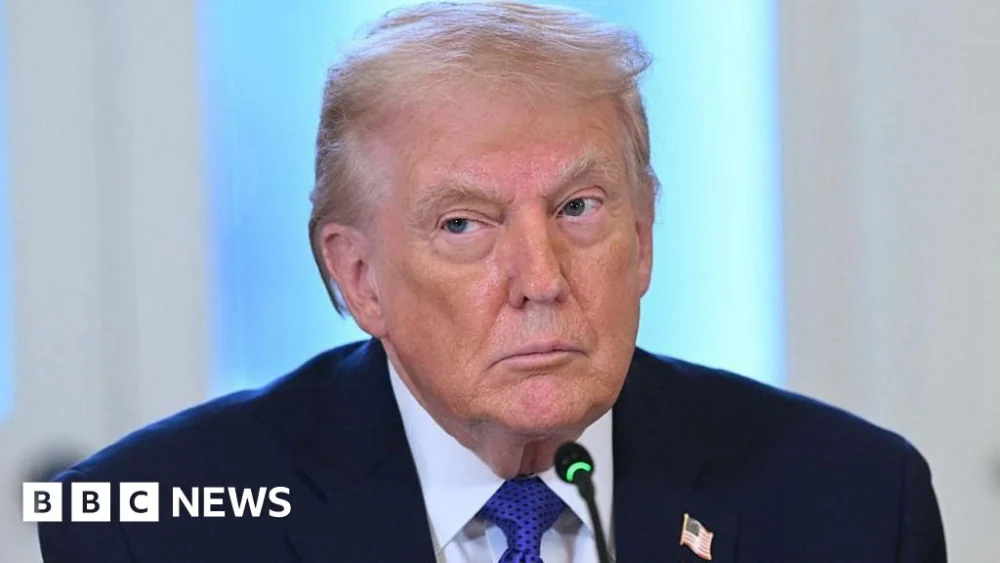
Lord Mandelson, the former UK ambassador to the United States and a veteran figure in British politics, has asserted that US President Donald Trump would not resort to military action to acquire Greenland. Speaking on the BBC’s Sunday with Laura Kuenssberg programme, Mandelson, known for his direct observations, stated that while he admired Trump’s “directness” in political discourse, he did not believe the President was a “fool.” Mandelson suggested that Trump’s advisors would undoubtedly remind him that any forceful attempt to take Greenland would "spell real danger" for American national interests and international standing.
The remarks from the prominent Labour peer come amidst heightened global attention on the semi-autonomous Danish territory, following President Trump’s explicit declarations. On Saturday, Trump had publicly stated that the US needed to "own" Greenland to prevent Russia and China from establishing a dominant presence there, adding provocatively that the acquisition would be achieved either "the easy way" or "the hard way." This assertion reignited a controversy that first emerged earlier in his presidency when reports surfaced about his interest in purchasing the vast Arctic island.
Denmark and Greenland have unequivocally rejected the notion of a sale, asserting that the territory is not for sale. Danish officials have gone further, warning that any military action by the United States against Greenland would inevitably lead to the collapse of the North Atlantic Treaty Organization (NATO), a cornerstone of Western collective security. This firm stance underscores the gravity with which the Danish government views Trump’s rhetoric, highlighting the potential for severe diplomatic and strategic repercussions within the transatlantic alliance.
The intensity of public and political concern in Denmark regarding the US President’s intentions is palpable. The AFP news agency reported on a recent Danish poll indicating that a significant 38% of Danes believe the US might indeed launch an invasion of Greenland under the Trump administration. This statistic reflects a profound level of apprehension and mistrust, challenging the long-standing friendly relations between the two NATO allies. In an effort to address the brewing tension and clarify positions, US Secretary of State Marco Rubio is scheduled to hold talks with Danish counterparts next week, a meeting expected to focus heavily on the future of Greenland and Arctic security.
Lord Mandelson, drawing on his extensive experience observing US political dynamics, including his brief but impactful tenure as ambassador, reiterated his conviction that military action was not a viable path. "He’s not going to do that [use military action to take Greenland]. I don’t know, but I’m offering my best judgement as somebody who’s observed him at fairly close quarters," he remarked, emphasizing that despite Trump’s unconventional style, there were practical limits to his actions.
Greenland, the world’s largest island, is sparsely populated, with a population of just under 60,000, primarily Inuit. However, its strategic geographical position between North America and the Arctic Ocean renders it immensely significant from a geopolitical perspective. Its vast ice sheet and coastal areas are ideally situated for missile early warning systems, crucial for continental defense, and for monitoring maritime traffic in the increasingly accessible Arctic region. The melting of Arctic ice due to climate change is opening new shipping lanes and access to vast untapped natural resources, making the region a new frontier for international competition.
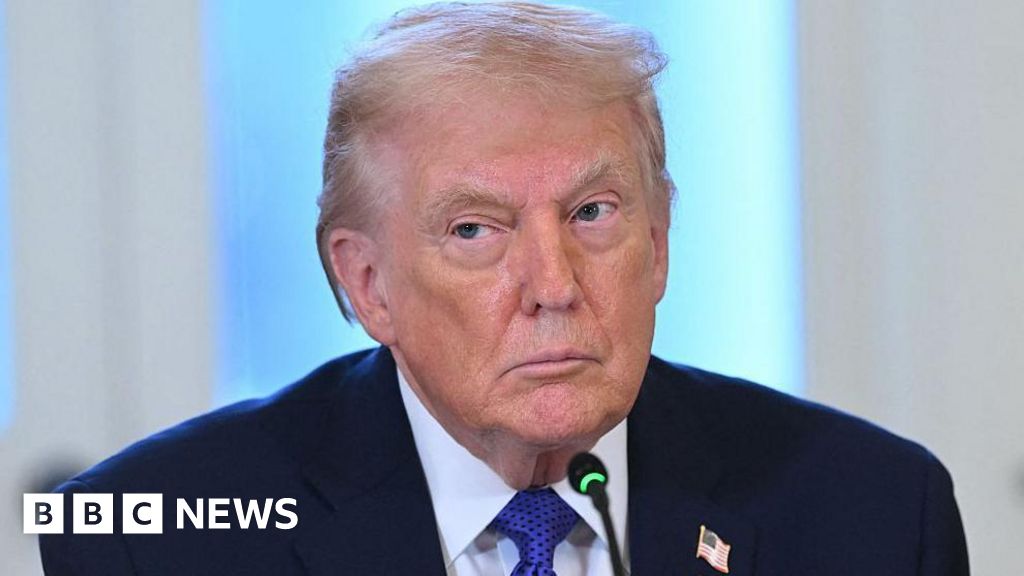
President Trump has consistently maintained that Greenland is vital to US national security, repeatedly making unsubstantiated claims that the territory was "covered with Russian and Chinese ships all over the place." His renewed focus on Greenland also bizarrely coincided with a commando raid on the Venezuelan capital Caracas last week, which reportedly seized President Nicolas Maduro and his wife and resulted in dozens of fatalities. The connection Trump drew between these two seemingly unrelated events baffled many observers, though it perhaps underscored his broader concern about rival powers expanding their influence globally.
Beyond the immediate crisis, Lord Mandelson also articulated a broader strategic concern. "We are all going to have to wake up to the reality that the Arctic needs securing against China and Russia. And if you ask me who is going to lead in that effort to secure, we all know, don’t we, that it’s going to be the United States," he stated. This perspective highlights the emerging "Great Game" in the Arctic, where major powers are vying for control and influence over strategic waterways, resource exploitation, and military positioning. Russia has been steadily rebuilding its military presence in the Arctic, while China has declared itself a "near-Arctic state" and is pursuing a "Polar Silk Road" initiative.
The United Kingdom, a key NATO ally, has echoed some of these concerns, albeit with a more diplomatic tone. Transport Secretary Heidi Alexander, speaking on the same BBC programme, confirmed that the UK is actively working with its NATO allies to bolster security in the Arctic. She emphasized that discussions about securing the region against the expanding influence of Russia and China were part of NATO’s ongoing strategic business, rather than a direct response to the US military threat against Greenland. Alexander affirmed that the UK agrees with Trump on one point: the Arctic Circle is indeed an increasingly contested part of the world. "It is really important that we do everything that we can with all of our Nato allies to ensure that we have an effective deterrent in that part of the globe against Putin," she declared, underscoring the collective security imperative.
However, not all UK politicians viewed the Greenland situation with the same urgency. Conservative leader Kemi Badenoch dismissed the issue as a "second order" concern, particularly in comparison to the critical developments unfolding in Iran, where protesters were defying a government crackdown. Badenoch characterized questions about sending troops to Greenland as "hypothetical," noting pragmatically that "the US has not invaded Greenland." Her comments reflect a desire to prioritize more immediate and pressing global crises over what she perceived as speculative or exaggerated threats.
Despite Trump’s recent rhetoric, the US already wields significant influence over Greenland, primarily through existing defense agreements with Denmark. The most prominent example is Thule Air Base, a vital strategic installation in northern Greenland that serves as the US Air Force’s northernmost base. Under the terms of the 1951 US-Danish Defense Agreement, the US has the authority to deploy as many troops as it deems necessary to the territory for its defense. This historical arrangement underscores a long-standing strategic partnership.
Yet, on Saturday, Trump expressed dissatisfaction with these existing agreements, telling reporters in Washington that they were "not good enough." His statements revealed a desire for outright ownership rather than mere access or influence. "I love the people of China. I love the people of Russia," Trump said, before adding, "But I don’t want them as a neighbour in Greenland, not going to happen. And by the way, Nato’s got to understand that." This direct challenge to NATO, implicitly suggesting that the alliance might not adequately protect US interests in the Arctic, sent ripples through the international community. In response, Denmark’s NATO allies – including major European countries and Canada – swiftly rallied to its support earlier in the week, issuing statements that firmly reaffirmed the principle that "only Denmark and Greenland can decide on matters concerning their relations." This collective diplomatic front served as a powerful rebuke to Trump’s unilateral aspirations.
Lord Mandelson, a key architect of the New Labour movement, has been a prominent figure in British politics for four decades. He held several influential ministerial roles following Tony Blair’s election in 1997, including Secretary of State for Northern Ireland and Secretary of State for Business, Innovation and Skills, though his career was marked by two resignations before Labour lost power in 2010. His extensive experience in both domestic and international affairs, coupled with his reputation as a shrewd political operator, lends particular weight to his assessment of the US President’s intentions and the broader geopolitical landscape surrounding Greenland. His insistence that Trump would not resort to force, while acknowledging the President’s unconventional style, offers a nuanced perspective on a highly sensitive international issue.


 George Anjay
 Nakalama John
 Nana Banana