
 George Anjay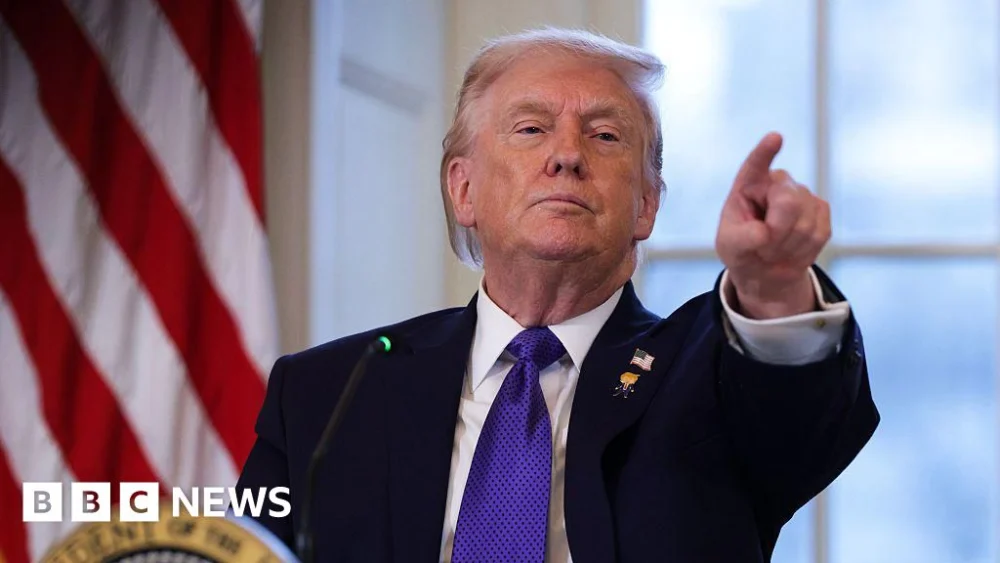
In a stark escalation of rhetoric and a decisive shift in regional policy, former U.S. President Donald Trump has issued an ultimatum to Cuba, demanding that the island nation "make a deal" imminently or face severe and punitive consequences, chief among them the complete cessation of vital oil and financial aid from Venezuela. This forceful declaration, disseminated through his Truth Social platform on Sunday, signals a dramatic pivot in Trump’s engagement with Cuba, directly linking its economic lifeline to the recent U.S. operation in Venezuela. The former president’s pronouncements suggest a strategic maneuver to isolate and pressure the Cuban government, leveraging its dependence on its long-standing ally, Venezuela.
The core of Trump’s threat revolves around the significant flow of Venezuelan oil and money to Cuba, which he asserts will be unequivocally terminated. Venezuela, under the leadership of Nicolás Maduro, has historically been a crucial supplier, reportedly sending approximately 35,000 barrels of oil daily to the island. This aid has been instrumental in propping up Cuba’s economy, particularly in the face of ongoing U.S. sanctions. Trump’s declaration, however, aims to sever this critical support system, stating with emphatic finality, "THERE WILL BE NO MORE OIL OR MONEY GOING TO CUBA – ZERO!"
Trump explicitly linked this economic pressure to Cuba’s alleged role in providing "Security Services" to the Maduro regime, referring to Cuban operatives as having supported "the last two Venezuelan dictators." This accusation underscores a key element of Trump’s narrative: that Cuba has been complicit in propping up what he characterizes as illegitimate and oppressive leaderships in Venezuela. The former president’s statement implies that this era of Cuban support for Venezuelan leadership is definitively over, and that Cuba’s continued reliance on such partnerships will only invite further retribution.
The urgency of Trump’s message, conveyed through the phrase "BEFORE IT IS TOO LATE," suggests a rapidly evolving geopolitical landscape and a limited window for Cuba to capitulate. However, Trump provided no specifics regarding the nature of the proposed "deal" or the exact ramifications of non-compliance, leaving a significant degree of ambiguity and fostering an atmosphere of uncertainty. This lack of clarity, while potentially intended to maximize pressure through fear of the unknown, also raises questions about the concrete policy objectives behind his pronouncements.
Trump’s rhetoric also directly referenced the recent U.S. operation that targeted Nicolás Maduro, an event that appears to have galvanized his approach to Cuba. He alluded to the raid as an action to "seize" Maduro and his wife, Cilia Flores, who are facing federal charges in the United States, including drug trafficking. It is widely understood that Cuba has provided Maduro with a significant portion of his personal security detail, a fact that Trump appears eager to exploit. He claimed that many of the Cuban nationals involved in this security detail were casualties of a "USA attack" in Caracas, stating, "Most of those Cubans are DEAD from last week’s USA attack."
This assertion, while disputed by Cuban authorities who claim a different number of casualties and frame the fallen as "brave Cuban combatants" who died defending against "terrorists in imperial uniforms," serves to reinforce Trump’s narrative of a decisive U.S. victory and Cuba’s subsequent vulnerability. Trump’s statement, "and Venezuela doesn’t need protection anymore from the thugs and extortionists who held them hostage for so many years," positions the United States as the ultimate guarantor of Venezuelan security, displacing Cuba’s historical role. He concluded this line of thought with a powerful declaration of American military supremacy: "Venezuela now has the United States of America, the most powerful military in the World (by far!), to protect them, and protect them we will."
The Cuban government has yet to issue a formal response to Trump’s latest threats. However, President Miguel Díaz-Canel has previously articulated a strong stance, honoring the deceased Cuban nationals as heroes for their perceived defiance against American aggression. This ideological framing suggests that Cuba may be prepared to weather further U.S. pressure, drawing on its history of resistance against perceived imperialistic designs.
While Trump’s administration has not outlined a clear, detailed strategy for Cuba beyond these pronouncements, his past statements have hinted at a belief in Cuba’s imminent collapse. He has previously suggested that direct military intervention might be unnecessary, implying that internal pressures and economic isolation were already pushing the country towards a breaking point. This perspective aligns with a broader U.S. foreign policy approach that seeks to weaken or topple governments deemed adversarial through economic and diplomatic means.
Adding another layer to the unfolding situation, U.S. Secretary of State Marco Rubio, a prominent Cuban-American figure with strong anti-Castro sentiments, recently indicated that Cuban leaders should be deeply concerned. Rubio stated he would be "concerned" if he were in the Cuban government and that "they’re in a lot of trouble." This sentiment from a key U.S. official amplifies the perceived threat and suggests a unified front within the Trump camp regarding Cuba.
In a move that further underscores his personal interest and political calculations, Trump also re-shared a social media post suggesting that Rubio could potentially become the president of Cuba. Trump’s endorsement of this idea, with the comment "Sounds good to me!", indicates a potential vision for Cuba’s future leadership that aligns with U.S. interests and reflects his desire to see a regime change on the island. This is a significant departure from traditional diplomatic discourse, hinting at a more interventionist and perhaps even neo-colonial approach to regional politics.
The immediate impact of these pronouncements is already being felt. The Trump administration’s tactic of confiscating sanctioned Venezuelan oil tankers has already begun to exacerbate a severe fuel and electricity crisis in Cuba. This existing hardship, now amplified by Trump’s direct threats to cut off all oil and financial aid, places the Cuban government in an increasingly precarious position. The economic strain, coupled with the political pressure, creates a volatile environment where the Cuban leadership faces immense challenges in maintaining stability and meeting the needs of its population. The coming days and weeks will likely reveal the extent to which Trump’s aggressive stance translates into concrete policy actions and how Cuba, along with its regional allies, will respond to this intensified pressure. The specter of further economic devastation looms large over the island, a stark reminder of the interconnectedness of regional politics and the potent impact of U.S. foreign policy decisions.



 Roy Suryo

 Nakalama John
 atisusanti
 Ramos Leo
