
 Nana Banana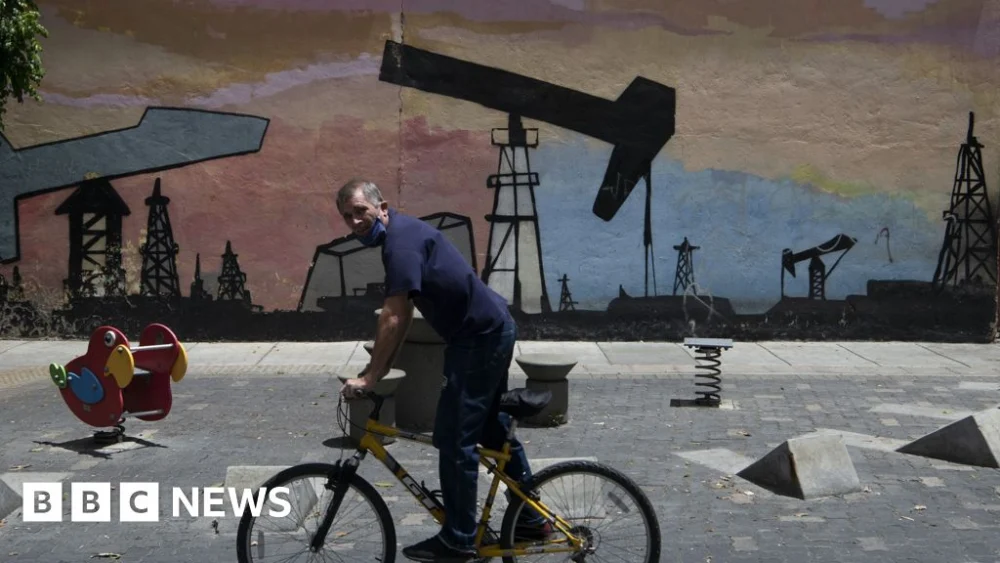
Donald Trump has explicitly vowed to seize control of Venezuela’s vast oil reserves, declaring his intent to "run" the country until a "safe" transition is complete, following the hypothetical capture of President Nicolás Maduro. The former U.S. president envisions American oil firms injecting billions of dollars into the South American nation, mobilizing its largely untapped resources. He asserts that U.S. companies would repair Venezuela’s "badly broken" oil infrastructure and "start making money for the country," a pronouncement that has immediately drawn both keen interest and considerable skepticism from industry experts and analysts.
The ambitious proposal, however, faces a colossal array of challenges. Experts have cautioned that such a plan would require tens of billions in investment and could take up to a decade to yield any meaningful increase in oil output. The complexities extend far beyond mere capital injection, encompassing deep-seated political instability, dilapidated infrastructure, legal quagmires, and the inherent difficulties of extracting Venezuela’s specific type of crude. The central question remains: can the U.S. truly take effective control of Venezuela’s oil wealth, and is Trump’s vision a feasible pathway to recovery and profit?
Venezuela, an OPEC member, boasts the world’s largest proven oil reserves, estimated at an astounding 303 billion barrels. Yet, this immense subterranean wealth starkly contrasts with its paltry current production. The nation’s oil output has plummeted dramatically since the early 2000s, a decline precipitated by the policies of former President Hugo Chávez and subsequently the Maduro administration. Their tightening grip over the state-run oil company, Petróleos de Venezuela S.A. (PDVSA), led to widespread nationalization, underinvestment, and a mass exodus of experienced technical and managerial staff. This institutional decay stripped PDVSA of its operational efficiency and technical expertise, leaving its once-thriving fields in disarray.
While a few Western oil firms, notably the U.S. company Chevron, still maintain a limited presence, their operations have shrunk considerably. This contraction is a direct consequence of escalating U.S. sanctions, which began under President Barack Obama in 2015 over alleged human rights violations and were significantly broadened under the Trump administration. These measures specifically targeted Venezuela’s oil exports, aiming to choke off Maduro’s primary source of revenue and exert pressure for political change. The sanctions have not only deterred new foreign investment but have also severely restricted Venezuela’s ability to import essential equipment, parts, and technology required for exploration, production, and maintenance.
Callum Macpherson, head of commodities at Investec, aptly highlights the core issue: "The real challenge they’ve got is their infrastructure." Bill Farren Price, senior research fellow at the Oxford Institute for Energy Studies, further elaborated on the BBC, noting that Venezuela’s oil industry "had its heyday decades ago" and has been in "sharp decline over the past 20 years." He described a grim reality where "a lot of the complex supply chain and infrastructure’s been looted and taken apart and sold." This paints a picture of systemic collapse rather than mere underperformance.
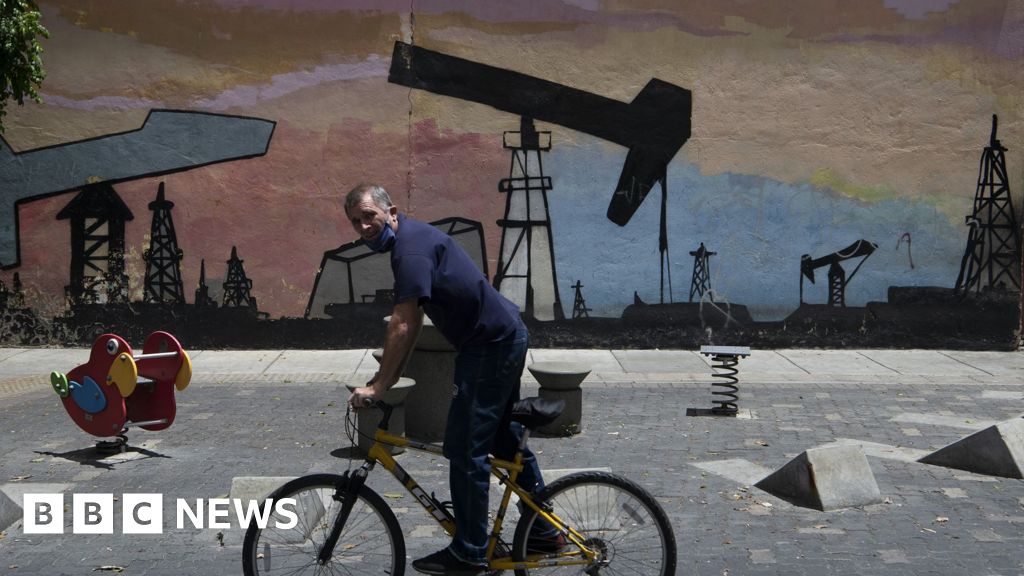
In November, Venezuela’s oil production hovered around an estimated 860,000 barrels per day (bpd), according to the International Energy Agency’s latest oil market report. This figure represents barely a third of its output a decade ago and accounts for less than 1% of global oil consumption. At its peak in the late 1990s, Venezuela produced over 3 million bpd, showcasing the dramatic scale of its decline. The type of crude Venezuela predominantly possesses, "heavy, sour" oil, presents an additional layer of complexity. This crude is dense and contains high levels of sulfur, making it harder and more expensive to refine compared to the "light, sweet" oil typically produced in the U.S., which is ideal for gasoline. Venezuelan crude is more suitable for products like diesel and asphalt, requiring specialized refining infrastructure that is often costly to build and maintain.
The punitive actions taken by the U.S. have also included the seizure of oil tankers off Venezuela’s coast and a naval blockade targeting sanctioned vessels entering and leaving the country. These measures, while effective in disrupting Maduro’s access to markets, have further isolated Venezuela’s oil sector and compounded its operational difficulties.
Homayoun Falakshahi, senior commodity analyst at data platform Kpler, underscores that the primary hurdles for oil firms eyeing Venezuelan reserves are fundamentally legal and political. He emphasized that any company hoping to drill in Venezuela would first require a legitimate agreement with a recognized government, a scenario that cannot materialize until a stable and internationally recognized successor to Maduro is firmly in place. This prerequisite means companies would be "gambling billions of investment on the stability of a future Venezuelan government," a highly uncertain proposition given the nation’s volatile political history.
Even assuming a stable political landscape, the process is far from instantaneous. "Even if the political situation is stable, it’s a process that takes months," Falakshahi noted. Companies would need to negotiate and sign new contracts, conduct extensive geological surveys, and then embark on a massive, long-term program of infrastructure investment. This includes repairing existing pipelines, pumps, and refineries, as well as potentially building new ones, a process that can easily span years. Analysts unanimously agree that restoring Venezuela’s former output levels would necessitate an investment of tens of billions of dollars and could realistically take up to a decade to bear fruit.
Neil Shearing, group chief economist at Capital Economics, suggests that Trump’s plans would have a limited impact on global oil supply and, consequently, on oil prices. He argues that there are "an enormous number of hurdles to overcome and the timeframe of what is going to happen is so long" that oil prices in the medium term, say by 2026, would likely see little change. Shearing points out that firms will only commit significant capital once a truly stable and predictable government is established in Venezuela, and even then, these projects "would not deliver for many, many years." He reiterates that the core issue has been "decades of underinvestment, mismanagement and it is really expensive to extract" Venezuelan crude.
Furthermore, Shearing highlights that even if Venezuela could miraculously return to its peak production levels of around three million barrels per day, it would still not rank among the world’s top 10 producers. This perspective is crucial, as he concludes that the world is currently "not suffering from a shortage of oil," pointing to high production among OPEC+ countries and other global producers. Lord Browne, the former chief executive of BP, echoes this sentiment, calling the revival of Venezuela’s oil industry a "very long term project." He cautions, "People underestimate the time it takes to do things. Marshalling all the resources, the material and people in particular, takes a very long time." Browne even suggests that while there might be a "quick pick up" of some minimal production, overall output might initially fall during the complex and disruptive process of reorganizing the industry.
Currently, Chevron remains the sole American oil producer active in Venezuela. The company received a specific license under former President Joe Biden in 2022, allowing it to operate despite broader U.S. sanctions. Chevron, which currently accounts for approximately a fifth of Venezuela’s limited oil extraction, has stated its focus is on employee safety and compliance with "all relevant laws and regulations." Other major international oil firms have largely remained publicly silent on Trump’s proposed plans, a reticence understandable given the country’s turbulent history.
Mr. Falakshahi believes that oil executives are undoubtedly engaging in internal discussions regarding the potential opportunity. However, he notes that "the appetite to go somewhere is linked to two main factors, the political situation and the resources on the ground." The ghosts of past expropriations loom large; ExxonMobil and ConocoPhillips are still seeking billions in compensation from Venezuela after their assets were seized in the 2000s, a stark reminder of the risks involved. This history makes companies extremely wary of committing vast sums without robust legal protections and political stability.
Despite these significant deterrents, Falakshahi concedes that "the potential prize may be deemed too big to avoid." Lord Browne agrees, suggesting that companies would be motivated to get involved because "having options for business in different parts of the world is a good thing to have." He added, "As a piece of business, if you were running a company… you want to get involved very quickly," implying that the strategic long-term value of access to the world’s largest reserves could outweigh the immediate risks for some.
In conclusion, while Donald Trump’s ambition to unlock Venezuela’s immense oil wealth is clear, the path to achieving this vision is fraught with extraordinary challenges. From the dilapidated state of infrastructure and the complexities of extracting heavy crude, to the deep-seated political instability, legal uncertainties, and the sheer scale of investment and time required, experts paint a picture of a monumental undertaking. The potential rewards are staggering, but the hurdles are equally formidable, suggesting that any significant revival of Venezuela’s oil industry would be a generational project, far removed from a quick fix or an immediate boon to global oil markets.


 Nakalama John
 atisusanti
 Ramos Leo
 Roy Suryo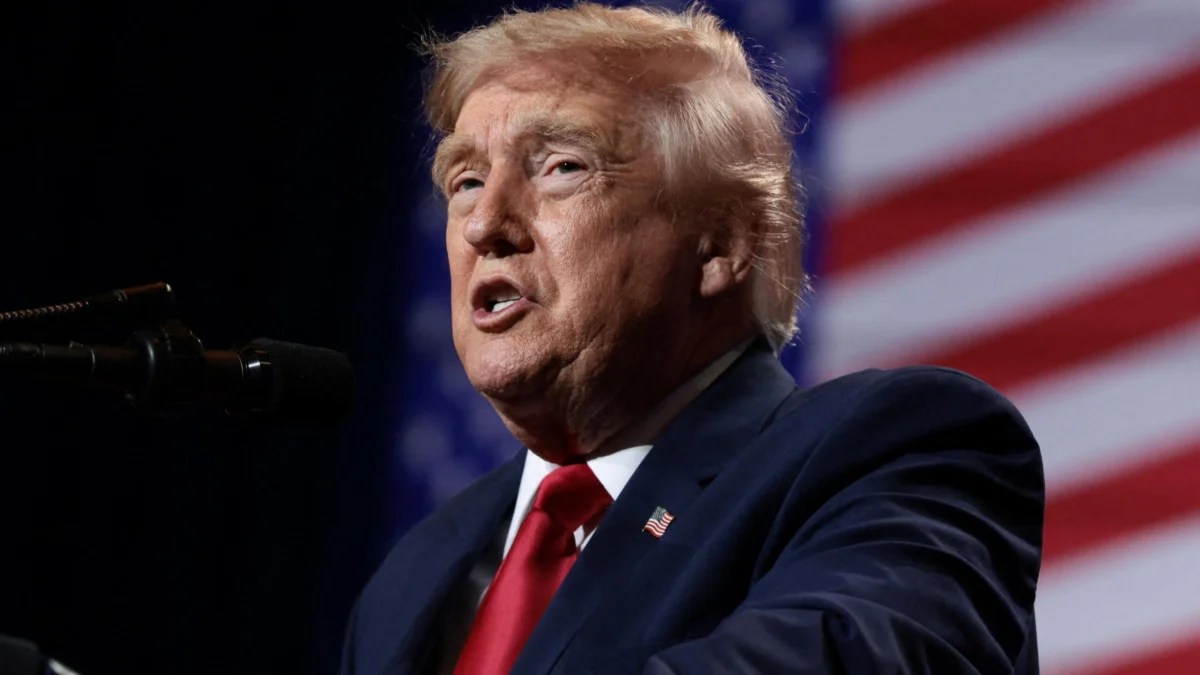
 George Anjay