George Anjay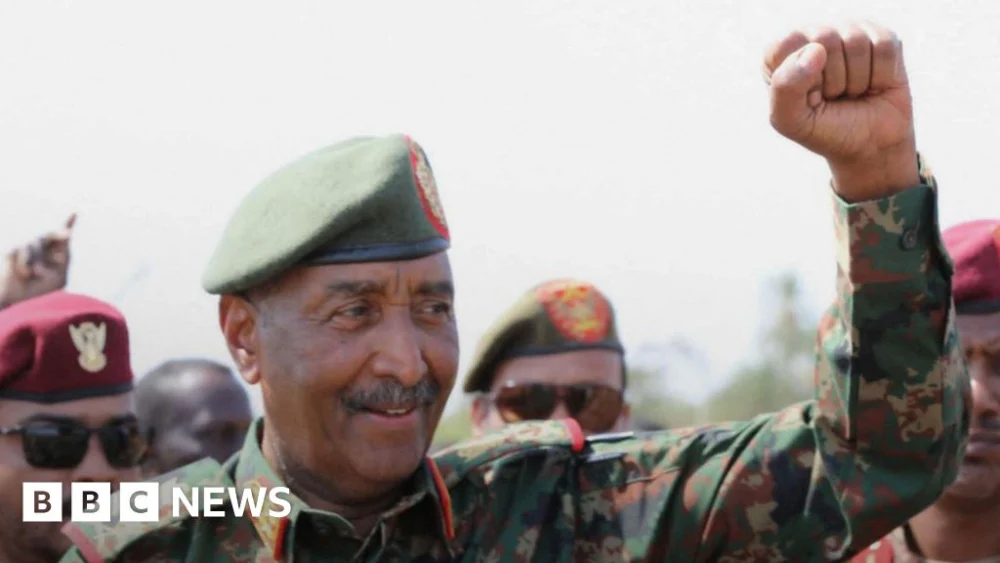
Sudan’s military-led government has officially re-established its presence in the capital, Khartoum, marking a significant symbolic and practical shift after nearly three years of operating from a wartime base in the eastern city of Port Sudan. The return signifies a new phase in the protracted civil war, a conflict that has devastated the nation and plunged millions into humanitarian crisis. Prime Minister Kamil Idris, addressing reporters on Sunday, declared the "government of hope" was now back in Khartoum, signaling an immediate focus on revitalizing the beleaguered city and its long-suffering residents. The government’s absence from the capital stemmed from the eruption of civil war in 2023, when the paramilitary Rapid Support Forces (RSF) forced the army out. While the army achieved a crucial breakthrough by recapturing parts of Khartoum in March, the city remains scarred by the brutal conflict.
The scale of devastation in Khartoum is immense. At the height of the fighting, an estimated five million people fled the city, according to United Nations figures. Those who remained or were unable to leave endured a harrowing experience under RSF occupation. Reports from survivors detail widespread mass looting, with RSF fighters allegedly occupying civilian homes, further exacerbating the displacement and fear. The physical landscape of Khartoum bears testament to the ferocity of the war, with huge swathes of the city lying in ruins. In October, Ugochi Daniels, a UN official, painted a grim picture of the capital, reporting that basic services were "barely functioning," a stark understatement of the widespread collapse of infrastructure and essential provisions.
Upon their return, Prime Minister Idris articulated a clear agenda for the government’s immediate priorities: the restoration and improvement of essential services for Khartoum’s populace. This includes critical areas such as electricity, water supply, healthcare, and education, all of which have been severely degraded by the conflict. The government’s commitment to these vital sectors underscores the immense challenge ahead in rebuilding not just infrastructure, but the very fabric of daily life for those who have endured so much. Beyond the immediate task of reconstruction, Idris boldly declared 2026 as a "year of peace" for Sudan, a nation that has tragically witnessed at least 150,000 deaths since the war erupted. This declaration, while aspirational, reflects a deep yearning for an end to the bloodshed and a path towards national reconciliation and stability.
The conflict in Sudan has escalated into what the United Nations has unequivocally described as the world’s worst humanitarian crisis. The sheer scale of displacement is staggering, with approximately 12 million people forced to flee their homes across the country. This figure represents a significant portion of Sudan’s population, highlighting the pervasive impact of the war on every facet of society. The genesis of this catastrophic conflict can be traced back to a bitter power struggle between the head of the army, General Abdel Fattah al-Burhan, and his former deputy and leader of the RSF, General Mohamed Hamdan Dagalo. Their falling out ignited a vicious and destructive contest for control of the nation, plunging Sudan into an abyss of violence and instability.
Both the RSF and the Sudanese military have been repeatedly accused of committing egregious atrocities throughout the protracted conflict. These accusations, often supported by extensive documentation and eyewitness testimonies, paint a grim picture of human rights abuses and war crimes. The international community has, for the most part, failed to broker a lasting peace. Numerous mediation efforts have faltered, unable to bridge the deep chasm of mistrust and animosity between the warring factions. The conflict has also become increasingly internationalized, with both sides allegedly receiving support from foreign powers who have been accused of pouring weapons and resources into the country, further fueling the protracted violence.
Among these foreign actors, the United Arab Emirates (UAE) has come under particular scrutiny. Recent allegations have surfaced, pointing to the UAE’s alleged support for the RSF. These claims, if substantiated, would significantly complicate international efforts to de-escalate the conflict and hold perpetrators of atrocities accountable. The UAE has, however, vehemently denied any involvement in supporting the RSF, maintaining its commitment to a peaceful resolution of the crisis. The complex web of international involvement and the ongoing accusations of external interference underscore the multifaceted nature of the Sudanese conflict and the challenges in achieving a sustainable peace. The return of the government to Khartoum is a step, however fraught with peril, towards reclaiming the capital and beginning the arduous process of national recovery and reconstruction, but the path ahead remains deeply uncertain, overshadowed by the ongoing violence, the immense humanitarian needs, and the unresolved political and military dynamics. The hope for peace in 2026, while a powerful sentiment, will require a profound shift in the current trajectory of the war and a renewed commitment from all parties, both domestic and international, to prioritize the well-being and future of the Sudanese people. The rebuilding of Khartoum and the restoration of normalcy will be a monumental undertaking, demanding sustained international support and a genuine will to end the devastating conflict.



 Roy Suryo
 Nakalama John
 atisusanti
 Ramos Leo