
 George Anjay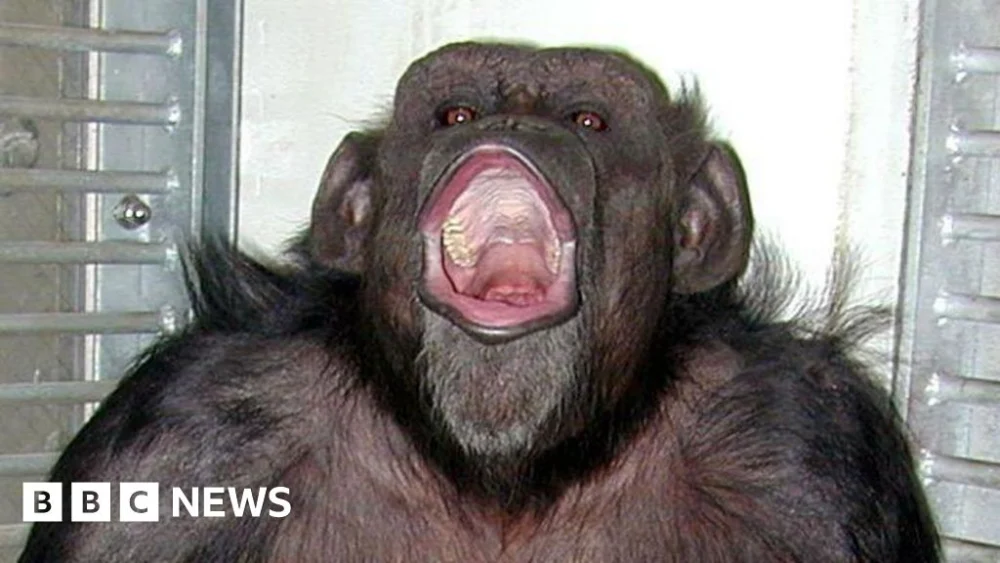
The world of primatology and cognitive science mourns the loss of Ai, a remarkable female chimpanzee who captivated researchers and the public alike with her extraordinary cognitive abilities, including the capacity to count and paint. Ai passed away on January 9th at the venerable age of 49, succumbing to natural causes, old age, and organ failure at Kyoto University’s Center for the Evolutionary Origins of Human Behavior in Japan. Her final moments were spent in the comforting presence of the dedicated staff who had cared for her and studied her for decades.
Born in the wild in western Africa, Ai’s journey led her to the Japanese institute in 1977, where she would become the central figure of the groundbreaking Ai Project. This ambitious research program, spearheaded by renowned primatologist Tetsuro Matsuzawa, delved deep into the intricacies of the "chimpanzee mind," aiming to unravel the complex cognitive processes that govern our closest living relatives. Ai, with her unique talents, became the project’s most celebrated subject, providing invaluable insights into chimpanzee intelligence.
The Ai Project’s findings were nothing short of revolutionary. Researchers discovered that Ai possessed a sophisticated understanding of numbers and an impressive ability to identify and differentiate colors. These foundational discoveries laid the groundwork for a series of increasingly complex experiments that revealed the depth of her cognitive capabilities.
At a remarkably young age, just 18 months old, Ai was introduced to a specially designed computer interface. This setup, featuring a unique keyboard linked to a computer, became her primary tool for engaging in memory and learning studies. This early exposure to a technological interface allowed scientists to observe and document her cognitive development in unprecedented detail.
By the age of five, Ai had already demonstrated an astonishing mastery of numerical concepts. She had successfully "mastered numerical naming from one to six and was able to name the number, colour and object of 300 types of samples," according to a pivotal 1985 scientific paper published by Matsuzawa. This early achievement highlighted her capacity for abstract thought and symbolic representation, abilities previously considered exclusive to humans. The sheer volume of information she could process and recall at such a young age was a testament to her exceptional memory and learning aptitude.
Beyond her numerical prowess, Ai also exhibited a creative and artistic side. When not engaged in rigorous cognitive tests, she found enjoyment in drawing and painting. Much like other chimpanzees at the research center, Ai would spontaneously engage in creating art, wielding marker pens with fluid strokes across blank paper. Significantly, these artistic endeavors were not motivated by external rewards such as food, indicating an intrinsic drive for creative expression. Her paintings, often abstract and vibrant, were a visual representation of her inner world and her engagement with her environment.
Ai’s intelligence extended to practical problem-solving, as evidenced by a memorable incident reported by Japanese media outlet Kyodo News. On one occasion, she managed to escape her enclosure, not through brute force, but by ingeniously using a key to unlock her cage, a feat that underscored her observational skills and understanding of cause and effect. This incident further solidified her reputation as an exceptionally intelligent and resourceful primate.
Her legacy continued through her offspring. In 2000, Ai gave birth to a son named Ayumu. Ayumu inherited his mother’s remarkable cognitive abilities, particularly her exceptional memory, and became a significant participant in the ongoing research of the Ai Project, carrying forward the scientific exploration of chimpanzee intelligence. The continuation of these studies through Ayumu ensured that Ai’s influence and the knowledge gained from her life would endure.
The impact of Ai’s work resonated far beyond the confines of the research institute. Her unique talents and the insights they provided into primate cognition garnered international attention. In 2017, a poignant tribute to Ai’s artistic contributions was made on the 40th anniversary of the Ai Project. A scarf, meticulously crafted from one of Ai’s own paintings, was presented as a gift to the esteemed primatologist Dame Jane Goodall, a global icon in chimpanzee research. This gesture symbolized the profound connection between Ai’s individual achievements and the broader scientific community’s efforts to understand and protect these intelligent beings.
Ai’s life and her contributions to science have fundamentally altered our understanding of chimpanzee intelligence. Her ability to master abstract concepts like numbers and colors, her artistic expression, and her problem-solving skills challenged long-held assumptions about the cognitive boundaries between humans and other primates. The Ai Project, with Ai at its heart, has provided irrefutable evidence of the sophisticated mental lives of chimpanzees, prompting a deeper appreciation for their sentience and complex social structures. Her passing marks the end of an era, but the knowledge and inspiration she provided will continue to fuel research and conservation efforts for years to come. The legacy of Ai is not just in the scientific papers and data she generated, but in the profound shift she inspired in how we perceive and interact with the animal kingdom, urging us to recognize the intelligence and emotional depth that exists beyond our own species. Her story serves as a powerful reminder of the interconnectedness of life and the importance of respecting the cognitive capabilities and inherent worth of all beings. The research initiated by the Ai Project continues to build upon the foundations she so brilliantly laid, ensuring that her intellectual contributions will echo through scientific discourse for generations.




 Roy Suryo

 Nakalama John
 atisusanti
 Ramos Leo
