
 Ramos Leo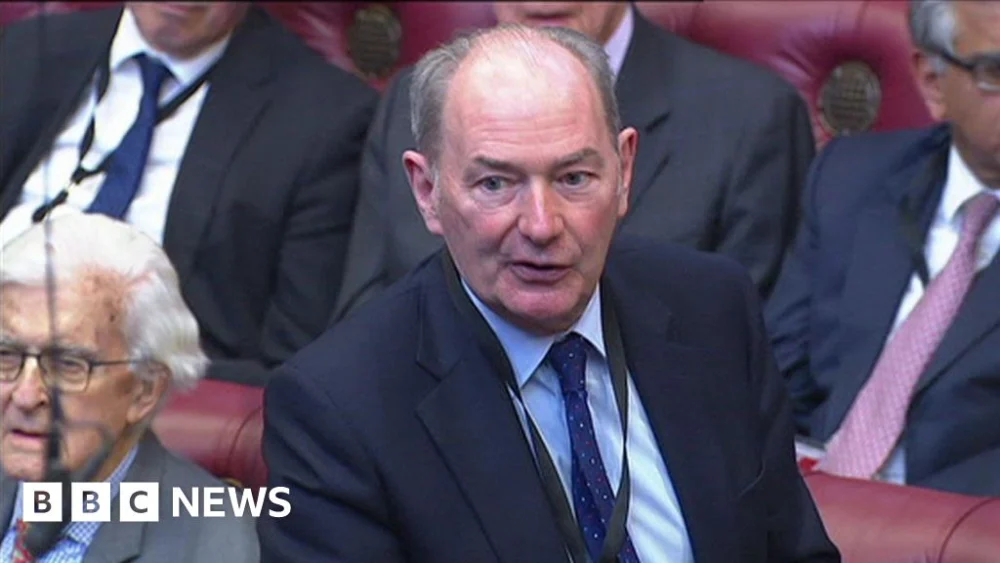
The House of Lords is set to welcome a new presiding officer as Lord Michael Forsyth of Drumlean, a venerable figure in Conservative politics and a former government minister, has been officially confirmed as the next Lord Speaker. This pivotal appointment places Lord Forsyth at the helm of the UK Parliament’s upper chamber, a role that combines significant procedural authority with crucial ceremonial duties. He will assume the prestigious position, taking his place on the historic Woolsack, in February, following the necessary formal approval from King Charles III.
The responsibilities inherent in the top job are multifaceted and demanding. Primarily, the Lord Speaker is tasked with chairing debates among peers, ensuring adherence to parliamentary rules, and maintaining order and decorum within the chamber. While the role is less interventionist than that of the Speaker of the House of Commons, requiring a degree of impartiality that allows peers to self-regulate to a greater extent, the Lord Speaker holds the ultimate authority in certain procedural matters. This includes having the final say in summoning ministers to answer urgent questions, a vital mechanism for parliamentary scrutiny. Beyond the legislative chamber, the Lord Speaker performs significant ceremonial roles at high-profile events, most notably the State Opening of Parliament, where they represent the House of Lords in proceedings that underscore the deep traditions of British democracy.
Lord Forsyth’s ascendancy to this distinguished post marks a transition from Lord John McFall of Alcluith, who is stepping down from the role for deeply personal reasons. Lord McFall’s decision to leave his position to care for his wife, following her recent diagnosis with Parkinson’s disease, has been met with widespread understanding and sympathy across the political spectrum. His tenure saw notable strides in improving the governance of the House of Lords and enhancing the accountability of its administration to its members, a legacy that Lord Forsyth has publicly pledged to build upon.
The election process for the Lord Speaker is a democratic exercise within the House of Lords, where peers cast their votes for their preferred candidate. Lord Forsyth emerged victorious from a field that included Baroness Deborah Bull, a distinguished former principal dancer with the Royal Ballet and a current Deputy Speaker. His successful campaign was predicated on a compelling vision for the future of the upper chamber, articulated in an election pitch that promised "leadership for a more effective, respected and influential House." Lord Forsyth’s platform underscored the increasing importance of the House of Lords in the contemporary political landscape, arguing that "as the Commons continues to struggle to scrutinise legislation effectively, greater pressure will fall on this House." This reflects a broader understanding within Westminster of the complementary, and often critical, role the Lords plays in legislative review and governmental oversight.
Upon the approval of the result, Lord Forsyth expressed his gratitude to his supporters for their trust and acknowledged the robust, yet cordial, nature of the campaign run by Baroness Bull. He paid tribute to Lord McFall, praising his predecessor’s dedication to improving the House’s governance and accountability. "I intend to build on that work as chair of the House of Lords Commission and Lord Speaker," Lord Forsyth affirmed, signalling his commitment to continuity and further reform.
Lord Michael Forsyth brings an impressive breadth and depth of experience to the role, boasting nearly 50 years of continuous public service. His political journey began relatively early, shortly after his graduation from the University of St Andrews in Scotland. In 1978, he was first elected to Westminster City Council, laying the groundwork for a career that would take him to the highest echelons of British politics. This early foray into local government provided him with foundational experience in public administration and community representation.
His entry into national politics occurred in 1983 when he was elected as the Member of Parliament for Stirling. This period marked a significant era in Conservative politics, with Lord Forsyth serving under the formidable premierships of both Margaret Thatcher and John Major. During his time in the House of Commons, he held several key ministerial positions, demonstrating his versatility and capacity for governance. These roles included serving in the Home Office, where he contributed to policy on law and order, and as an employment minister, addressing crucial issues of the labour market and industrial relations. His career culminated in his appointment as Secretary of State for Scotland in 1995, a cabinet position of considerable influence and responsibility. In this role, he oversaw significant aspects of Scottish affairs, navigating complex political and social issues specific to the nation.
However, his tenure as an MP came to an end in the seismic 1997 general election, which saw a Labour landslide sweep away many long-standing Conservative majorities, including his own in Stirling. The election marked a dramatic shift in the British political landscape, ending 18 years of Conservative rule.
A particularly poignant and enduring aspect of Lord Forsyth’s public life is his connection to the town of Dunblane, which was part of his constituency. In 1996, the town was the site of a horrific massacre where 16 primary schoolchildren and their teacher were tragically killed by a lone gunman. Lord Forsyth was deeply involved in the aftermath of the tragedy, providing support to the community and advocating for changes in gun control legislation. The profound impact of this event has stayed with him, as he has openly spoken about still suffering from flashbacks of the school gym where the atrocity occurred, highlighting the personal toll public service can take.
After his departure from the House of Commons, Lord Forsyth’s expertise and experience were not lost to Parliament. He was elevated to the peerage in 1999, taking his seat in the House of Lords as a Conservative peer. In the upper chamber, he continued his dedicated service, chairing a number of influential committees. Notably, he chaired the Financial Services Regulation Committee, a role that required deep understanding of economic policy and regulatory frameworks, particularly crucial in an increasingly complex global financial environment.
The support for Lord Forsyth’s candidacy for Lord Speaker spanned across traditional party lines, underscoring his reputation for integrity and competence. He received endorsements from prominent figures such as former Labour Home Secretary Lord Blunkett and retired senior judge Baroness Butler-Sloss. Such cross-party backing is a testament to his standing within Parliament and his ability to command respect from colleagues with diverse political perspectives.
The other formidable candidate in the election, Baroness Deborah Bull, offered a distinct background. A celebrated figure in the arts, Baroness Bull was a principal dancer at the Royal Ballet for nearly two decades, achieving international acclaim for her performances. Her transition from the world of classical dance to parliamentary life has been remarkable, and she currently serves as a Deputy Speaker in the House of Lords, demonstrating her commitment to public service and her procedural acumen. Her campaign brought a different flavour to the contest, highlighting the diverse talents and experiences within the Lords.
As Lord Michael Forsyth prepares to take up his new responsibilities, he steps into a role that is both guardian of tradition and facilitator of modern parliamentary scrutiny. His extensive political career, marked by significant ministerial roles, a deep understanding of legislative processes, and a profound personal connection to a national tragedy, equips him uniquely for the challenges and dignities of the Lord Speakership. He will oversee a chamber that, as he himself noted, is under increasing pressure to effectively scrutinise legislation and hold the government to account, ensuring its continued relevance and influence in the British democratic system. His five-year term promises to be a period where his experience and leadership will be instrumental in shaping the future trajectory of the House of Lords.



 Nakalama John
 atisusanti
 Roy Suryo
 Nana Banana
 George Anjay