
 Nana Banana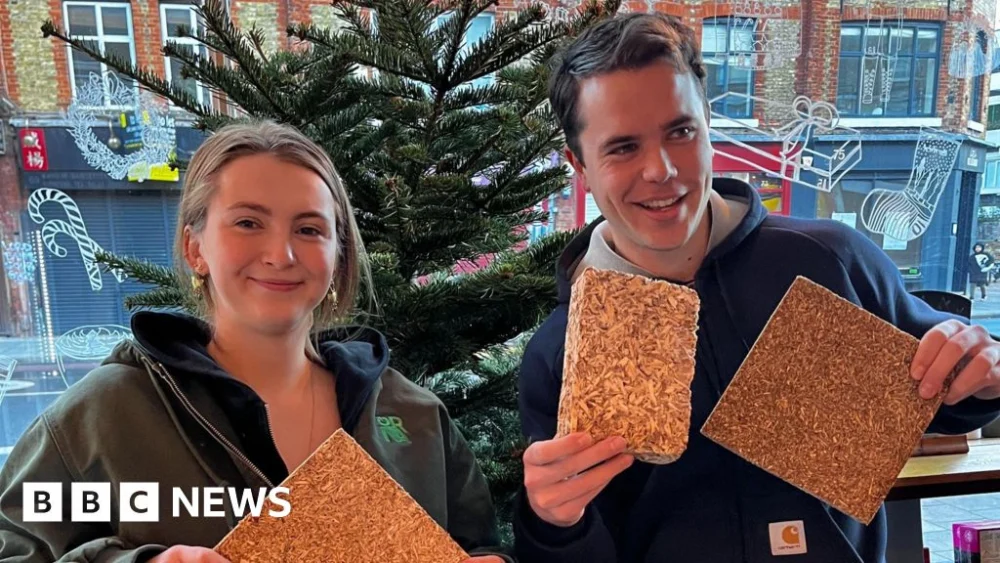
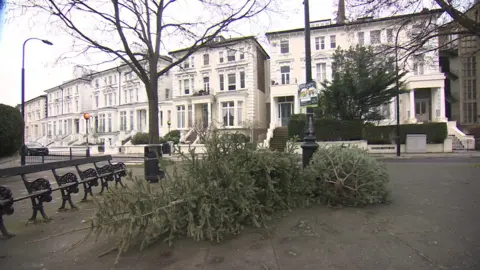
Industry estimates paint a stark picture: approximately seven million Christmas trees across the UK are condemned to landfill each year. This colossal volume of organic waste contributes significantly to greenhouse gas emissions, particularly methane, a potent climate-warming gas, as the trees decompose in anaerobic landfill conditions. Beyond the immediate environmental concern, it represents a substantial squandering of natural resources, from the land used to cultivate the trees to the energy expended in their transport and disposal. In response to this growing environmental consciousness, a vibrant ecosystem of innovative schemes is flourishing across London, offering residents more sustainable ways to celebrate the season and manage their post-Christmas greenery.
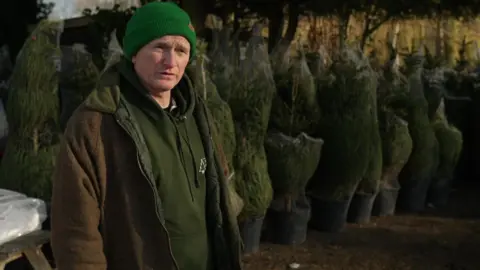
One such pioneering initiative champions the concept of renting a living Christmas tree rather than purchasing a cut one destined for eventual disposal. London Christmas Tree Rental, founded by Jonathan Mearns, operates on a simple yet profoundly impactful premise: all their trees are carefully potted, delivered to homes, and then returned after the festive season to be nurtured and grown on for reuse the following year. "Just simply, rent, water, return," explains Mearns, encapsulating the effortless nature of their service. He initiated the venture driven by a desire to offer a tangible, accessible solution to the rampant Christmas tree waste he observed.
The process is streamlined for modern urban living. Customers can browse and select their preferred tree size and type (typically Nordmann Firs, known for their needle retention) via the company’s website, choosing convenient pick-up and drop-off dates. The trees are available from four strategic hubs positioned across London, including a popular spot in Dulwich, south-east London, ensuring accessibility for a wide demographic of city dwellers. Once the festive period concludes, the trees are carefully transported back to a dedicated farm where they are replanted and allowed to thrive, growing larger and stronger for future Christmases. This unique cycle fosters a deeper connection between consumer and nature.
For many patrons, the experience transcends mere convenience; it’s about establishing an enduring bond with their chosen tree. Jonathan Mearns recounts heartwarming anecdotes of customers eagerly anticipating reunification with "their" specific tree year after year. "Sometimes people come back and say, ‘is that really my tree?’" Mearns shares with a smile. "We get pictures and we’ll compare, and they’ll say actually it is, it’s just grown a little bit, so people love it." This personal touch reinforces the sustainable message, transforming a transactional purchase into a recurring, environmentally conscious tradition. One loyal customer, who has participated for four years, expressed her satisfaction to BBC London: "I just like the idea, it’s more environmentally friendly." This scheme not only diverts trees from landfill but also cultivates a greater appreciation for living organisms and the circular economy.
While tree rental addresses the front-end of consumption, another ingenious scheme in Peckham, south-east London, tackles the post-consumption challenge head-on by repurposing trees once their festive duty is complete. The ORNA Group, co-founded by Hugo Knox and Caelo Dineen Vanstone, is at the forefront of a revolutionary initiative, transforming discarded Christmas trees into valuable construction materials. Knox’s journey to this innovative solution began with a direct, visceral encounter with the scale of Christmas waste.
"Back in November 2019, I left my first job coming out of university," Knox recalls. "I rang up one of my close friends, Max. I said, look, ‘it’s Christmas, Christmas trees, shall we give it a go?’" What started as a modest door-to-door operation in Camberwell, selling trees and offering installation services, quickly evolved into a thriving seasonal business. However, this hands-on experience provided Knox with an invaluable, albeit concerning, insight into the sheer volume of post-Christmas tree waste. "But from that I learned a lot about Christmas tree waste and saw all of the waste first-hand in the streets of London, and that’s what led to ORNA Group," he explains, highlighting the genesis of their ambitious circular economy project.
The environmental implications of discarded trees are, as highlighted by the Carbon Trust, considerably significant. On average, a real Christmas tree that is properly recycled or repurposed produces about 3.5kg of carbon dioxide emissions over its lifecycle. However, a two-metre tree sent directly to landfill without its roots can have a significantly higher carbon footprint, soaring to approximately 16kg of CO2 equivalent. This stark contrast underscores the critical importance of responsible disposal. The Carbon Trust also notes that an artificial tree, if used consistently over several years (typically 10-20 Christmases), can create lower overall emission levels compared to buying a new cut real tree annually. However, the ORNA Group’s innovation presents a compelling argument for real trees, provided they are given a "new lease of life" after use.
Recognizing this, most London boroughs have established robust schemes where trees can be collected and recycled to drastically reduce the number ending up in landfill. These council-run initiatives typically involve chipping the collected trees, which are then often used as mulch in local parks, gardens, or composting facilities, returning valuable nutrients to the soil. Residents are encouraged to check their local council’s specific guidelines and collection dates, with comprehensive information readily available via resources like London Recycles.
At the heart of the ORNA Group’s operation lies their workshop, a hub of material innovation. Here, real trees, meticulously collected from homes and businesses across London, undergo a transformative process. They are first chipped into a fine, consistent aggregate, forming the raw material for their pioneering products. Material scientist Caelo Dineen Vanstone, another of the start-up’s co-founders, meticulously oversees this intricate process. "When it arrives here, it’s mostly unprocessed," she explains. "The trees have come straight out of houses or businesses in different forms, but it comes here chipped up into the right consistency."
Vanstone elaborates on the scientific intricacies of their method: "The process involves cooking and modifying natural ingredients before combining them with the tree waste to create a homogenous wet material." This proprietary blend, incorporating natural binders, is then pressed and cured to form durable, versatile construction materials. The resulting products could range from acoustic panels that improve sound quality in buildings, to decorative wallboards that offer a unique aesthetic, or even insulation materials that enhance energy efficiency. This not only diverts waste but also offers a sustainable, bio-based alternative to conventional construction materials, reducing reliance on finite resources and potentially sequestering carbon within the built environment.
Beyond their innovative material science, the ORNA Group is also deeply committed to community engagement and education. They actively work with young people, demonstrating how seemingly small actions, like recycling a Christmas tree, can contribute to significant environmental change. "We’re not trying to change the world quite yet," Dineen Vanstone humbly states, reflecting on their focused approach. "But it’s just about trying to make our street corner a little bit nicer and trying to do something positive rather than doing something that’s going to impact our future generations in a negative way." This ethos underscores a broader movement within London: a collective drive towards a more circular economy, where waste is seen not as an end, but as a valuable resource waiting to be transformed.
These London-based initiatives—from the regenerative model of tree rental to the innovative material transformation by ORNA Group—exemplify a burgeoning commitment to sustainability. They offer practical, engaging solutions that empower individuals to make more environmentally conscious choices during the festive season. By fostering responsible consumption and pioneering creative repurposing, London is leading the way in transforming its post-Christmas waste into valuable resources, cultivating a greener, more sustainable urban future, one Christmas tree at a time. The capital’s streets, once simply a pathway for discarded pines, are now a testament to ingenuity and environmental stewardship, giving Christmas trees a truly meaningful new lease of life.


 Nakalama John
 atisusanti
 Ramos Leo
 Roy Suryo
 George Anjay